You wake up, blink, and something feels off. One eyelid is painful and a little puffy, with a red bump sitting right at the lash line that wasn’t there last night.
That’s almost certainly a stye. Here’s how to get rid of a stye fast: hold a warm compress against the closed eyelid for 10 to 15 minutes, three or four times a day. Most styes settle within a week or so. Nothing cures one overnight, and squeezing it makes things worse.
The short answer: what actually clears a stye
Heat is the whole game, and the best treatment is a boring one. A warm compress softens the blocked oil glands, lets the trapped material drain, and eases the discomfort and irritation. Pair it with clean hands, a clean eyelid and a break from eye makeup, and your body does the rest.
Here’s the part most quick-fix articles skip. Fast doesn’t mean overnight. A realistic goal is less pain in two or three days and a calm eyelid within a week or two. Wondering how to get rid of a stye even sooner? Start compresses today, not tomorrow.
What a stye is, and why you got one
A stye (the medical name is hordeolum) is a small, painful infection of one of the oil glands in the eyelid. Bacteria, usually Staphylococcus aureus, get into a blocked gland and the area swells up. StatPearls puts that bug behind roughly 90 to 95 percent of cases.
There are two kinds. An external stye forms along the lash line and looks like a pimple. An internal stye grows deeper inside the eyelid, so it feels like a tender, swollen area more than a visible bump. The symptoms are the same either way: pain, redness, watering and sometimes light sensitivity.
So why you? Rubbing your eyes with unwashed hands, sleeping in eye makeup, an old mascara wand and dirty contact lenses are the usual suspects, and so is a pillowcase that hasn’t been washed lately. Conditions like blepharitis, rosacea and diabetes also make styes more likely.
Stye or chalazion?
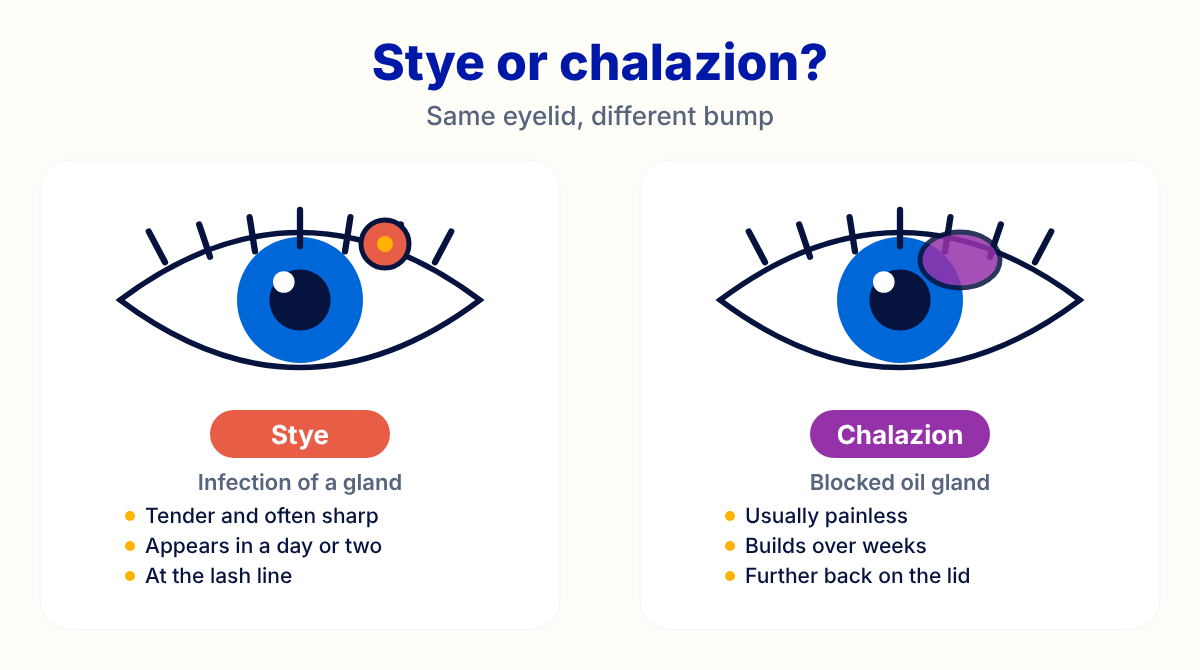
People mix these up. A chalazion is a blocked gland with inflammation but no infection, so it’s usually painless and slow to grow.
| Stye | Chalazion | |
|---|---|---|
| Pain | Tender, often sharp | Usually painless |
| Speed | Appears over a day or two | Builds over weeks |
| Location | Edge of the eyelid | Further back on the lid |
| Cause | Infection of a gland | Blocked oil gland, no infection |
How to get rid of a stye at home, step by step
These simple home remedies are the first-line treatment from the American Academy of Ophthalmology and Mayo Clinic.
Start with a warm compress
Soak a clean washcloth in warm water, wring it out, and lay it over your closed eye for 10 to 15 minutes. Re-wet it when it cools. Do this three or four times a day.
Warm, not scalding. It should feel like a heating pad on low, never a burn. Mayo Clinic suggests a shorter 5 to 10 minutes, but the pattern is the same: regular heat, several times a day, for as long as the bump is there.
After each session, press very gently along the lid with a clean fingertip. That light massage helps the oil glands drain.
What about a warm tea bag? It holds heat nicely, but we haven’t found good evidence that the tea itself adds anything, so a washcloth works just as well.
Keep the lid clean, and skip the squeeze
Wash your hands before you touch your face. Then clean the edge of the eyelid gently with mild soap and warm water, or a drop of tear-free baby shampoo in warm water on a cotton pad. An over-the-counter eyelid cleanser works too, and daily eyelid hygiene like this pays off for months.
Now the rule that matters most. Can you pop a stye? No. The AAO says a stye shouldn’t be popped, and squeezing can push the infection deeper into the eyelid. If it needs drainage, an eye doctor does that with a sterile tool.
Switch to glasses and skip cosmetics near your eyes until it heals. Toss any mascara or eyeliner you used just before it showed up.
| Do this | Not this |
|---|---|
| Warm compress, 3 to 4 times a day | Squeezing or “drawing out” the bump |
| Clean the lid with mild soap | Rubbing or scratching your eye |
| Wear glasses instead of contact lenses | Wearing makeup or contacts |
| Wash your pillowcase and towels | Sharing towels or mascara |
How long does a stye last?
Most styes get better without antibiotics or any other treatment. Expect something like this.
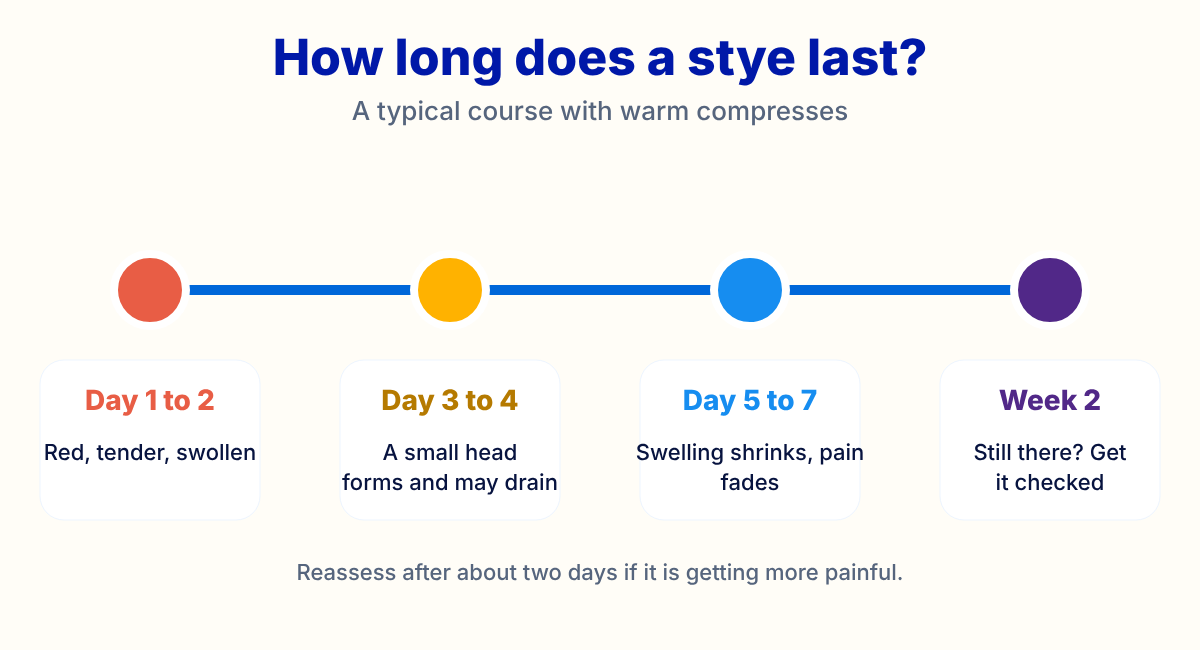
In the first two days the lid is red, sore and swollen. Around day three or four a small yellow head may appear, and it often drains by itself once you’ve been using heat, and that drainage is a good sign. By day five to seven the swelling shrinks and the pain fades. Reassess at two weeks: a bump that’s still there then needs a professional look.
When to see a doctor about a stye
Plenty never need an appointment. But some do, and waiting too long can turn a nuisance into something worse. See an eye doctor, or get seen the same day, if your symptoms include any of these:
- It’s very painful or hasn’t improved after about two days of steady compresses.
- Your vision is blurry or changes in any way.
- The redness and swelling spread past the eyelid onto your cheek or around the eye.
- You have a fever, or light sensitivity.
- It keeps coming back in the same spot.
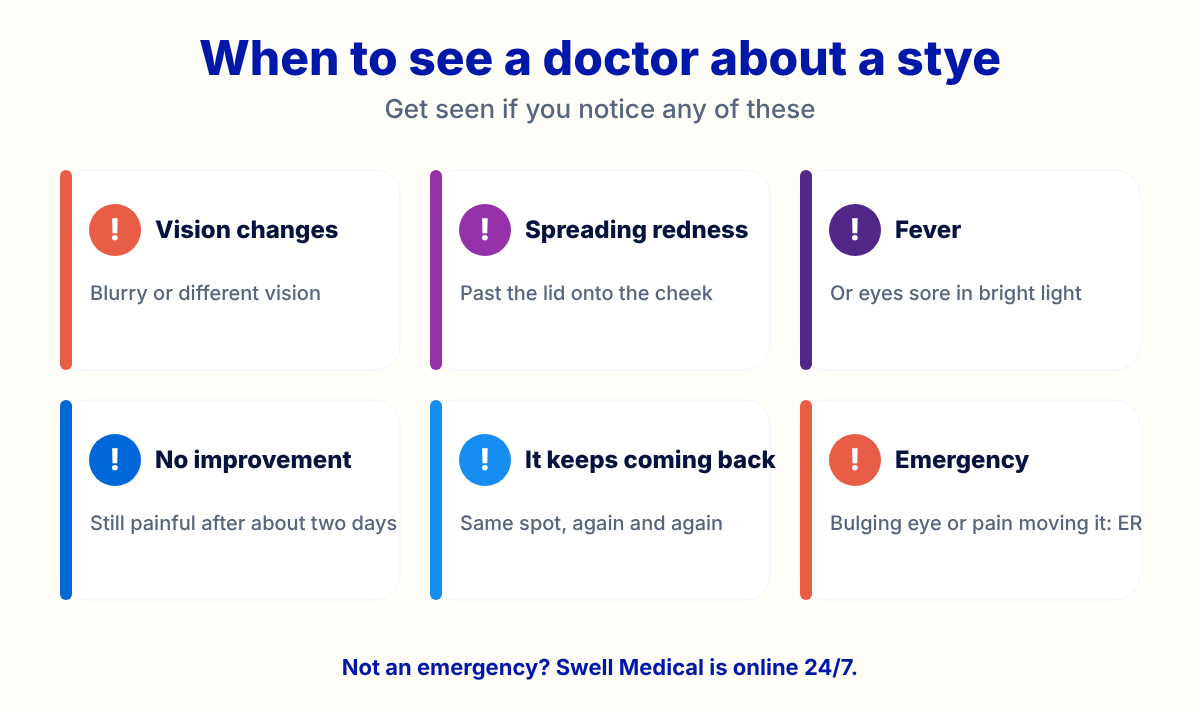
Spreading redness and swelling can mean preseptal cellulitis, an infection of the skin around the eye. Pain with eye movement, a bulging eye, double vision or a high fever can signal orbital cellulitis, which is an emergency. Go to the ER, don’t wait for an appointment.
How clinicians treat a stye that won’t quit
If home treatment hasn’t been enough, an eye doctor has a few options. For an infected stye, they may prescribe antibiotics as eye drops or an ointment. To be fair, StatPearls notes there’s little evidence that antibiotics applied to the eyelid help a plain, uncomplicated stye, so many are treated with heat alone. Oral antibiotics are for cases where the infection spreads past the eyelid. Nobody needs antibiotics for a chalazion.
A lump that turns out to be a chalazion may get a steroid injection. A stye that won’t drain can be opened in the office with a small cut under local anesthetic. Never a home job.
How to stop styes from coming back
The best way to prevent a stye is boring habits. Wash your hands before touching your eyes, take your makeup off every night, replace mascara every three months or so, and keep your lenses clean. Good eyelid hygiene helps too. If you get styes often, ask about rosacea or blood sugar, since both are linked to repeat styes.
Get your stye looked at today
Not sure whether yours is the wait-and-warm kind or the needs-a-prescription kind? That’s a quick conversation. Swell Medical offers online urgent care around the clock for everyday, non-emergency problems like a painful eyelid bump. A licensed clinician reviews your symptoms, tells you whether home remedies still make sense, and sends medication if it’s needed.
Virtual care has limits, and we’ll tell you so. If your vision changes, or the swelling spreads or comes with a fever, you need an in-person exam or the ER, not a video visit. For an emergency, call 911.
Questions people ask about getting rid of a stye
What causes eye styes to form?
A stye starts when bacteria infect a blocked oil gland in the eyelid. Rubbing your eyes, old cosmetics, dirty lenses and conditions like blepharitis, rosacea and diabetes all raise the odds.
How do you draw a stye out?
You don’t pull it out yourself. Apply a warm compress for 10 to 15 minutes, three or four times a day, and let the gland drain naturally. Squeezing can spread the infection, so leave any manual drainage to a clinician.
Can a dirty pillow cause a stye?
It can contribute. Unwashed pillowcases and towels carry oil and bacteria that touch your eyelids every night. Wash them regularly, especially while you have a stye.
Does a warm tea bag help a stye?
A warm, damp tea bag holds heat just like a washcloth, so it can help for that reason. There’s no strong evidence that the tea adds anything extra.
Do I need antibiotics for a stye?
Usually not. Most styes need no treatment beyond warm compresses. A clinician may prescribe antibiotic ointment or eye drops for a stubborn one, and oral antibiotics if the infection spreads.
Are styes contagious?
Not in the way pink eye is, but the bacteria can spread. Don’t share towels, pillowcases or eye makeup while you have one, and wash your hands after touching the area.
Can I wear contact lenses or makeup with a stye?
No. Both can carry bacteria and cause more irritation. Wear glasses and skip cosmetics until it has fully healed.
Trusted references
Public-health, research, and medical-society resources related to this guide.