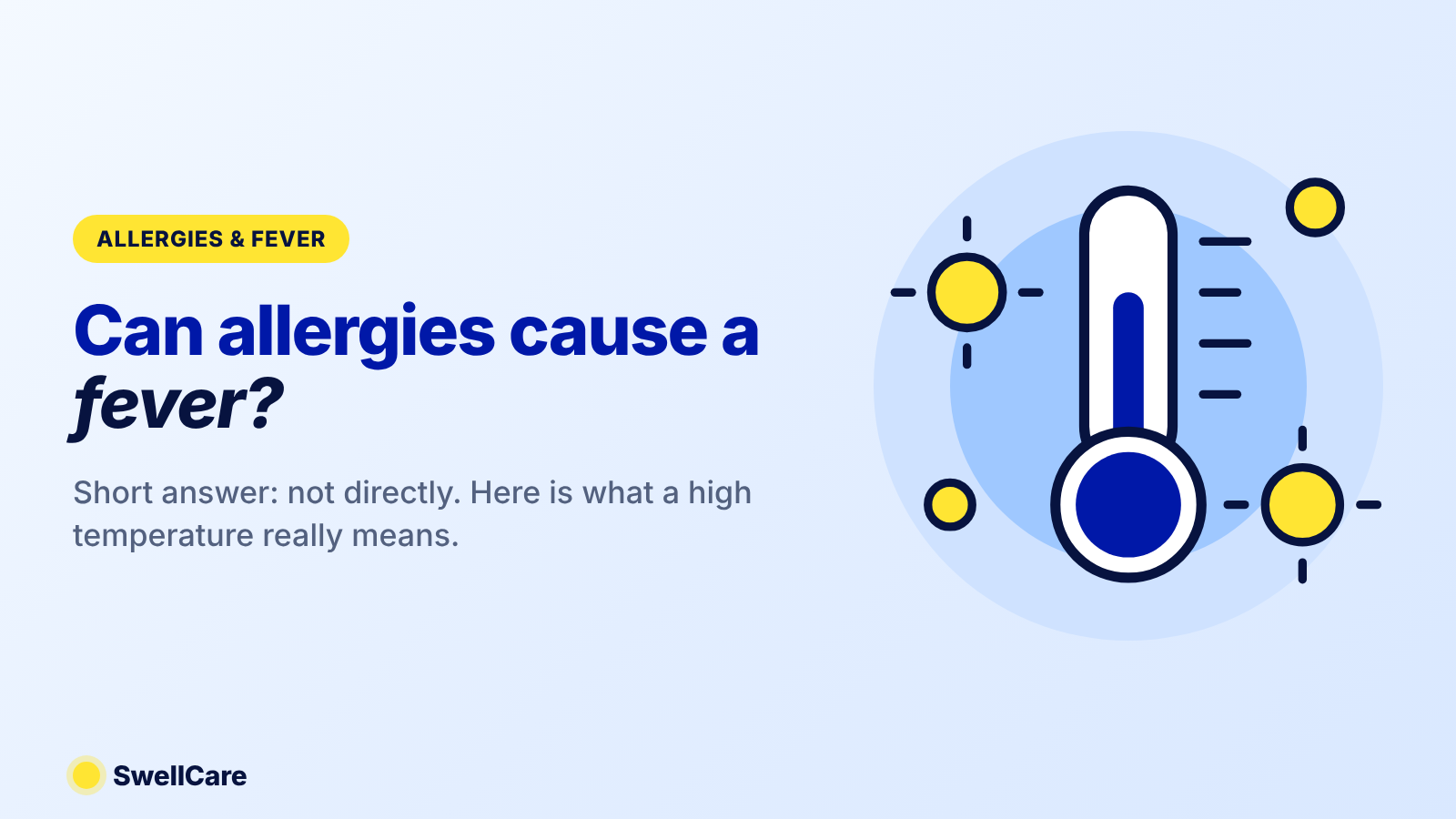
Your nose is running, your eyes itch, and the thermometer says 100.6°F. So which is it? Can allergies cause fever, or is something else going on?
Here’s the straight answer. Allergies don’t raise your body temperature on their own. A fever with allergies almost always means an infection is tagging along.
That changes what you should do next. Read on and you’ll know why the symptoms get mixed up, how to tell them apart at home, and when it’s time to call someone.
Can allergies cause fever? The short answer
No. Allergies don’t cause a fever, and that includes seasonal allergies and the one with fever in its name. Hay fever, known medically as allergic rhinitis, is a nickname, nothing more. The American College of Allergy, Asthma and Immunology (ACAAI) says hay fever brings a runny or stuffy nose and itchy eyes, mouth or skin, not a raised temperature.
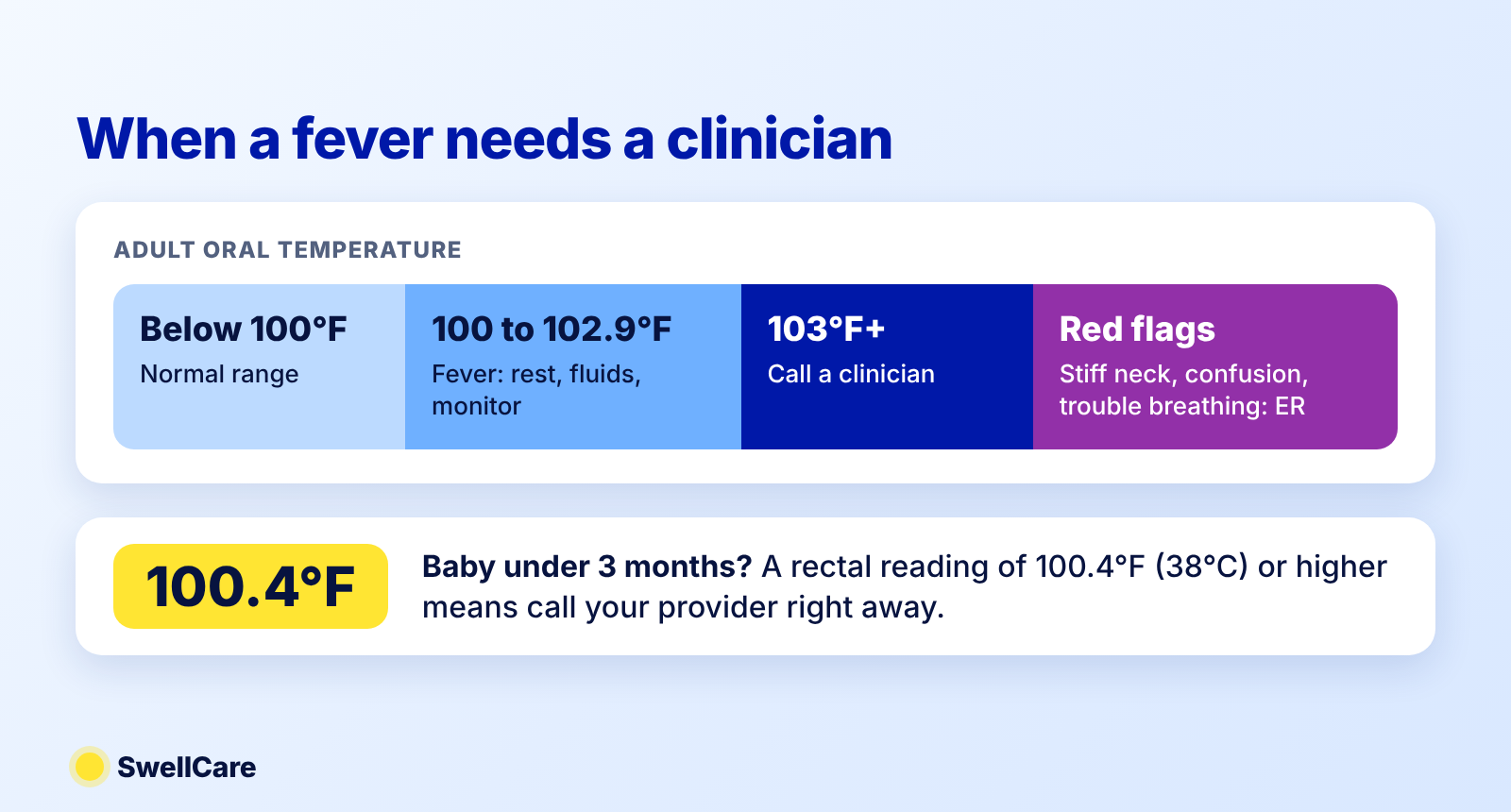
Allergy symptoms can still make you feel rotten. Fatigue, a pounding sinus headache and a flushed face are all common. Feeling feverish isn’t the same as having one, and a thermometer settles it. Mayo Clinic counts an oral reading of 100°F (37.8°C) or higher as a fever.
Why allergies don’t raise your body temperature
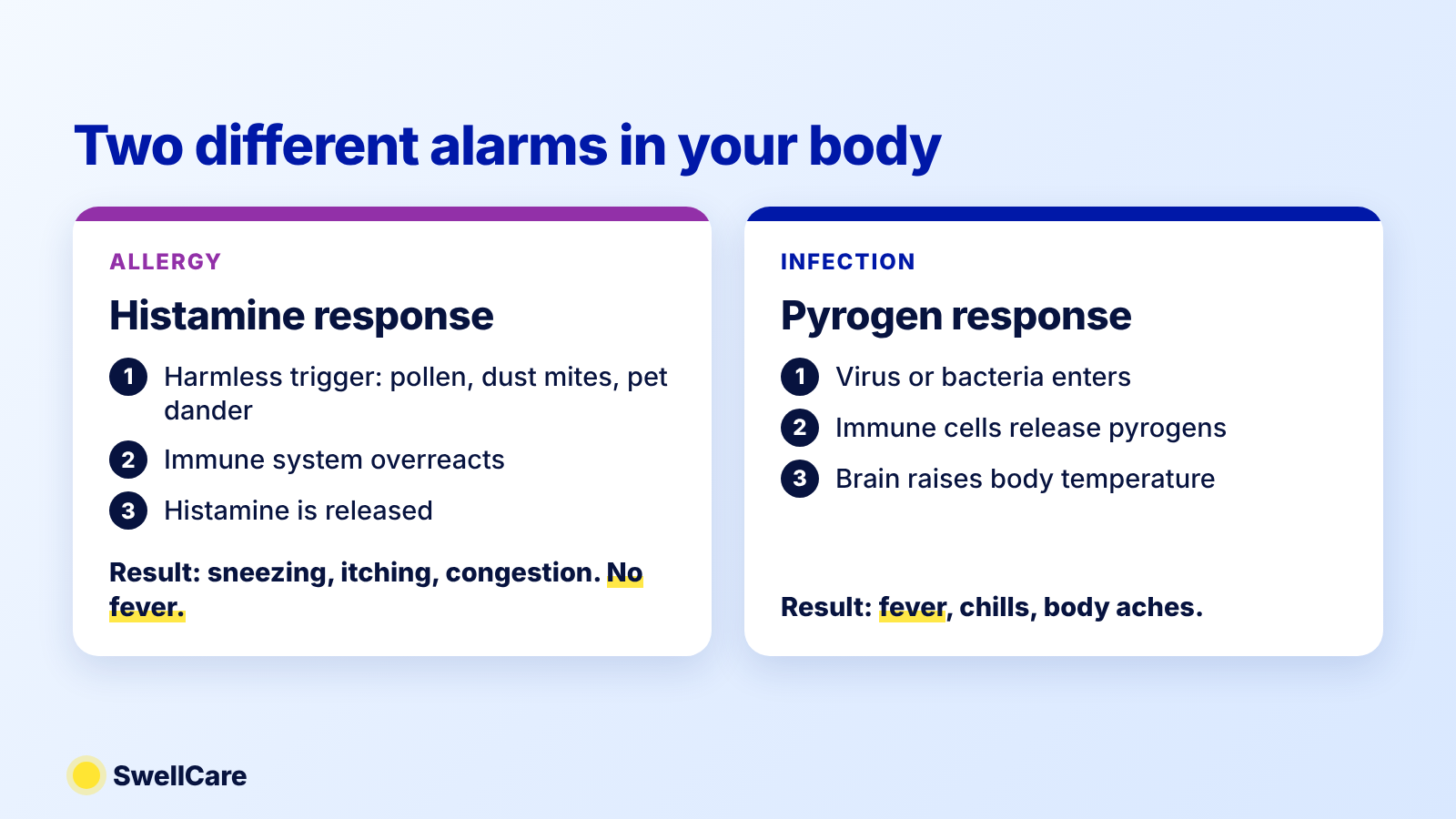
Picture what each problem actually is. An allergy is your immune system overreacting to something harmless, like pollen, dust mites, pet dander or mold. Those allergens trigger a release of histamine, and histamine causes the sneezing, itching and swelling. The symptoms are loud, but the inflammation behind them stays local to your nasal passages, eyes and throat.
A fever is a different alarm, and your immune system sounds it. When it meets a virus or bacteria, it releases chemicals called pyrogens, and they tell your brain to turn up your body temperature. Allergic reactions don’t release pyrogens, so there’s no signal to heat you up, as Cleveland Clinic explains.
When you have a fever with allergy symptoms
So why do so many people report a fever with allergies? Because allergies make you easier to infect, even when your immune system is healthy. Congestion and extra mucus can trap germs in your sinuses, and an infection there can cause one. The allergy didn’t make it. The infection did.
A sinus infection on top of allergies
This is the most common story. Allergy inflammation blocks drainage, fluid pools, and bacteria or viruses multiply in the warm, damp space. Doctors call it acute sinusitis. Most cases are viral, though some turn bacterial. A sinus infection tends to bring thick yellow or green mucus, sinus pressure around the eyes and cheeks, and sometimes a fever. Most clear up in about 7 to 10 days, and Mayo Clinic lists hay fever as a risk factor.
A cold, the flu or COVID-19
Early on, cold symptoms look a lot like allergy symptoms. A cold is viral, so it spreads, and it peaks around day three, with body aches and sometimes a fever. The flu hits harder and faster, with chills, fatigue and body aches. COVID-19 can look like either one, and only a COVID-19 test tells them apart. Runny nose plus fever? Those symptoms point to an infection first, not allergies.
Other causes of a fever
A low-grade fever can also come from certain medications, some vaccines, heat illness, severe sunburn or an inflammatory condition such as rheumatoid arthritis, ACAAI notes. Each one can nudge up your body temperature. If it keeps coming back and no cold or flu explains it, get it checked.
Allergies or infection? How to tell the difference
Use the pattern of symptoms, not a single one. Itchy, watery eyes, sneezing and a scratchy sore throat lean toward allergies. A cough, aches and fatigue that deepen over a couple of days lean toward infection. Postnasal drip can go either way. Here’s a quick side-by-side.
| Clue | Allergies | Cold or flu | Sinus infection |
|---|---|---|---|
| Fever | No | Often with flu, sometimes with a cold | Sometimes |
| Itchy eyes or nose | Common | Rare | Rare |
| Body aches | No | Common, especially with flu | Uncommon |
| Mucus | Thin and clear | Clear, then thicker | Thick, yellow or green |
| Sneezing | Frequent | Common | Less common |
| How long | Weeks, while the trigger is around | About 3 to 10 days | 7 to 10 days, sometimes longer |
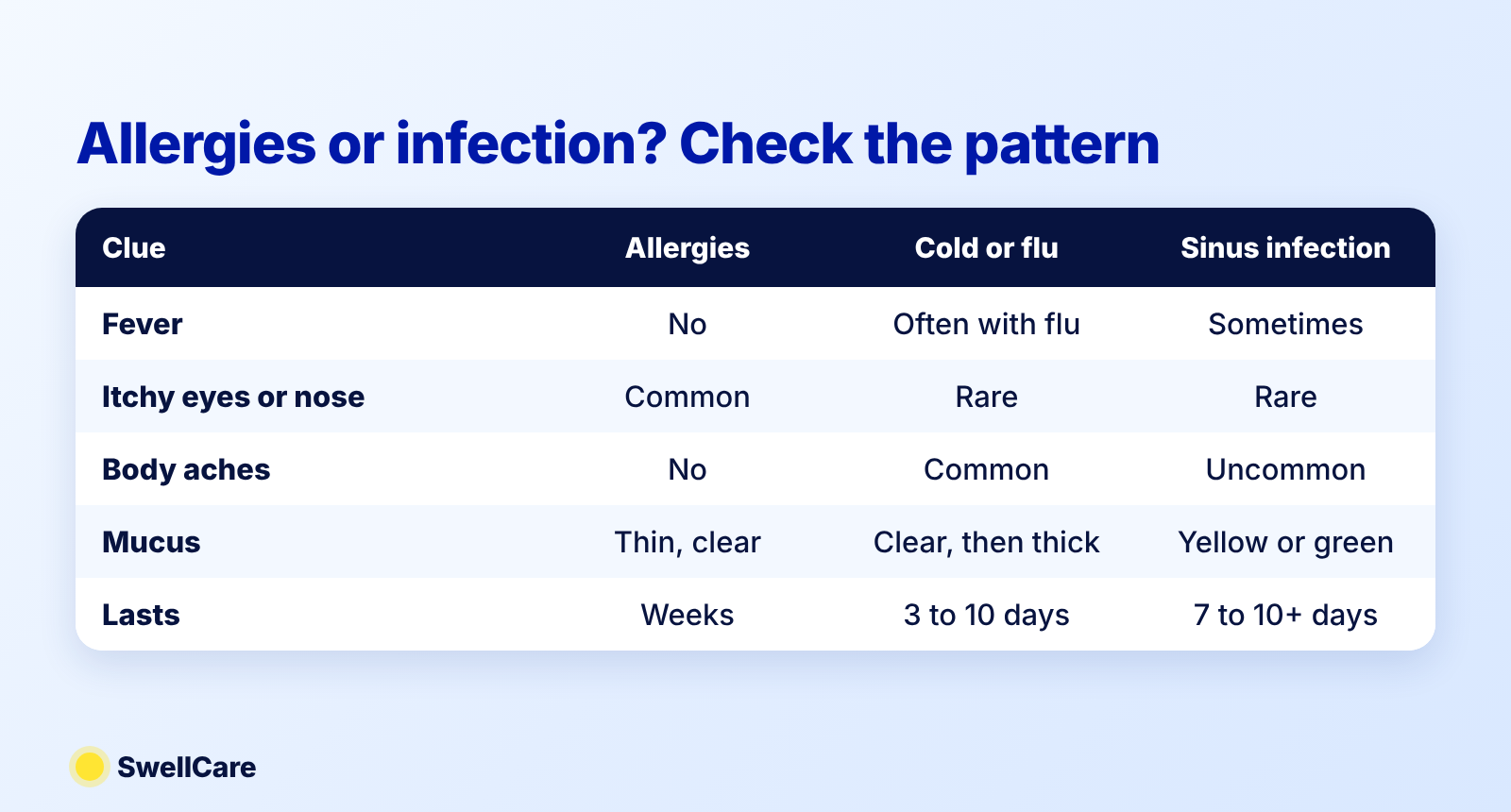
Timing helps too. Allergy symptoms tend to come back around the same time every year and last as long as you’re exposed to the allergen. Year-round symptoms often point to indoor triggers like dust mites and pet dander. Infections run a course and fade.
How to feel better when allergies and a fever overlap
The right treatment depends on what’s actually there. For allergy symptoms, over-the-counter antihistamines calm the histamine response and ease sneezing, itching and a runny nose. Steroid nasal sprays reduce inflammation, and oral decongestants relieve congestion for a short stretch (ask a pharmacist how long they’re safe to use, and whether nasal sprays of that type suit you). A saline nasal rinse washes allergens out of your sinuses. If the same season wrecks you every year, an allergist can talk through allergy shots, also called immunotherapy.
For the fever, rest, fluids and a reducer like acetaminophen or ibuprofen usually do the job when they’re right for you. Antihistamines won’t bring one down. Antibiotics are a treatment for bacterial infections only, so they won’t fix a cold or a virus.
When to see a doctor about a fever
Most of these pass at home. Reach out to a clinician if you notice any of these:
- An adult temperature of 103°F (39.4°C) or higher
- A fever lasting more than three or four days
- Sinus symptoms that last past 10 days, or improve and then get worse
- A baby under 3 months with a rectal temperature of 100.4°F (38°C) or higher
Go to the emergency room if it comes with a stiff neck, severe headache, confusion, trouble breathing, chest pain or a rash. And if you get hives, swelling of the lips or throat, or wheezing soon after an allergen exposure, that’s a severe allergic reaction called anaphylaxis. Call 911. Sinus infections that keep returning are a good reason to see an allergist.
Talk to a SwellCare clinician online
Not sure whether it’s allergies, a cold or something more? You don’t have to guess. SwellCare offers 24/7 online care, so you can describe your symptoms, share your temperature and get clear next steps without sitting in a waiting room. Start a SwellCare visit and let a clinician sort it out with you.
Questions people ask about allergies and fever
Can seasonal allergies cause a low-grade fever?
No. Seasonal allergies cause sneezing, congestion and itchy eyes, not a higher body temperature. If a low-grade reading shows up alongside them, look for a cold, a sinus infection or another cause. Track your readings for a day or two and call a clinician if it persists.
Can pollen cause fever?
Pollen and other allergens can set off your allergies, but they can’t heat your body up. The high reading people link to springtime is usually a viral or bacterial infection that took hold while allergy swelling had your nose and sinuses blocked.
Can an allergic reaction cause a fever?
A typical allergic reaction doesn’t. A severe one (anaphylaxis) needs emergency treatment whether or not you have a temperature. Some drug reactions can come with fever, so tell a clinician about any new medicine you started before it showed up.
Can allergies make your body ache?
Allergies can leave you tired and heavy-headed, but sharp body aches usually point to the flu, COVID-19 or another infection. Aches plus chills plus a high reading is a pattern worth testing for, not guessing about.
Can allergies cause fever in kids?
No, the same rule applies to children. A child with allergy symptoms who also runs hot likely has an infection. Call the pediatrician for any fever in a baby under 3 months, or if a child seems listless, is hard to wake or has a fever lasting more than three days.
Trusted references
Public-health, research, and medical-society resources related to this guide.