Something deep in your back aches, and you can’t tell if it’s a pulled muscle or your kidneys. Here’s the short answer. Kidney pain is felt high on the back, just below the rib cage, on one or both sides of the spine. Doctors call that area the flank. The ache sits deep, and it can travel toward your belly or groin.
That location is your biggest clue. This guide shows you the exact spot, what kidney pain feels like, how to tell it from ordinary back pain, and which symptoms mean you shouldn’t wait. Severe pain with a fever? Skip straight to the section on when to see a doctor.
Where is kidney pain felt in the back?
Your kidneys are two fist-sized organs that sit against the back wall of your abdomen, one on each side of the spine, tucked under the lower ribs. So kidney pain shows up higher than most people expect. It isn’t down near your belt line. It’s up under the ribs.
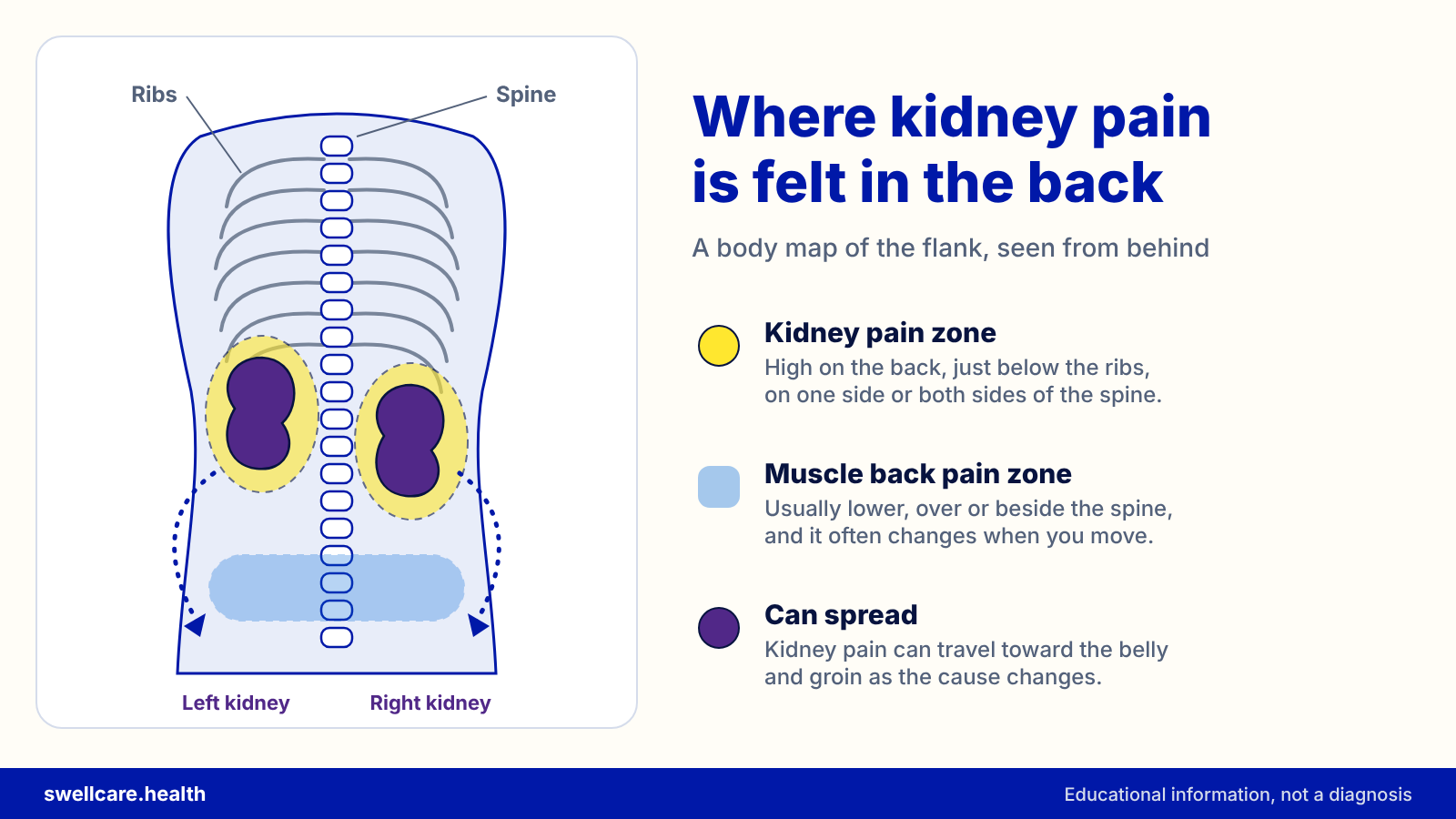
Most of the time the pain stays on one side. Flank pain on the right or left usually points to the kidney on that side. Both sides can hurt when both kidneys are involved, as in a severe infection (Kidney Fund).
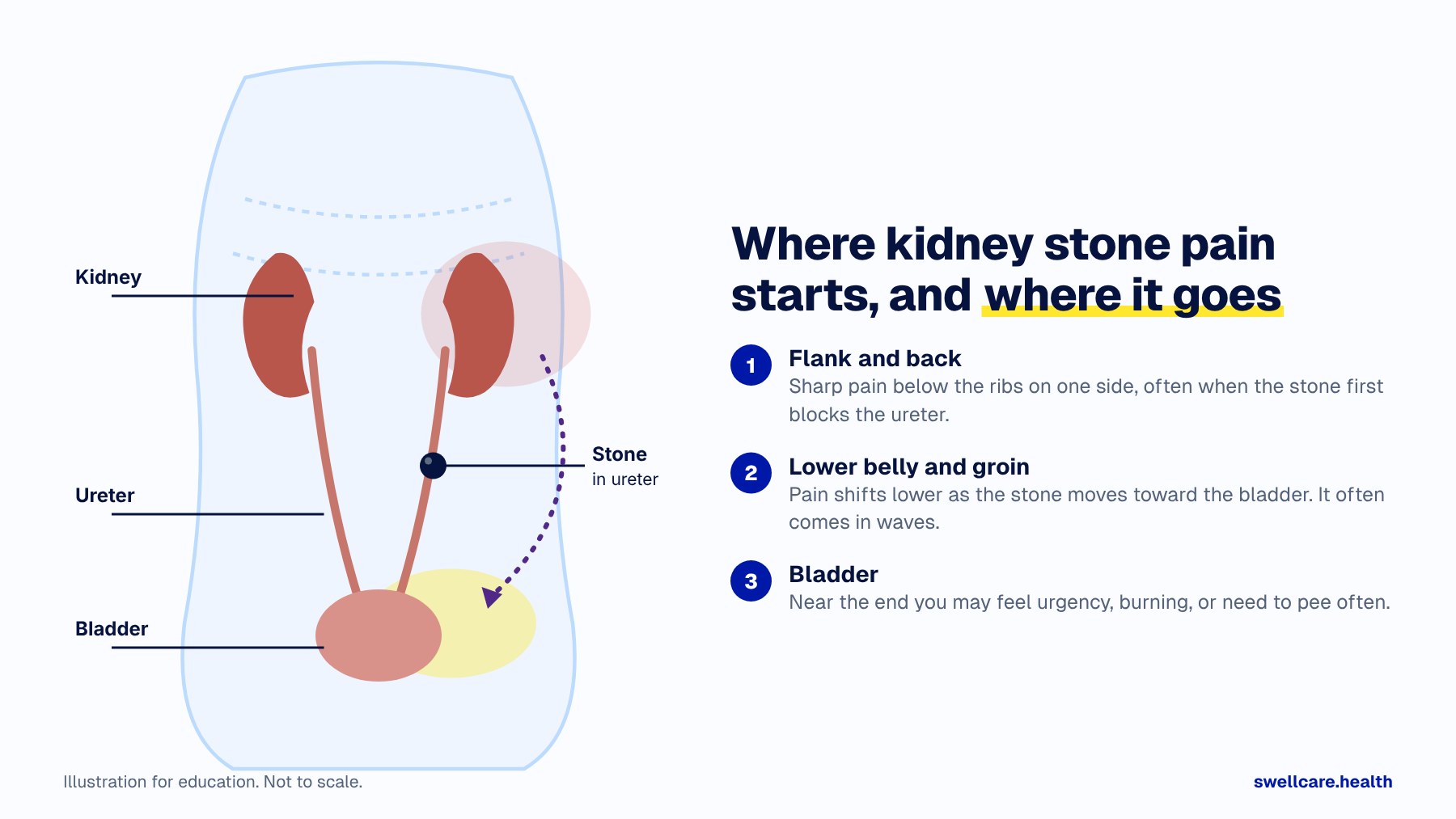
Where the pain goes next matters too. It can wrap around your side toward the belly, or slide down into the groin. Kidney stones moving through the urinary tract often do exactly that (NIDDK).
What kidney pain feels like
Patients describe it two ways. One is a dull, steady ache that never quite lets up. The other is sharp pain that rolls in waves, peaks, then eases before the next surge (Cleveland Clinic). Waves often point toward kidney stones. A steady dull ache fits many causes, including infection.
The pain rarely travels alone. Symptoms that tag along include nausea, vomiting, chills, pain when you pee, trouble emptying your bladder, or blood in urine, which can look pink, red, or brown. Those companions tell you more than the pain does.
Kidney pain vs. back pain
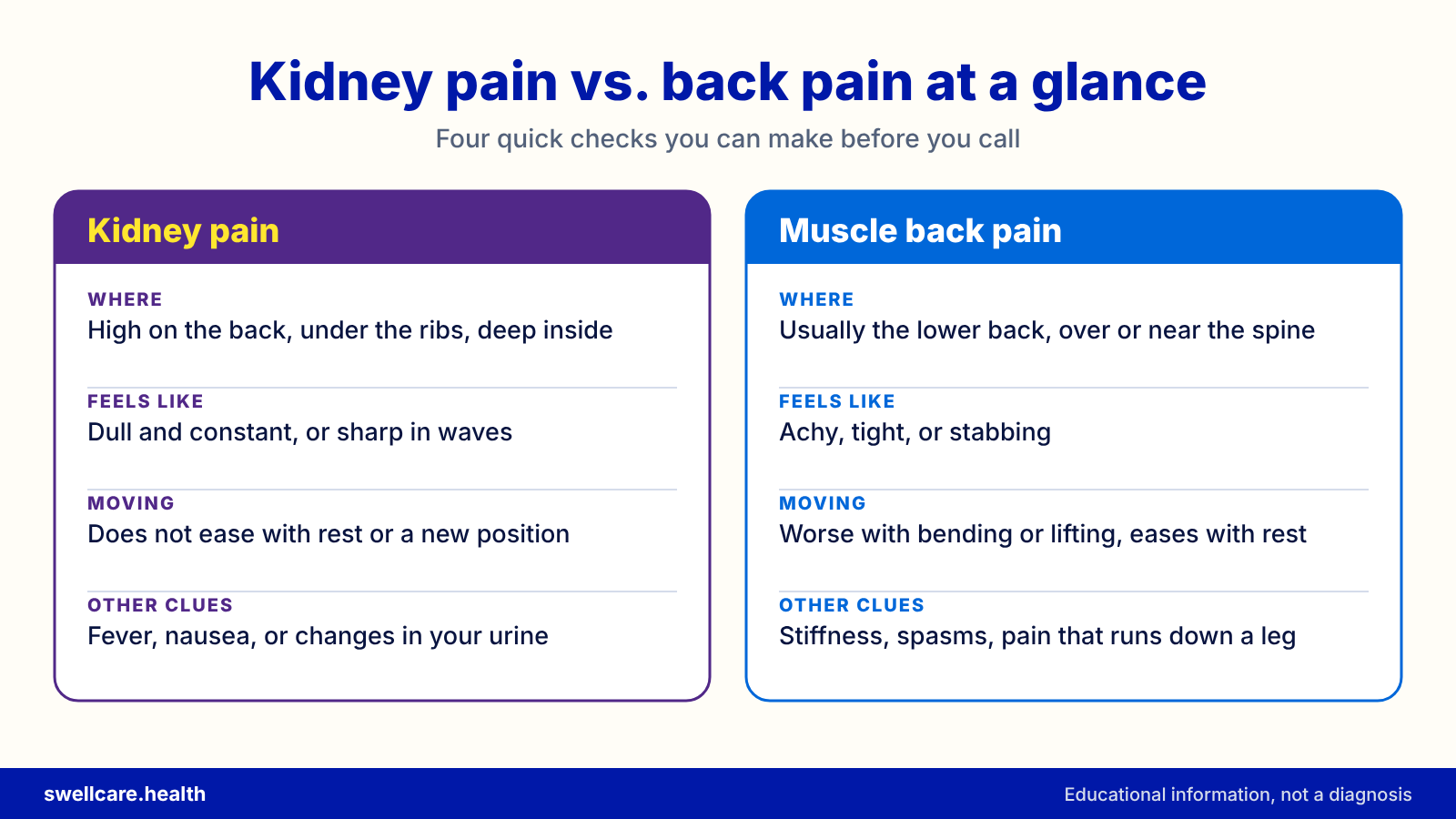
Here’s a rule of thumb. Muscle pain changes when you move. Kidney pain usually doesn’t.
| Feature | Kidney pain | Muscle back pain |
|---|---|---|
| Location | High on the back, under the ribs, deep inside | Lower back, often over the spine |
| Feels like | Constant ache, or sharp in waves | Achy, tight, or stabbing |
| Movement | Doesn’t ease with rest or a new position | Worse with bending or lifting, eases with rest |
| Other symptoms | Fever, nausea, urine changes | Stiffness, spasms, pain down a leg |
Try a simple test at home. Change position, stretch gently, then lie flat. If the pain follows you through every position, take it seriously. Hip problems and sciatica can also pass for kidney trouble, but they sit lower and often run down the leg. Kidney pain can feel like lower back pain at first, because the flank blends into the lower back.
What causes kidney pain?
Kidney stones and kidney infections are the two causes people hear about most, and they feel different.
Kidney stones are hard mineral deposits. Pain starts when one blocks the flow of urine. It hits hard, comes in waves, and can spread to the groin. Blood in urine is common.
A kidney infection (pyelonephritis) often begins as a bladder infection (a urinary tract infection) that climbs upward. Expect symptoms like fever, chills, and burning when you pee along with the flank pain. It needs treatment, because it can progress to sepsis (NIDDK).
Other causes include injury, a blockage in the urinary tract, a bladder that can’t empty, and urine flowing backward toward the kidneys. Kidney cancer often causes no pain early on. As it grows, kidney cancer can bring pain and blood in urine. Inherited kidney disease, such as polycystic kidney disease, can cause a lasting ache. If you already live with kidney disease, treat any new pain as a reason to call.
What helps while you wait to be seen
Relief isn’t about masking the pain. It’s about finding the cause. A doctor usually starts with a urine test for infection or blood, then imaging, such as an ultrasound or a CT scan. Treatment follows the cause: antibiotics for infection, medication or a procedure for stones. Most causes of kidney pain are treatable, and treatment works best when it starts early.
For comfort in the meantime, drink water unless a clinician has limited your fluids, rest, and try a heating pad on the sore area. Acetaminophen is usually the gentler choice. Ibuprofen and similar drugs can be hard on the kidneys, so ask first.
None of that treats the cause. It buys you a few hours, not a diagnosis.
When to see a doctor
Don’t sit on this. See a doctor if kidney pain lasts more than a day or two, or if back pain comes with any of these symptoms: fever or chills, blood in your urine, pain when you pee, vomiting that keeps fluids from staying down, trouble passing urine, or pain you can’t control. Infection and blockage can both get worse fast.
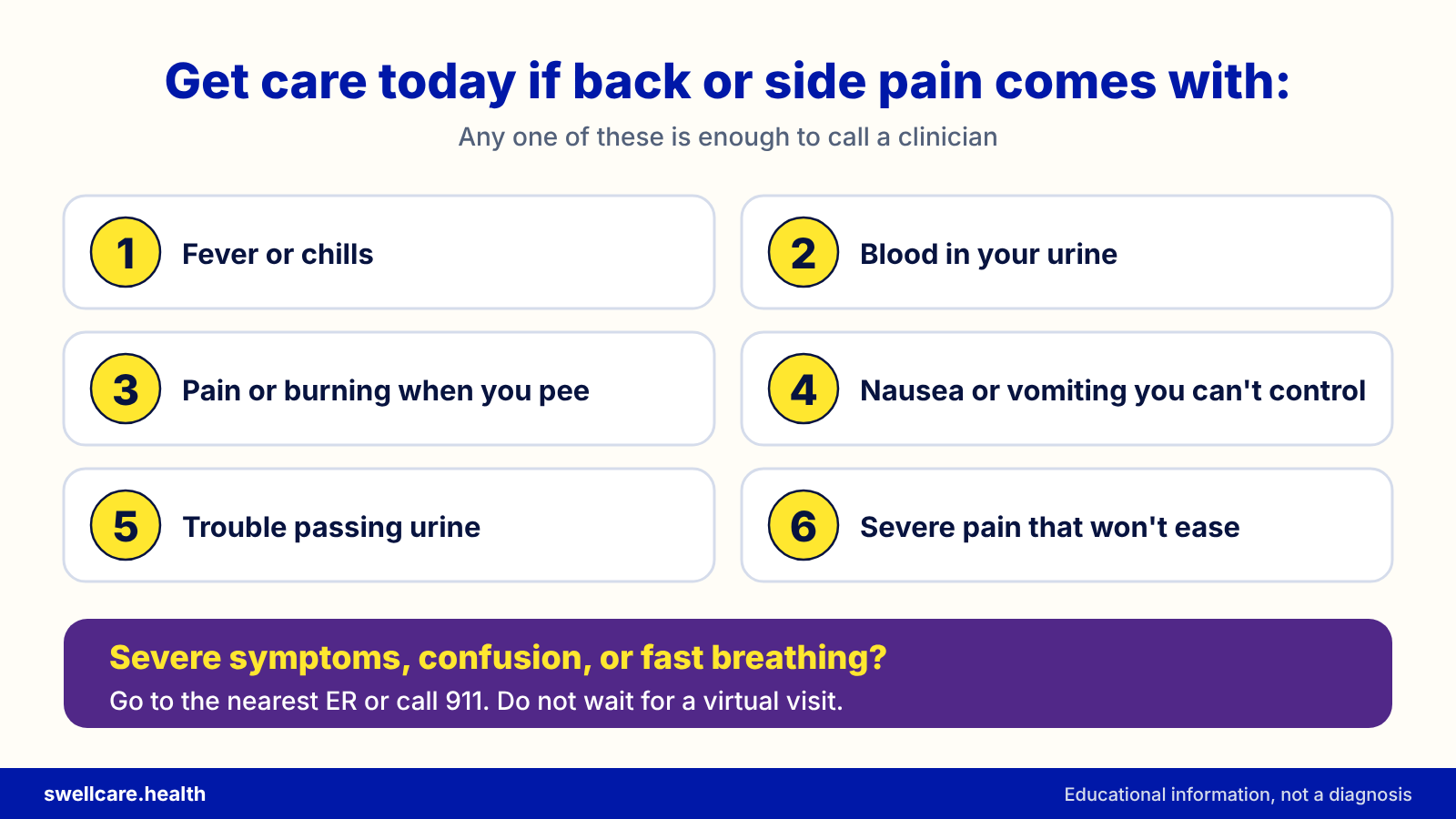
Go to the ER or call 911 for severe symptoms, like intense pain with confusion, fast breathing, or shaking chills.
Not sure how urgent it is? SwellCare offers 24/7 online care. A clinician can review your symptoms and tell you whether it’s urgent, order labs when they make sense, and tell you whether you need an in-person exam or imaging. Start with SwellCare urgent care and get a clear next step today.
Questions people ask about kidney pain
Is kidney pain felt on the left or right side?
Either, and sometimes both. A problem in one kidney usually causes pain on that side. Both sides can hurt when both kidneys are affected, as with a severe infection or inherited cysts.
Can kidney pain feel like lower back pain?
It can. The flank blends into the lower back, so the source is hard to pinpoint. Kidney pain usually sits higher and deeper, though. Pain with fever or urine changes deserves a call, however high or low it sits.
Is kidney pain sharp or dull?
Both happen. A dull, constant ache is common, and a stone can cause sharp pain that comes in waves. The pairing matters more than the type. Sharp or dull pain plus nausea, vomiting, or blood in urine needs checking.
What gets mistaken for kidney pain?
Muscle strain, a herniated disc, sciatica, and hip problems top the list. They sit lower, often run down the leg, and shift with movement. When you can’t tell, let a doctor sort it out.
Where do you press to check for kidney pain?
Pressing at home isn’t reliable. Doctors check for tenderness over the flank, but they also test your urine and sometimes order imaging. Use location, pattern, and warning signs instead, and get checked if you’re unsure.
Trusted references
Public-health, research, and medical-society resources related to this guide.