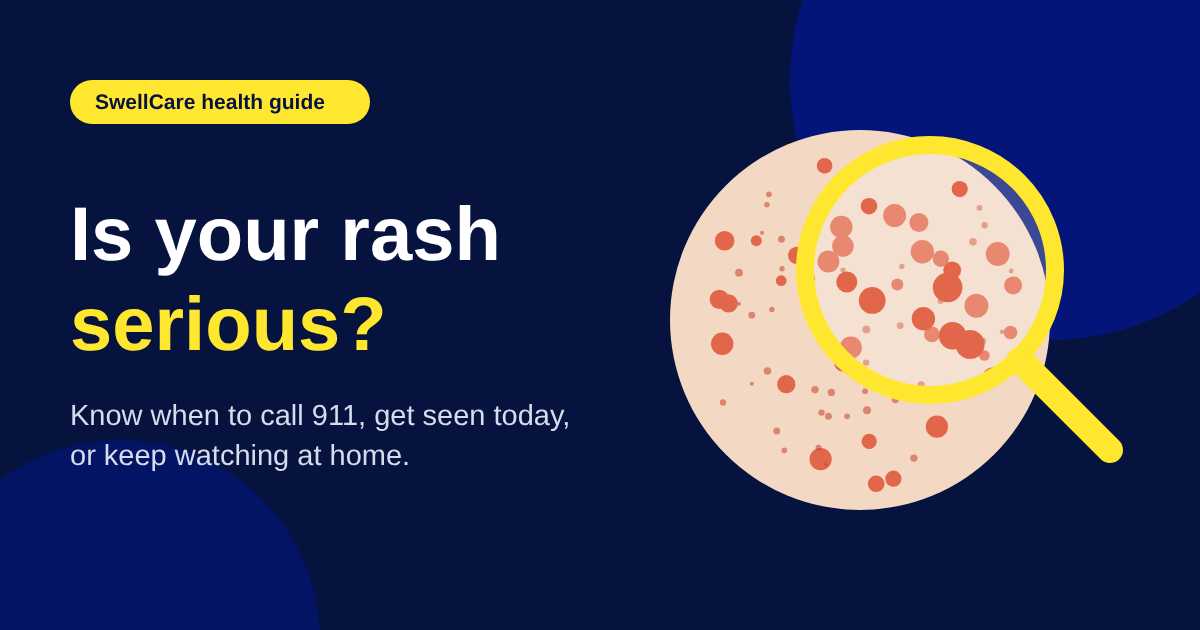
You spot it in the mirror. A patch of red, bumpy skin that wasn’t there yesterday, and now you can’t stop looking at it. So how do you know if a rash is serious, or just annoying?
Here’s the short answer. A rash is serious when it comes with trouble breathing, a fever, fast spread, open sores, strong pain, or purple spots that don’t fade when you press them. Most rashes are harmless. A few aren’t, and they move quickly.
This guide sorts rashes into three tiers so you can decide in about two minutes: call 911, get seen today, or keep an eye on it at home.
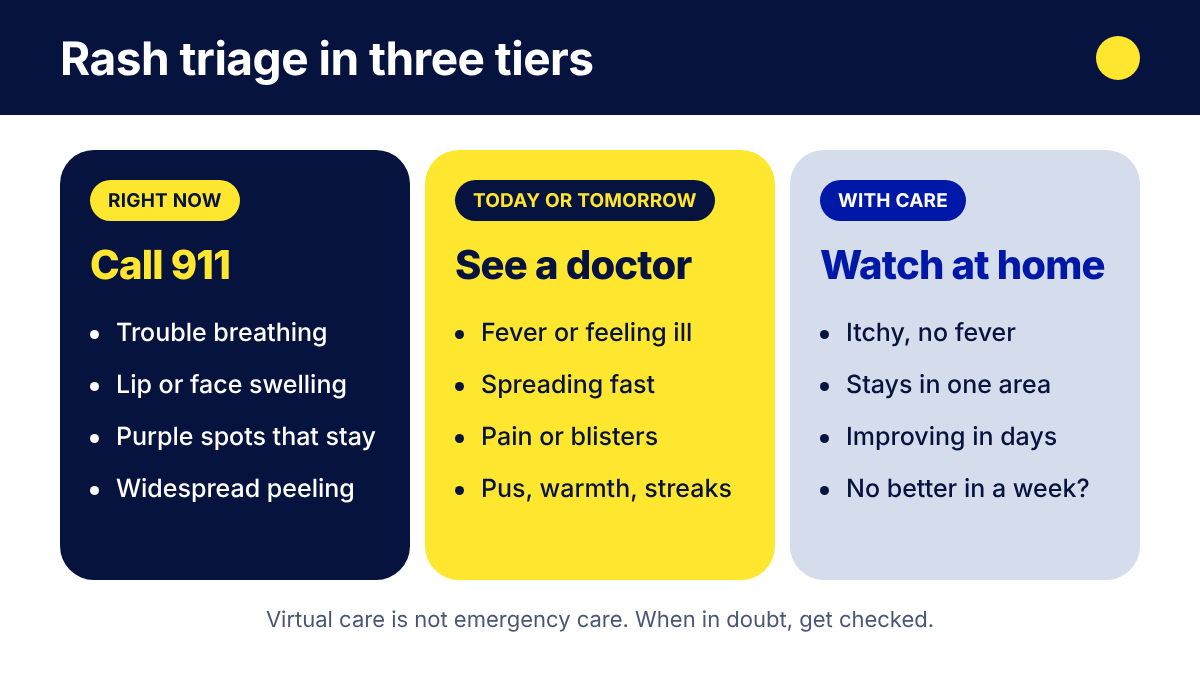
Rash red flags: when to call 911 right now
Call 911 or go to the nearest emergency room if a rash shows up with any of these symptoms:
- Trouble breathing or swallowing
- Swelling of the lips, tongue, face or eyes
- Dizziness, fainting or a racing pulse soon after a new food, medicine or sting
- Purple or dark red spots that don’t fade under pressure, especially with a fever
- Widespread blistering, or skin that peels away in sheets
The first three point to anaphylaxis, a severe allergic reaction. It can build in minutes, often after a food allergy trigger, a medicine or an insect sting, and the skin frequently shows it first with hives or flushing. A rash with swelling and breathing symptoms is an emergency. The American Academy of Dermatology says to get help right away if breathing or swallowing gets hard, or if the eyes or lips swell.
Don’t drive yourself. Don’t wait to see if the rash settles.
Widespread blistering with a high temperature and a sore mouth may be Stevens-Johnson syndrome, a rare and dangerous drug reaction. Mayo Clinic notes that early signs, including a high temperature, a sore mouth and throat and burning eyes, can show up a day or three before the rash itself appears.
Signs your rash needs a doctor within a day or two
Not every serious rash is a 911 rash. These symptoms mean you should see a doctor today or tomorrow:
- Chills, a fever or feeling generally unwell
- Spreading fast, or covering a large part of your body
- Pain, and not just itch
- Blisters, open sores or raw skin
- Any rash near your eyes, mouth or genitals
- Signs of infection: pus, yellow crusting, warmth, a foul smell or red streaks
The infection signs deserve extra attention. Skin that’s hot, swollen, tender and getting redder may be cellulitis, a bacterial infection that needs antibiotic treatment. Pain that seems far out of proportion to how the skin looks, plus fever, can point to necrotizing fasciitis. It’s rare. It’s also an emergency.
Shingles belongs here too. A strip of painful blisters on one side of the body, often preceded by burning or tingling in the skin, is its classic pattern. The shingles rash is also the one most people don’t connect to the virus behind chickenpox. Antiviral treatment generally works best when it starts early, so don’t sit on it.
The glass test for a purple rash
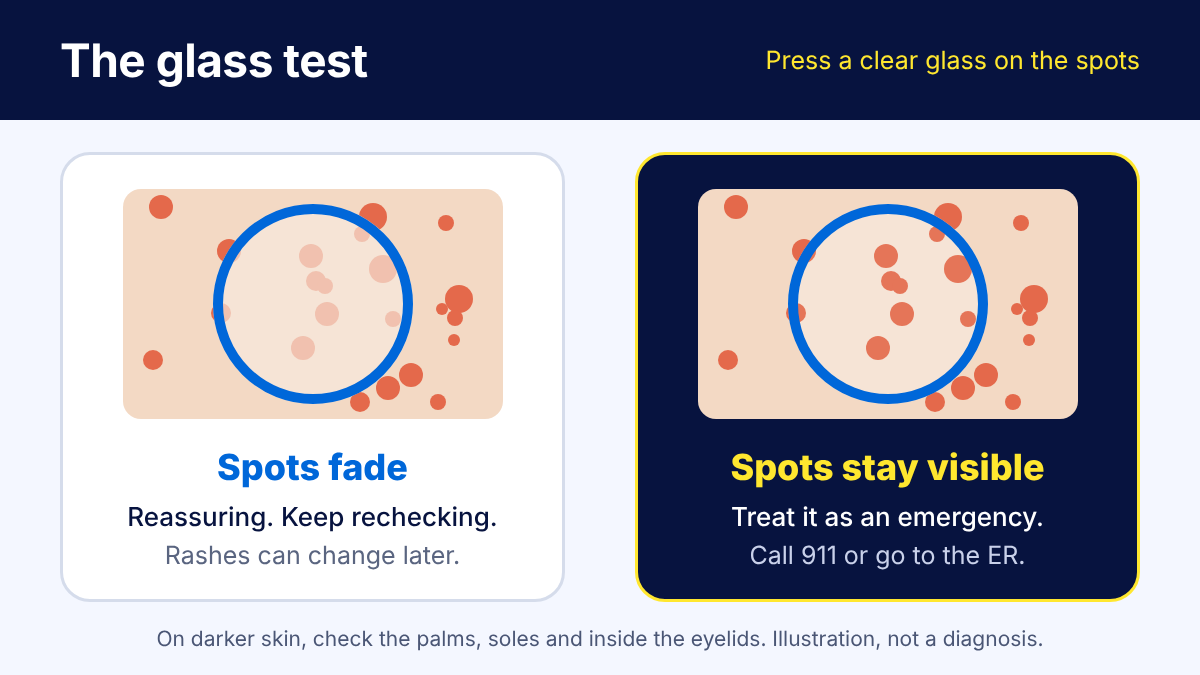
Press the side of a clear drinking glass firmly on the spots. If they fade, that’s reassuring. If you can still see them through the glass, treat it as an emergency.
A rash that doesn’t fade can signal meningococcemia, a blood infection tied to meningitis bacteria. Meningitis Now says you don’t need a fever first, and on darker skin you should check the palms, soles or inside the eyelids. Keep rechecking, because a rash that fades early can change later. Bruising that appears in or around a rash deserves the same urgency.
What does a serious rash look like?
So how do you know if a rash is serious from the way it looks? Photos can mislead, and no list replaces an exam by a doctor. Still, patterns help, and rash symptoms overlap a lot, so pair the look with how you feel. Use this as a starting map, not a diagnosis.
| What you see | What it could be | What to do |
|---|---|---|
| Purple spots that don’t fade, or bruising around the rash | Meningococcemia, vasculitis | Go to the ER |
| Expanding red patch, sometimes a bull’s-eye, after tick exposure | Lyme disease | See a doctor within days |
| Painful band of fluid-filled bumps on one side | Shingles | Same or next day |
| Hot, swollen, tender red skin that keeps growing | Cellulitis | Same day |
| Raised welts with lip or tongue swelling | Hives with a severe allergic reaction | Go to the ER |
| Peeling, blistering skin and mouth sores | Stevens-Johnson syndrome | Emergency room |
Lyme disease gets its own paragraph because it’s easy to miss. The classic Lyme disease rash, called erythema migrans, shows up about 3 to 30 days after a tick bite, typically around day 7, and can grow to roughly 12 inches across. It’s rarely itchy or painful. And only about 70 to 80 percent of infected people get it, according to CDC’s Lyme symptom page.
So a tick bite followed by any odd rash is worth a visit, bull’s-eye or not. If you’ve been hiking or gardening in tick country, say so. Lyme disease is far easier to treat early, and shingles is the same story: both are rashes where waiting costs you.
Vasculitis is the other one to know. It’s inflammation of the blood vessels, often linked to an autoimmune condition, and it can show up as purple spots on the legs.
Rashes that look scary but are usually mild
Plenty of rashes look dramatic and turn out fine.
Contact dermatitis happens when skin reacts to an allergen like poison ivy, nickel or latex, or an irritant like harsh detergent. Eczema brings dry, itchy, inflamed patches of skin that flare and settle. Heat rash comes from blocked sweat glands in the skin on hot, humid days. Even a mild allergic reaction can cause an itchy rash, so watch for swelling or breathing symptoms. Hives are raised, itchy welts that can come from an allergy, an infection or sometimes nothing anyone can pin down. MedlinePlus lists contact dermatitis, eczema and heat rash among the common causes.
What these rashes share: no fever, nothing beyond the trigger zone, itch more than pain, and improvement once you remove the cause. Allergy-related ones usually need simple treatment: avoid the trigger, moisturize, and ask your doctor or pharmacist whether an antihistamine fits you.
Low-strength hydrocortisone cream can calm an itchy, uninfected rash when used briefly on a small area. Skip hydrocortisone if the skin might be infected or fungal, because a steroid can make those worse. If you’re unsure, ask first.
How long is too long to wait on a rash?
One week. That’s the outer limit, not a target.
MedlinePlus advises calling your provider if a rash hasn’t improved after a week of treatment, or if symptoms like itching never let up. Go sooner for babies, older adults, or anyone with diabetes or a weakened immune system.
If a rash keeps coming back, a dermatologist can look for patterns. The AAD suggests seeing a board-certified dermatologist when a rash isn’t improving. Recurring patches might be eczema, psoriasis or an autoimmune condition, and each needs a different long-term treatment plan, so the right diagnosis matters.
ER, urgent care, telehealth or a dermatologist?
Match the problem to the door.
The emergency room is for anything on the 911 list. A same-day visit for a rash, in person or online, fits symptoms like fever, fast spread, pain, blisters or infection signs. For long-running or repeat rashes, see a dermatologist. Telehealth works well for stable, visible rashes, because a doctor can look at clear photos of the skin, ask the right questions, then tell you whether you need to be seen in person.
The benefit is speed and certainty. You get an answer tonight instead of a sleepless guess, and you don’t sit in a waiting room with a rash that turns out to be contact dermatitis.
What to do while you decide
Do these four things now, whatever tier you land in:
- Take clear photos of the skin in daylight, today and again in a few hours, so a doctor can see if the rash is spreading.
- Write down when the symptoms started and what changed: new medicines, foods, soaps, plants, tick exposure (a possible Lyme disease clue) or sick contacts, plus any known allergies.
- Don’t scratch, pick or try a new cream.
- List every medicine and supplement you take.
Then act. If it’s on the 911 list, call. If it’s a same-day rash, SwellCare’s 24/7 virtual urgent care can have a doctor look at the rash, and you can browse the conditions we treat first. See how it works. Virtual care is not emergency care, so phone 911 for the red flags above.
Questions people ask about serious rashes
Can a rash be dangerous, or are most of them harmless?
Most rashes come from things like eczema, allergies or irritants, and a mild allergic reaction is a common one. They clear up with simple treatment. Only a small number signal infections, drug reactions or blood problems. The danger signs are fever, quick spread, open sores, severe pain, trouble breathing and spots that don’t fade.
How long should a rash last before I see a doctor?
Book a visit if your symptoms haven’t improved after about a week, even with home care. Sooner is better with a high temperature, pain, blisters or infection signs. Babies and older adults, or anyone with weakened immunity, should be checked earlier. For a rash that keeps returning, see a dermatologist.
Is a rash with no fever still serious?
It can be. A temperature is a useful warning sign, but a rash can still be serious without one. Swelling of the lips or face, trouble breathing (possible anaphylaxis), painful blisters, spots that don’t fade and fast spread all matter on their own.
Can stress cause a rash?
Stress doesn’t create most rashes, but it can trigger flares of eczema and hives in people who already get them. If a rash appears during a stressful stretch, still check for the red flags above before blaming your nerves.
Trusted references
Public-health, research, and medical-society resources related to this guide.