You had a brutal week. Then, out of nowhere, your neck is blotchy and your arms itch like crazy.
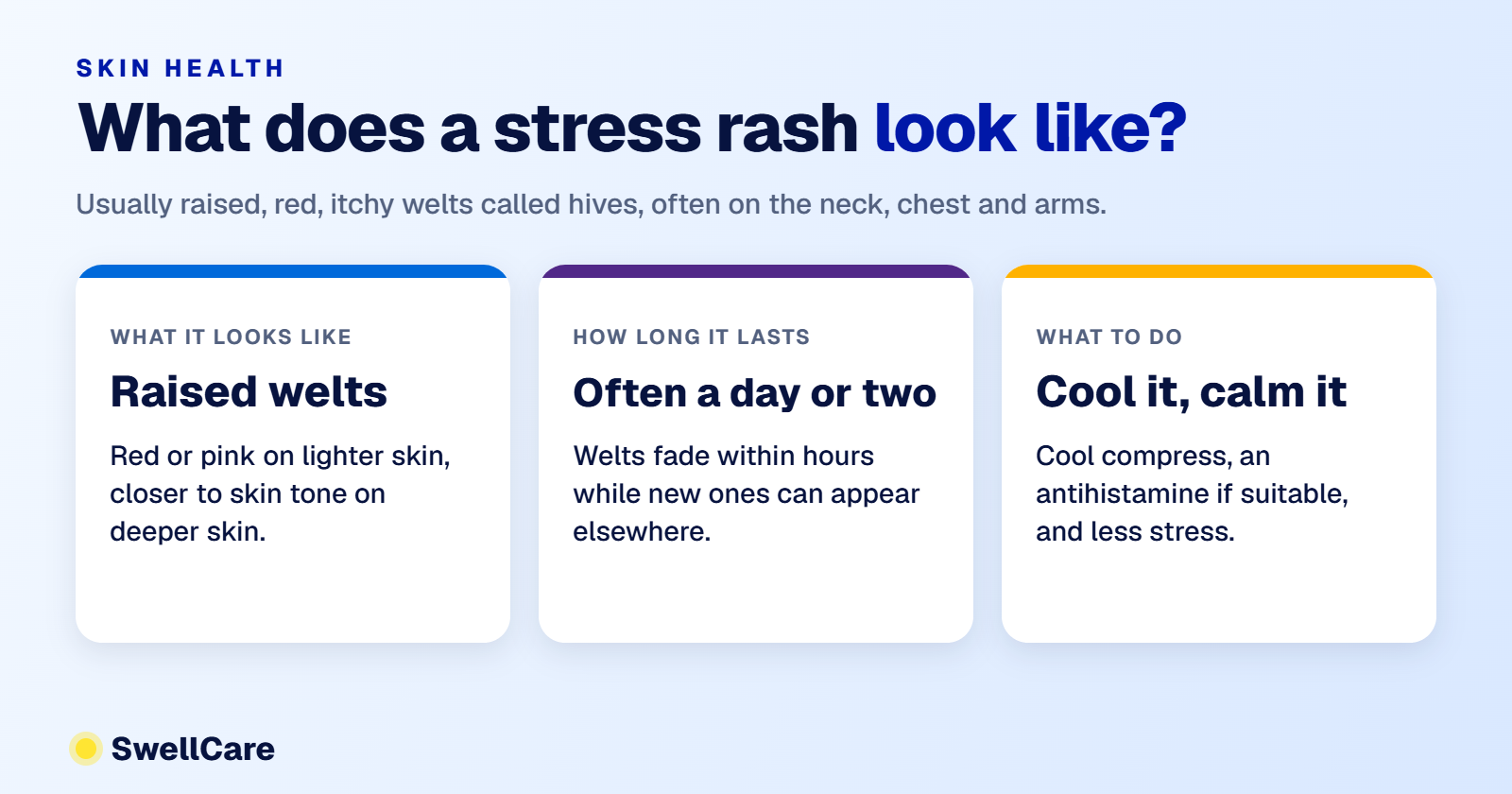
So, what does a stress rash look like? Most of the time it’s a patch of raised, red, itchy welts, which doctors call hives. They can be as small as a fingertip or merge into a patch bigger than your palm. They love the neck, chest, face and arms.
Here’s the good news. A stress rash is usually harmless and fades on its own. The catch is being sure it’s stress and not something that needs a clinician. This guide shows you what to look for, where it appears, what else it could be, and what to do tonight to calm your skin.
What does a stress rash look like?
Picture a mosquito bite, then picture ten of them joined together. That’s the closest everyday comparison for stress hives. The welts are raised, usually red or pink on lighter skin, and can look closer to your natural skin tone or slightly darker on deeper skin. Press the center and it may turn pale for a second.
The symptoms to watch for are simple. The skin feels itchy, and sometimes it burns or stings. Individual welts can pop up in minutes and then fade within hours, while new ones appear somewhere else. Doctors call that “migrating,” and it’s one of the best clues that you’re dealing with hives rather than a fixed patch of eczema.
Size varies a lot. Some stay about the size of a fingertip. Others spread into large, uneven patches. Cleveland Clinic notes that a stress rash often disappears in a day or two, though fresh hives can keep arriving while the stress continues (Cleveland Clinic).
Where stress rashes show up on your body
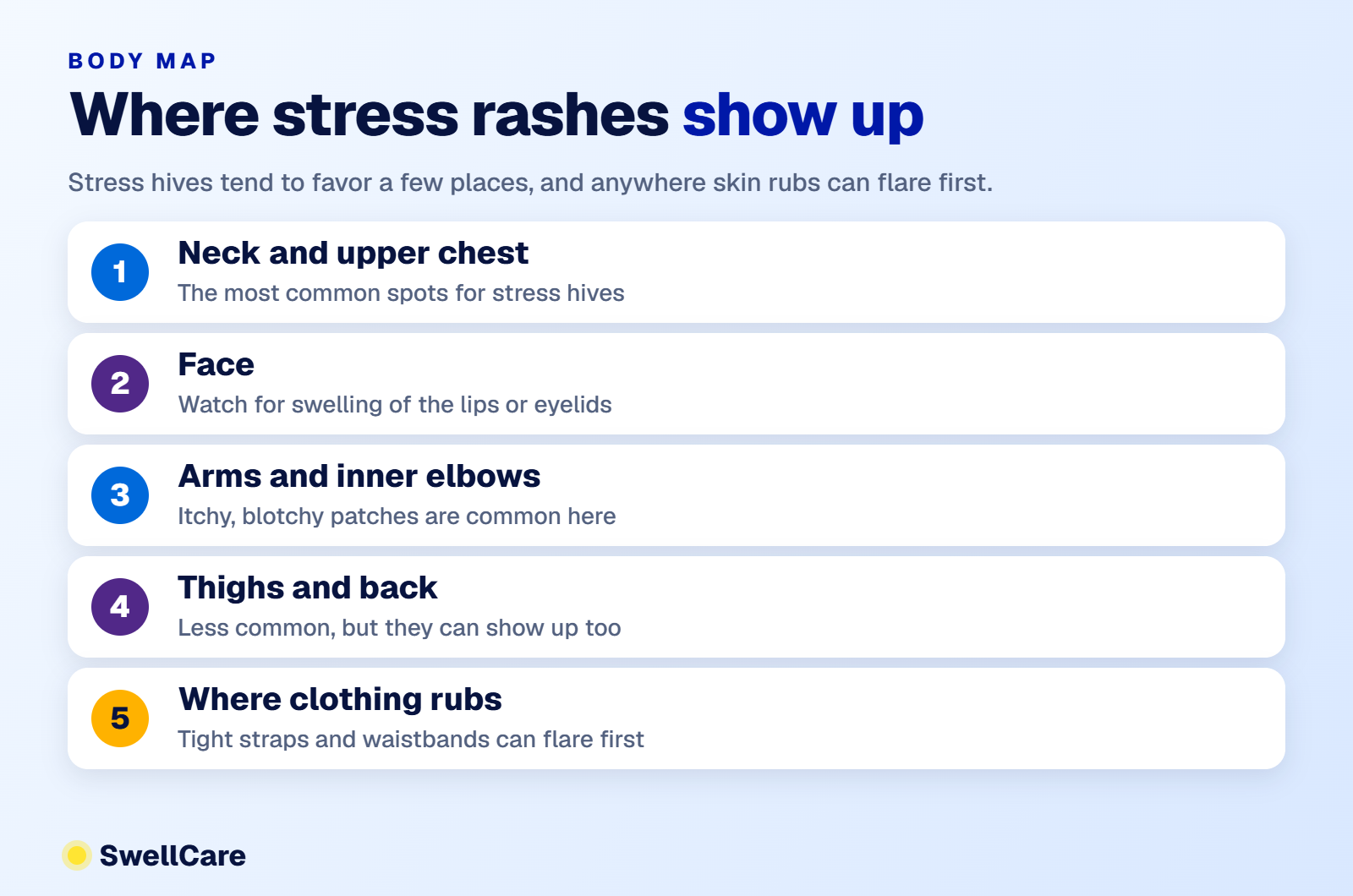
Stress rashes aren’t picky, but rashes from stress tend to favor certain spots. The neck and upper chest top the list. Many people also notice them on the face, arms and the inner elbows, and they can appear on the thighs or back too. Anywhere your skin rubs against tight clothing, straps or a waistband can flare first.
Swelling is worth watching. Mild puffiness around a bump is normal. Swelling of the lips, eyelids or tongue is not, and we’ll cover that in the red-flag section below.
Why stress makes your skin react
Your skin is part of your nervous system’s reach. When you’re anxious or worn down, your body releases stress hormones such as cortisol, and the stress response can also release histamine, which can lead to hives. Stress hormones can also drive inflammation, which is why stressed skin can look puffy and red. Histamine opens up tiny blood vessels and lets fluid leak into the skin. That’s the welt, and it’s the same chemical behind many allergy symptoms.
That also explains the itch. Histamine pokes at nerve endings, so you scratch, which irritates the skin further. Inflammation builds, and the cycle keeps going. Anxiety about the rash itself can then feed more inflammation.
Anxiety and a bad night make it worse. So does a long run of bad weeks, because chronic stress keeps the body’s alarm switched on. Stress can also set off flare-ups of conditions you already have, including eczema, psoriasis and rosacea, which are all driven by skin inflammation. Cleveland Clinic adds that hives tend to be more common in women and most often affect people in their 20s, 30s and 40s.
Is it a stress rash or something else?
Here’s the honest answer: many rashes look alike, and plenty of rashes that seem stress-related aren’t, and stress isn’t always the cause. Use the table as a quick sort, not a diagnosis.
| Condition | What it looks like | Clue that points to it |
|---|---|---|
| Stress hives | Raised, itchy red welts that move around | Come and go within hours |
| Eczema | Dry, scaly, itchy patches | Often in elbow and knee creases |
| Psoriasis | Thick, silvery-scaled plaques | Stay in the same spot for weeks |
| Rosacea | Flushing and small bumps on cheeks and nose | Triggered by heat, alcohol, spicy food |
| Heat rash | Tiny clusters of prickly bumps | Appears in sweaty, covered areas |
| Contact dermatitis | Red, sometimes blistered patch | Matches where a new product touched |
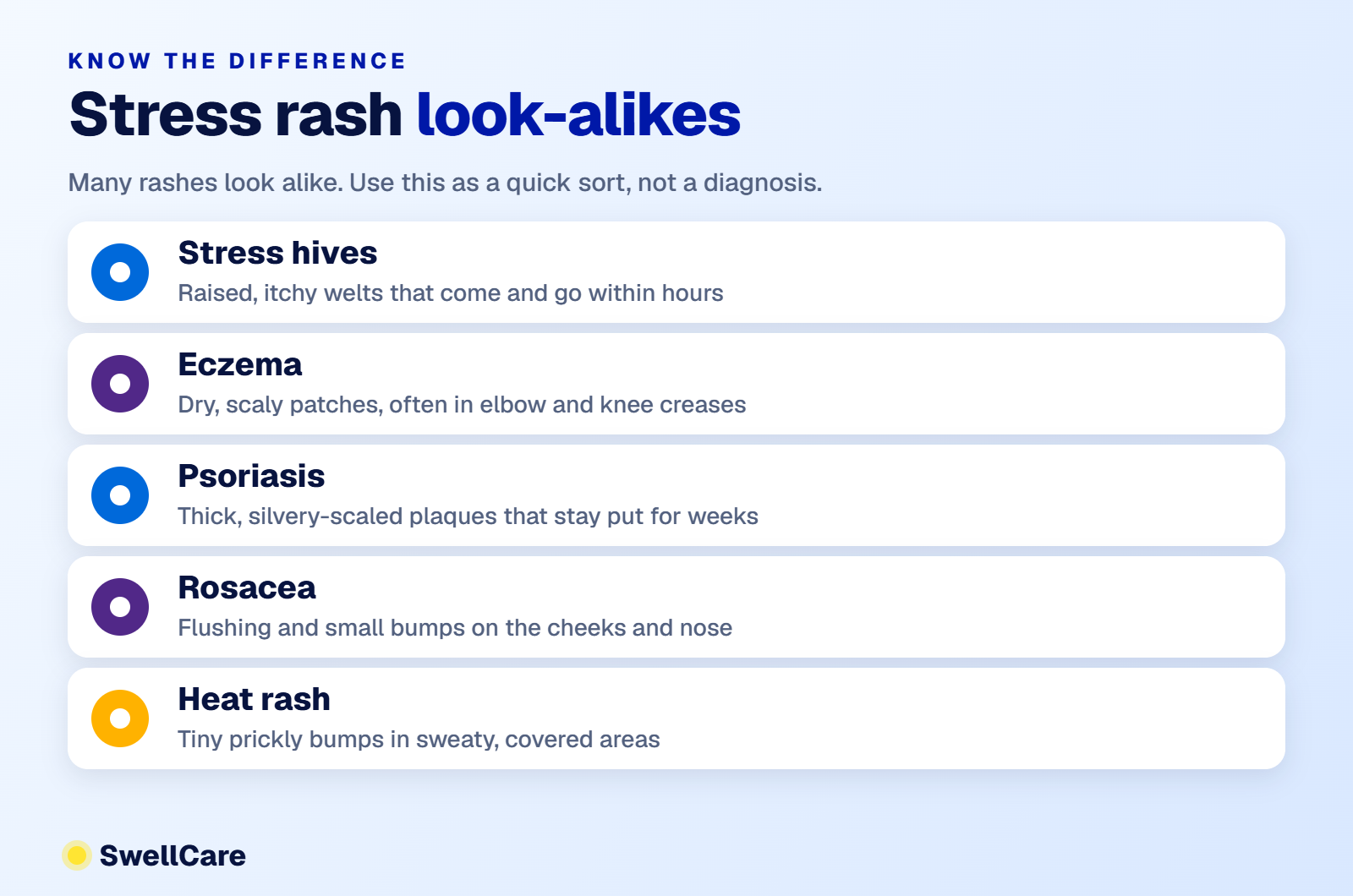
Heat rash and contact dermatitis are the two most often mistaken for stress rashes. A new laundry detergent, a nickel watch or a hot gym session can cause either one. One more lookalike matters most: an allergic reaction. If the rash arrives within minutes of a new food, medicine or insect sting, treat it as an allergy until proven otherwise. Stress rashes tend to follow a stressful stretch instead, and you may be able to point to the week it started.
How long does a stress rash last?
Usually not long. Many stress rashes clear in a day or two, and most rashes of this type leave no marks, though the outbreak can come in waves and return a few weeks later. Hives that last less than six weeks are called acute. Hives that keep returning past that point are called chronic, and they’re worth a proper workup with a dermatologist or allergist (AAAAI).
If your rash sticks around more than a few days despite treatment, don’t wait it out.
How to calm a stress rash at home
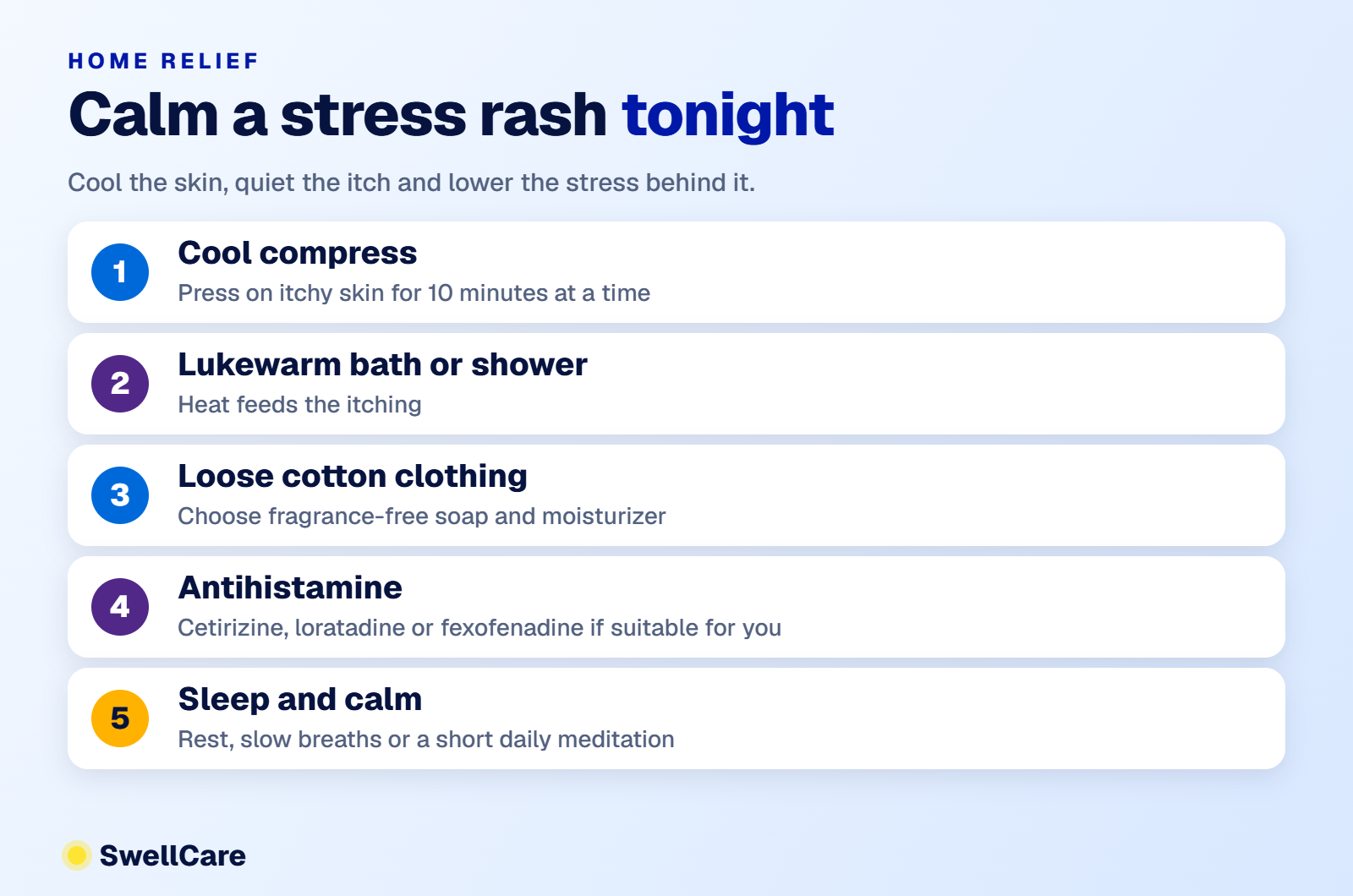
The goal of any stress rash treatment is simple: cool the skin, quiet the itch and lower the stress behind it. Most people can start tonight. Stronger antihistamines are an option if the basics don’t work.
Start with your skin. Press a cool compress on the itchy skin for 10 minutes at a time. Take a short, lukewarm shower, not a long hot one, because heat feeds the itching. A lukewarm oatmeal bath soothes many people, and colloidal oatmeal products work well if you don’t want to grind your own. Pick fragrance-free soap and moisturizer, and wear loose cotton.
Next, think medicine. Over-the-counter antihistamines such as cetirizine, loratadine or fexofenadine can ease the itch and the swelling. A pharmacist can tell you which of these antihistamines suits you, especially if you take other medicines. Prescription antihistamines may be the next step when the store-bought kind falls short, and a clinician can advise on that. Cleveland Clinic also advises skipping aspirin and ibuprofen during a flare, since they can sometimes trigger hives. A hydrocortisone cream is generally not much help for true hives, so ask a pharmacist before relying on it.
Then go after the cause. Rest is the first lever, because a tired body reacts harder. A short daily meditation, a walk or a few slow breaths before bed can all lower the stress load. Even five minutes of guided meditation counts, and calming your anxiety calms your skin. Therapy or counseling is a real treatment option when anxiety is the engine behind repeated rashes.
Try not to scratch. It’s hard, we know. Keep nails short and cover the worst patch at night if you scratch in your sleep, since scratching makes rashes last longer.
When to see a doctor about a stress rash
Most stress rashes don’t need urgent treatment. Some rashes do.
Call 911 or go to the ER if hives come with trouble breathing, wheezing, throat tightness, fainting, or swelling of the lips, tongue or face. Those can signal anaphylaxis, a life-threatening reaction.
Get seen soon if any of these apply:
- The rash lasts more than a few days or keeps coming back
- You have a fever, pus, blisters or spreading redness
- The itching wrecks your sleep, night after night
- Over-the-counter treatment isn’t helping
- You just aren’t sure what it is, which is reason enough
A dermatologist can sort out the cause when a rash won’t behave, and a primary care clinician can start the work-up sooner.
Get a stress rash checked from home
Waiting days for an appointment while your skin itches is miserable, and stress rashes rarely wait politely. SwellCare offers clinician-led, non-emergency urgent care around the clock by video or chat, and rash is on our list of conditions we see. A clinician can review your symptoms, tell you what’s likely going on, and say whether you need in-person care. Prescriptions are never guaranteed.
Start with SwellCare urgent care and describe what’s bothering you. If a screen isn’t enough, we’ll say so and point you to in-person care. You can also browse conditions we treat or read how long poison ivy lasts if you suspect a plant instead.
Questions people ask about stress rashes
Can stress cause a rash suddenly?
Yes. A stressful event can release histamine. That can trigger hives within hours, sometimes sooner. The rash may show up on the neck, chest or arms and itch right away. Many stress rashes fade within a day or two, but new rashes can appear if the stress continues. Sudden swelling or breathing trouble is different and needs emergency care.
Can stress cause itchy skin without a rash?
It can. Stress and anxiety can make skin feel itchy, crawly or prickly even when nothing is visible. Dry skin, a new soap or an underlying condition can cause similar itching. If it lasts more than a week or two, keeps you awake or comes with other symptoms, have a clinician take a look.
Is a stress rash the same as an allergic reaction?
Not exactly. Both can produce hives, and both involve histamine, but the trigger differs. A stress rash follows emotional or physical strain, and these rashes rarely start within minutes of contact with something new. An allergic reaction follows contact with an allergen such as a food, medicine or sting. Allergic reactions can turn serious fast, so treat any breathing trouble or facial swelling as an emergency.
Can chronic stress cause recurring rashes?
Yes. Ongoing stress keeps your body’s alarm switched on, so rashes can return in waves or flare again with eczema, psoriasis or rosacea. Managing sleep and stress helps, and a clinician can rule out other causes. Hives that keep coming back for more than six weeks deserve a dermatology or allergy evaluation.
How do you get rid of a stress rash fast?
Cool the skin with a compress, take a lukewarm shower, and use an over-the-counter antihistamine if it’s right for you. Wear loose clothing and avoid scratching. Treat the cause too: sleep, movement and calming habits help. If the rash lingers or spreads, get it checked.
Trusted references
Public-health, research, and medical-society resources related to this guide.