You’ve had a stuffy nose for three days. Now there’s a cough that won’t let up, and last night you heard a faint whistle in your chest. Cold, or something else?
Here’s the blunt answer. RSV vs cold in adults is hard to call from symptoms alone, because respiratory syncytial virus (RSV) starts out looking like a cold. What separates them is how the illness unfolds: how deep the cough goes, whether your breathing changes, and who you are. A healthy 35-year-old usually gets RSV as a rough cold. A 72-year-old with asthma or COPD can end up in the hospital with it.
RSV vs cold in adults: the quick answer
No single symptom reliably tells these two apart, and the CDC says as much. Both bring a runny nose, a cough and tiredness. The differences show up in timing, breathing and risk.
| Common cold | RSV in adults | |
|---|---|---|
| How it starts | Sore throat and sneezing, then congestion | Symptoms arrive in stages, about 4 to 6 days after exposure |
| Core symptoms | Runny or stuffy nose, sneezing, sore throat, mild cough | Runny nose, cough, sometimes fever, wheezing, reduced appetite |
| Breathing | Usually unaffected beyond a blocked nose | Wheezing or shortness of breath can appear |
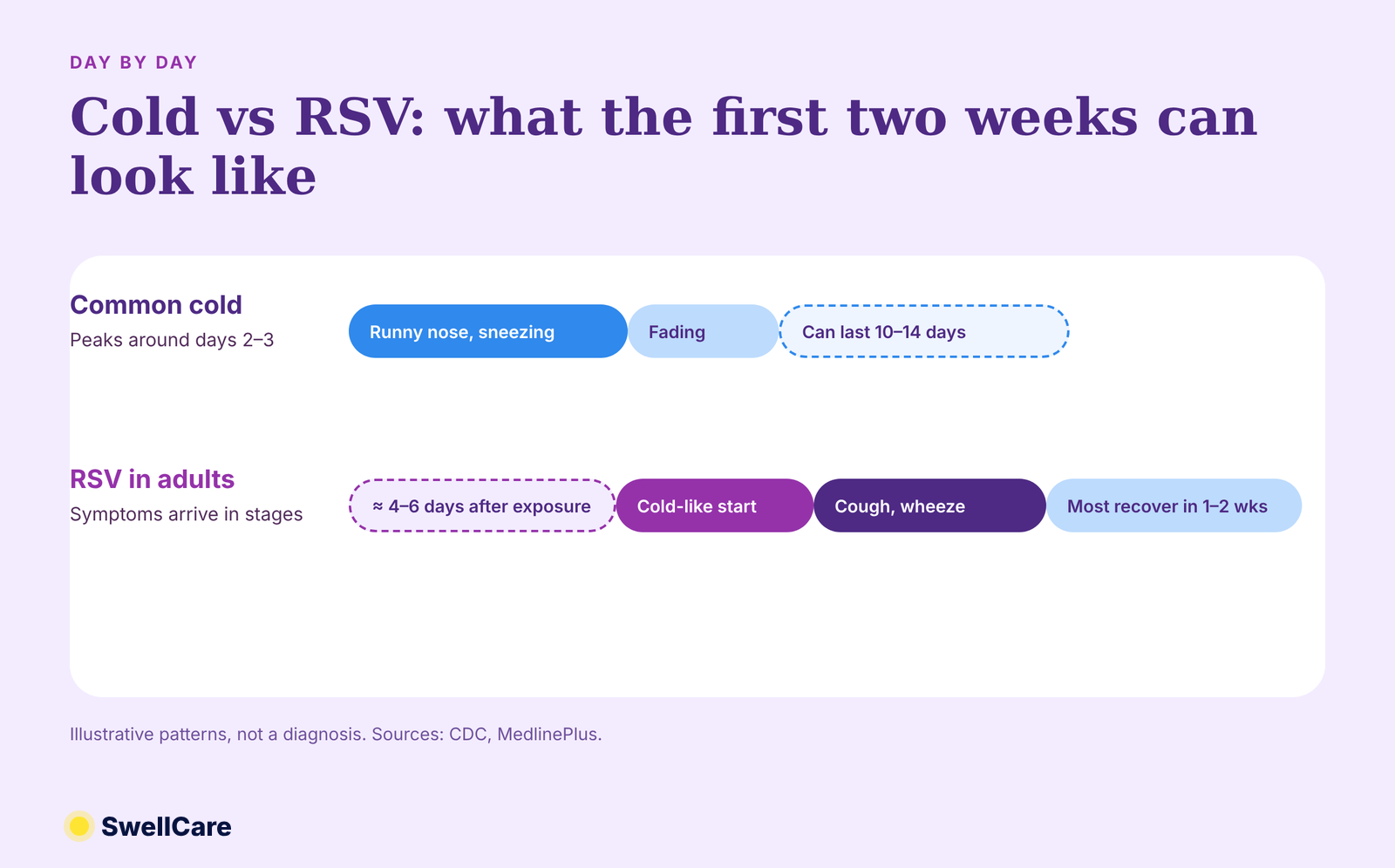
| How long | Often under a week, sometimes 10 to 14 days | Most people recover within 1 to 2 weeks |
| Complication risk | Low | Pneumonia, flare-ups of chronic lung disease, especially in older adults |
| Treatment | Rest, fluids, symptom relief | Supportive care; antivirals aren’t routinely used |
What a cold usually looks like
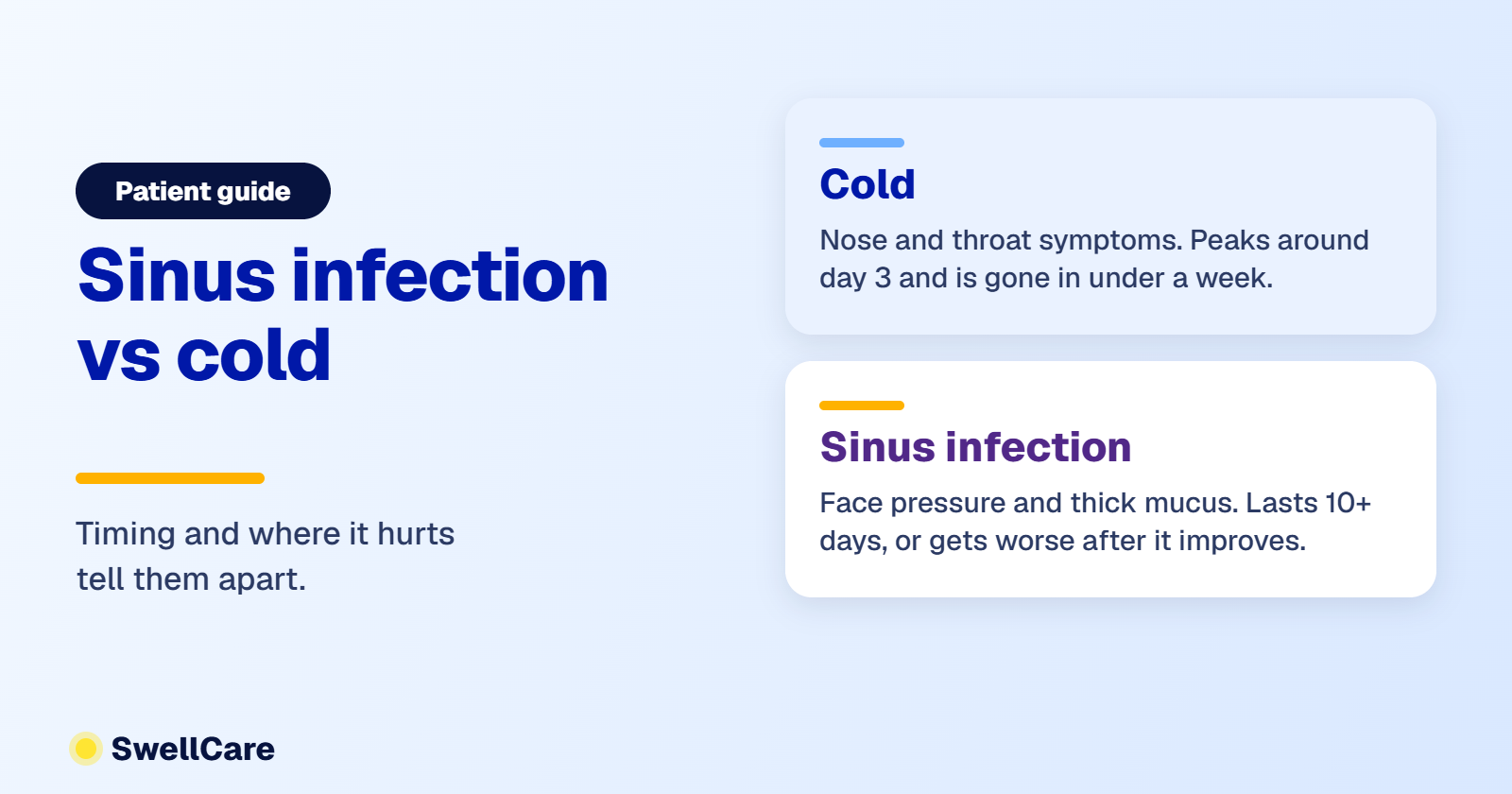
More than 200 viruses can cause a cold (see sinus infection vs cold if your face aches too), and rhinovirus is the usual suspect. You get a runny nose, congestion, sneezing, a scratchy sore throat and a mild cough. A headache, body aches and some fatigue are common. If a fever shows up at all, it tends to be low. Flu and COVID-19 can feel similar, but the CDC says they’re more likely to cause severe illness than a common cold.
Colds peak around day two or three, then fade. The CDC describes the common cold as usually gone in under a week, though MedlinePlus notes it can drag on for 10 to 14 days. Feeling lousy but steadily improving? That’s the classic common cold pattern.
What RSV feels like in adults
Early on, it’s a cold impersonator. Congestion, sneezing and a mild headache come first. Then a cough settles in, sometimes with fever, chills, fatigue, wheezing or less interest in food. CDC’s RSV symptom page says symptoms usually appear in stages rather than all at once, roughly four to six days after infection.
Many adults never get past the “bad cold” stage, and that’s the catch. Watch your symptoms over several days, not just one. You can pass respiratory syncytial virus to a grandparent or a coworker with a heart condition without ever feeling sick enough to stay home.
Five clues that point toward RSV
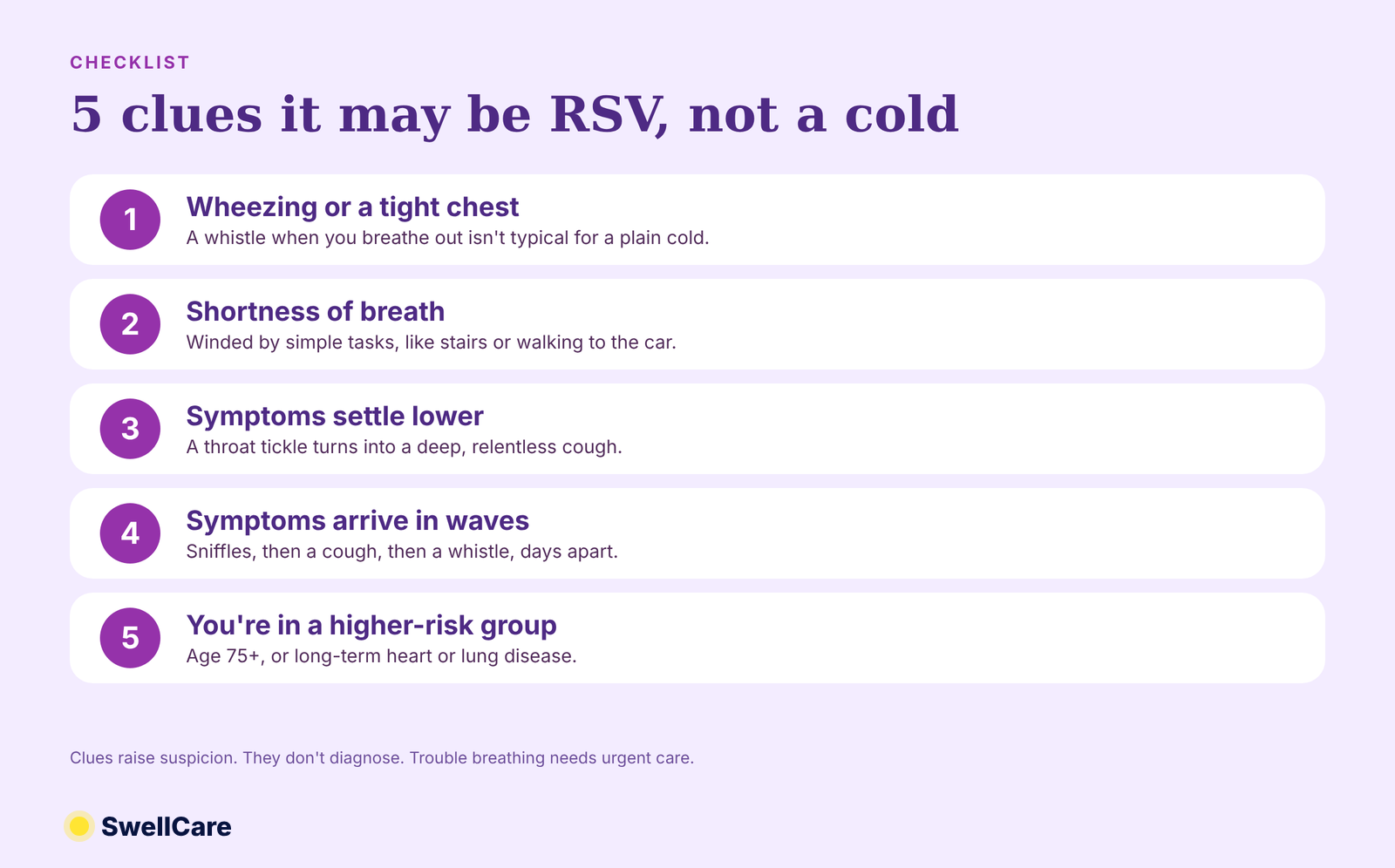
None of these diagnoses you. Together, they raise the odds.
- Wheezing or a tight chest. A whistle when you breathe out isn’t typical for a plain cold.
- Shortness of breath. Climbing one flight of stairs shouldn’t leave you winded because of a head cold.
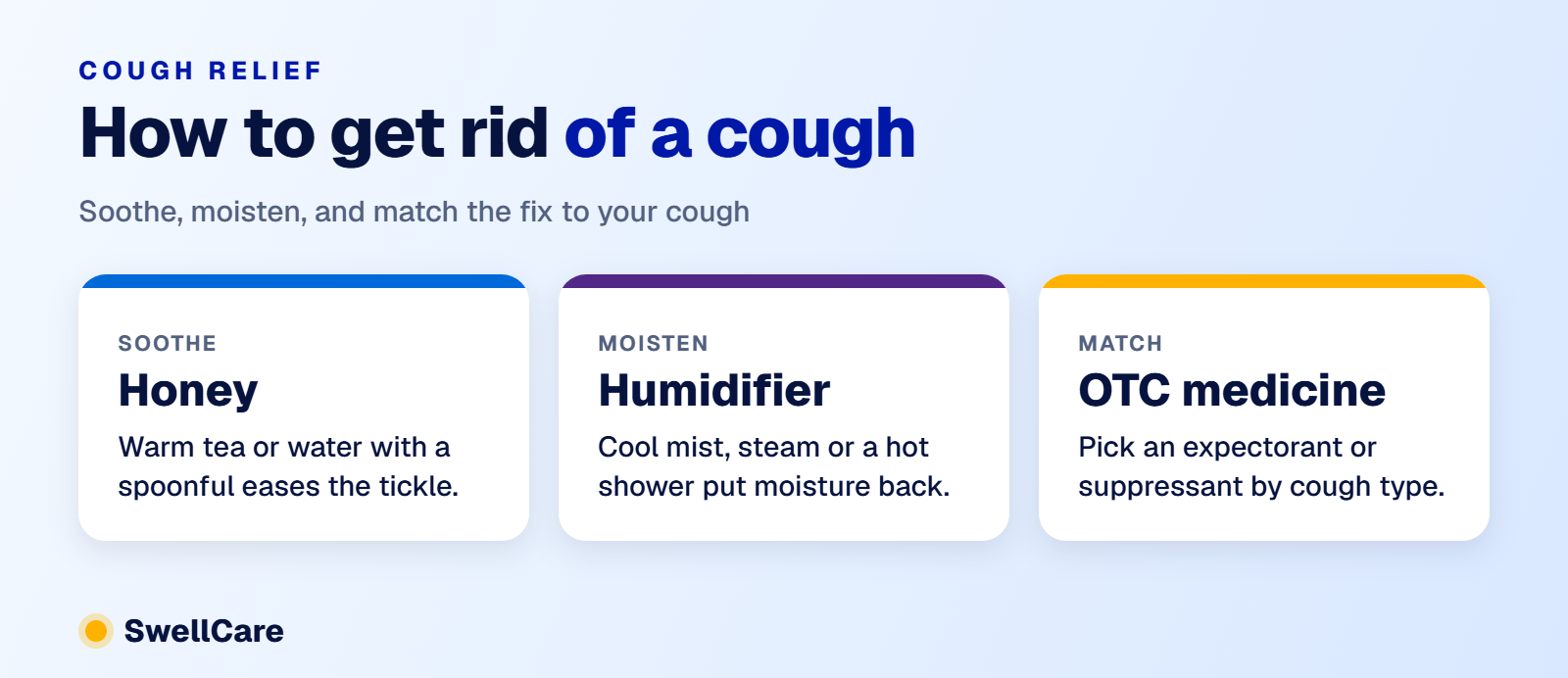
- Symptoms that settle lower. A tickle in your throat turns into something deep and relentless (here’s how to get rid of a cough).
- Symptoms that arrive in waves. Sniffles, then a hacking cough, then a whistle in your chest, a few days apart.
- You’re in a higher-risk group. Age 75 or older, or a long-term lung or heart condition, changes how seriously you should treat the same symptoms.
Why RSV is riskier for older adults
RSV can spread from the nose and throat into the lower airways, causing bronchiolitis or pneumonia. For a young, healthy adult that’s rare. For older adults it isn’t. The CDC estimates RSV causes roughly 110,000 to 180,000 hospitalizations a year among US adults 50 and over. Complications include pneumonia, a secondary infection and flare-ups of long-term conditions. Severe RSV is the one to watch each fall and winter.
Those most likely to get seriously ill include adults 75 and older, people with COPD, asthma, heart failure or other chronic heart and lung disease, and anyone who is immunocompromised. CDC’s adult RSV page also lists nursing home residents. In severe cases, hospital care can mean oxygen, fluids and treatment for a lung flare-up.
When to call a doctor or go to the ER
Call your doctor if you notice any of these, since a virus that lingers can turn into a secondary problem:
- Your fever lasts more than four days
- Symptoms haven’t improved after 10 days
- You feel better, then get worse again
- You’re showing signs of dehydration, like not drinking enough
- A long-term health condition is getting worse
If you’re in a higher-risk group, call early, even when symptoms feel mild. Flu and COVID-19 antivirals work best when started early, and your doctor can also check for RSV. Don’t wait for day four.
Go to the emergency room or call 911 for trouble breathing, persistent chest pain or pressure, new confusion, persistent dizziness, or severe weakness. These are warning signs from the CDC’s respiratory virus guidance, and they need medical attention right away. Severe symptoms are never a wait-and-see situation.
How to feel better at home
There’s no routine antiviral for RSV, so treatment is about comfort and watching for severe change. Rest. Drink plenty of fluids. Run a clean cool-mist humidifier, use saline spray, and suck on lozenges for a sore throat. Acetaminophen or ibuprofen can ease aches and fever, but check with a clinician first if you have heart disease, high blood pressure or kidney problems.
Watch the label on combination cold products. Many already contain a pain reliever, and doubling up is an easy way to overdose. Antibiotics won’t help a viral infection.
Stay home and keep your distance from others. You’re contagious for roughly three to eight days, and sometimes a day or two before symptoms start, according to the CDC on RSV transmission.
The RSV vaccine: who should get it
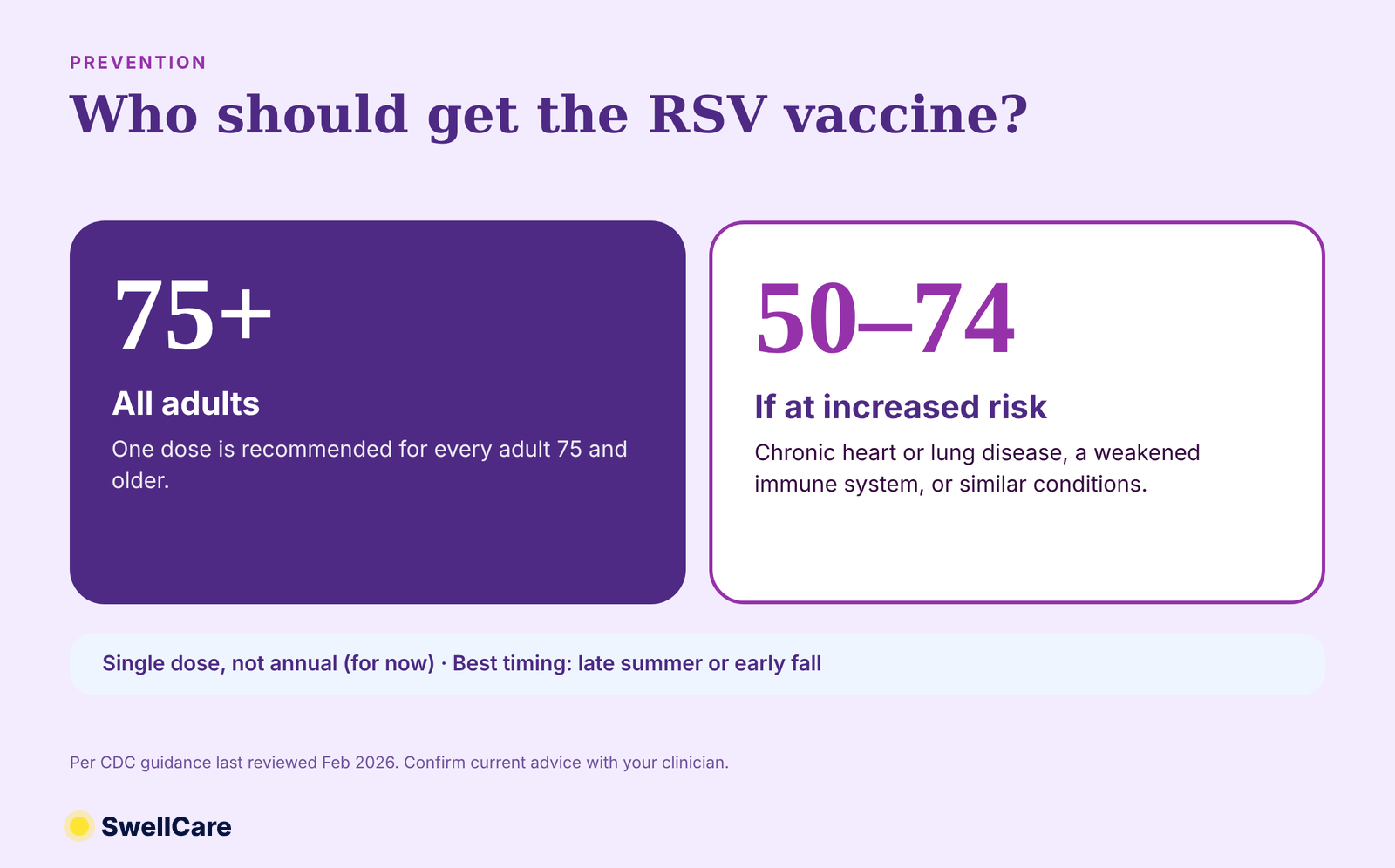
Prevention beats guessing, and the RSV vaccine is the best tool for older adults. Under CDC guidance on the RSV vaccine (last reviewed February 2026), a single RSV vaccine dose is recommended for all adults 75 and older, and for adults 50 to 74 who are at increased risk because of chronic heart or lung disease, a weakened immune system or similar conditions. Three vaccines are licensed, and the best timing is late summer or early fall, ahead of the RSV virus’s usual fall and winter surge. The goal is to lower your odds of severe illness and hospitalization.
The vaccine isn’t an annual shot, at least for now. Check the CDC adult RSV vaccine page for the latest advice, then ask your clinician where you fit.
Get a clear answer from a Swell clinician
Still unsure whether it’s RSV or a cold? That’s a fair place to be. A doctor can weigh your symptoms, your age and your health history, and tell you whether you need testing, a closer watch or an in-person visit.
Swell offers 24/7 clinician-led virtual care by chat or video. You start with a free screening, and a completed consultation is $45, with no membership. Start with Swell urgent care or see how it works. Swell isn’t emergency care, so call 911 for trouble breathing.
Questions people ask about RSV vs a cold
How long does RSV last in adults?
Most adults feel better within one to two weeks. A mild case can pass faster, and a cough sometimes hangs around after the rest of the illness has faded. If you’re not improving by day 10, or you get worse after feeling better, call your doctor.
Can you have RSV without a fever?
Yes. Fever can happen with RSV, but it isn’t guaranteed, and many adults have sniffles and a cough with little or no fever. Fatigue, chills and body aches may be the louder clues. That’s one reason RSV is easy to mistake for a cold. Pay more attention to breathing than to the thermometer.
How long is RSV contagious?
Most people are contagious for about three to eight days. It can start spreading a day or two before you feel anything at all, which is exactly why it travels so easily. People who are immunocompromised can shed the virus for four weeks or longer, so they may need to take extra care around others.
Is there a test that tells RSV from a cold?
Yes, but you often don’t need one. Lab tests such as RT-PCR are highly sensitive, while rapid antigen tests are quicker but generally less sensitive. A clinician may order an RSV test if the result would change your care, for example if you’re older, very sick or have a lung condition.
What are the first signs of RSV?
The first signs of RSV look just like a cold: a runny nose, congestion, sneezing and a mild cough. Watch for what comes next, and call a doctor for any medical attention you’re unsure about. A whistle in your chest, breathlessness, a worsening cough or symptoms that return after improving suggest it’s time to see a doctor.
Trusted references
Public-health, research, and medical-society resources related to this guide.