It’s week two. The sniffles are long gone, but you’re still coughing, you’re wiped out by mid-afternoon, and a low temperature keeps coming back. You’ve kept going to work, because you don’t feel sick enough to stop.
That pattern is exactly why walking pneumonia has its name. Walking pneumonia symptoms in adults are usually light enough to function through, and they often look like a chest cold that overstays its welcome. Most cases are mild. Some aren’t, and a few signs mean you should see a doctor soon.
Walking pneumonia symptoms in adults: what they actually look like
Walking pneumonia is a milder respiratory infection that settles in the lungs. Doctors often call it atypical pneumonia. The most common cause is bacteria called Mycoplasma pneumoniae, and the CDC says it usually shows up as a chest cold, with pneumonia being the less common outcome.
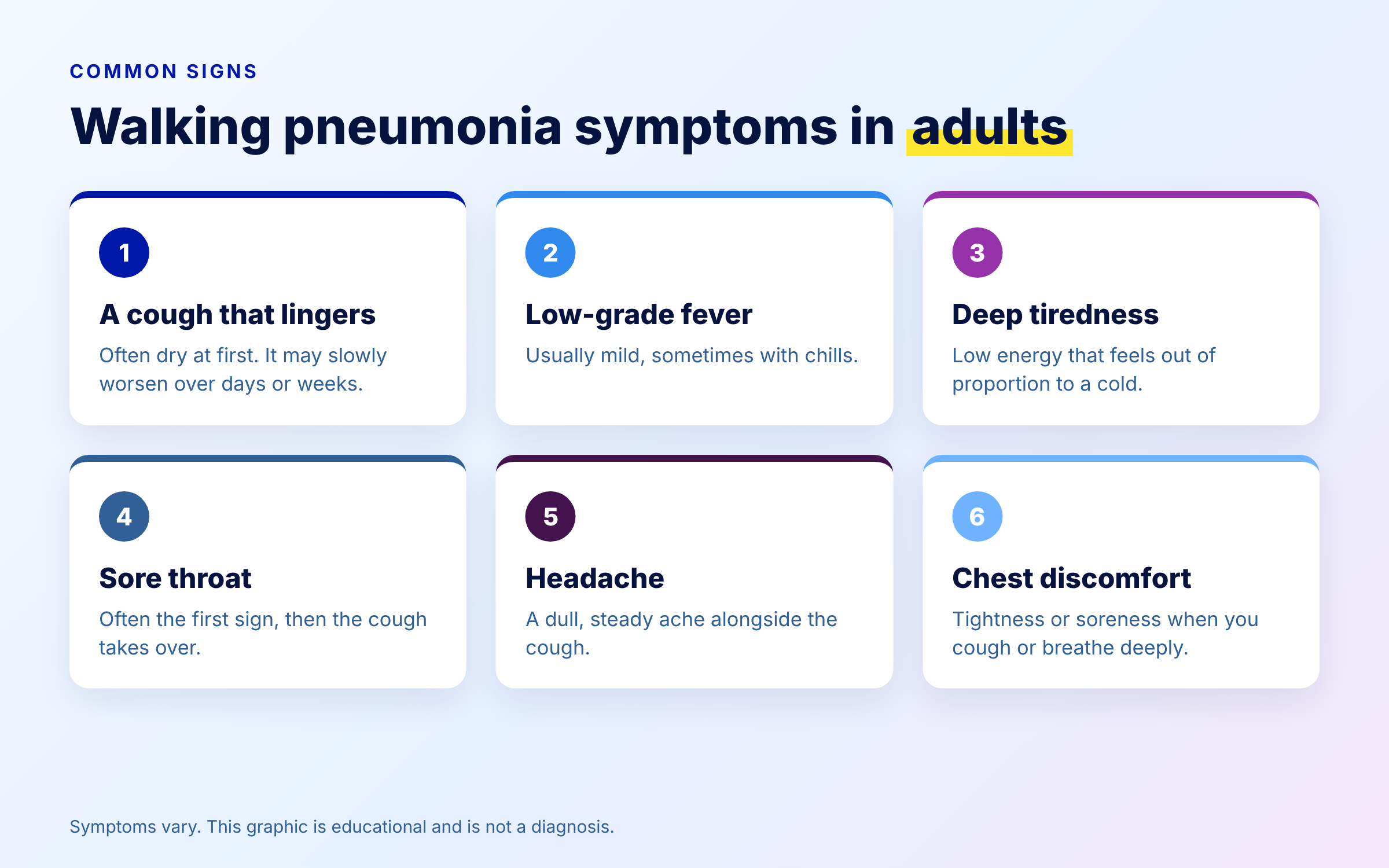
Beyond the cough, many people also get a headache and a sore throat. Here’s what adults tend to notice:
| Symptom | What it feels like |
|---|---|
| Cough | Starts dry and nagging, then slowly worsens over days |
| Low-grade fever | Mild, sometimes with chills, easy to brush off |
| Fatigue | Tired in a way that feels bigger than the rest of the illness |
| Sore throat | Often the first sign, before the cough takes over |
| Headache | A dull ache that rides along with everything else |
| Chest discomfort | Soreness or tightness when you breathe deeply or cough |
The CDC notes that people with this infection often seem better than you’d expect for someone with a lung infection. That’s where “walking” comes from. You can still get to the grocery store. You just feel flat.
The cough that changes the story
Pay attention to this one. Colds tend to bring a wet hack that fades as the congestion clears. With walking pneumonia, the dry cough often builds instead, and it can linger for weeks after the fever is gone. The CDC lists shortness of breath among the pneumonia symptoms, too. The American Lung Association adds that this type of pneumonia can come with a severe cough, and that coughing up greenish, yellow or bloody mucus is a reason to get checked.
Cold or walking pneumonia? How to tell the difference
You can’t diagnose this at home, and even clinicians often can’t tell by sound alone. But the trajectory gives clues. Most colds ease within a week or so. Walking pneumonia builds slowly and hangs on.
| Common cold | Walking pneumonia | |
|---|---|---|
| Onset | Quick, often with a runny nose | Gradual, often over several days |
| Cough | Wet, improves as congestion clears | Dry and nagging, may get worse |
| Fever | Rare or very mild | Low-grade, may come and go |
| Energy | Dips, then recovers | Stays low, can feel draining |
| Trajectory | Peaks early, then fades | Lingers or slowly worsens |
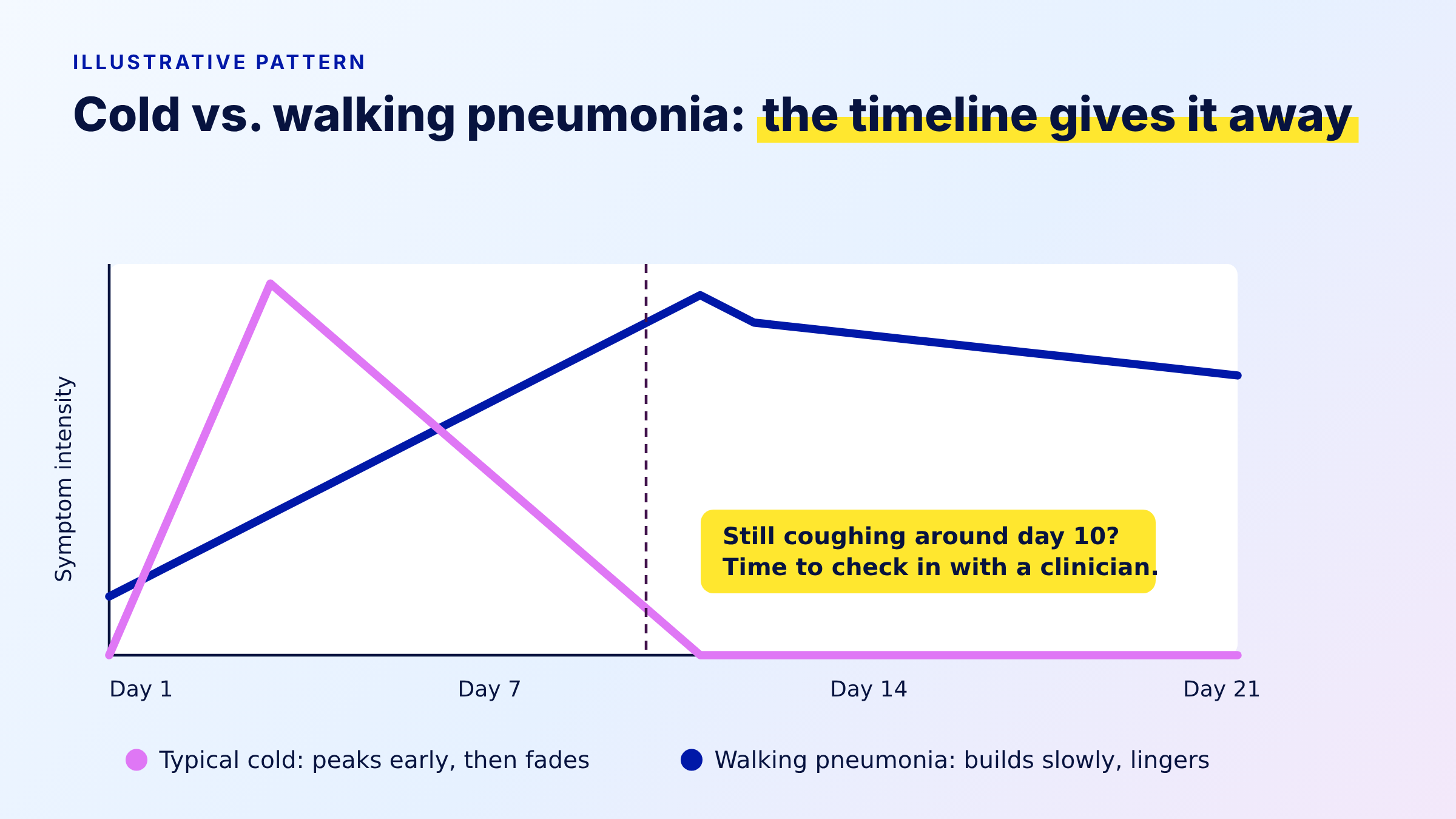
If you’re still coughing around day ten, or you were improving and then got worse, treat that as your cue to check in with a doctor. The same goes for symptoms that look like flu or COVID-19 but don’t behave like them. Those can overlap, and a quick assessment sorts it out faster than guessing.
What causes walking pneumonia (and why it’s called “walking”)
Several germs can cause atypical pneumonia, including bacteria such as Legionella and some viruses, according to Cleveland Clinic. In adults, the usual suspect is that same bacteria. The CDC lists it as the second most common bacterial cause of pneumonia in adults who need hospital care.
Mycoplasma spreads through droplets when someone coughs or sneezes. Symptoms can appear one to four weeks after exposure, which makes it hard to say where you picked it up. Some people carry the infection and never feel sick. And since antibiotics only work on bacterial infections, a clinician wants to know what you’re dealing with.
Who is more likely to get walking pneumonia?
Anyone can. But MedlinePlus lists several risk factors for pneumonia in general that matter for adults:
- Age 65 or older
- Smoking or heavy alcohol use
- Lung conditions such as asthma or COPD
- A weakened immune system
- Chronic conditions like diabetes, heart failure, or kidney or liver disease
- A recent cold or flu
Older adults and people with a weakened immune system can have fewer symptoms, or even a lower-than-normal temperature, so a “mild” presentation doesn’t always mean a mild infection.
Red flags: when it’s more than walking pneumonia
Most people with walking pneumonia recover without trouble. Rare complications include asthma flares, serious pneumonia and problems like encephalitis or hemolytic anemia, per the CDC. You don’t need to memorize that list. You need to know which symptoms change the plan.
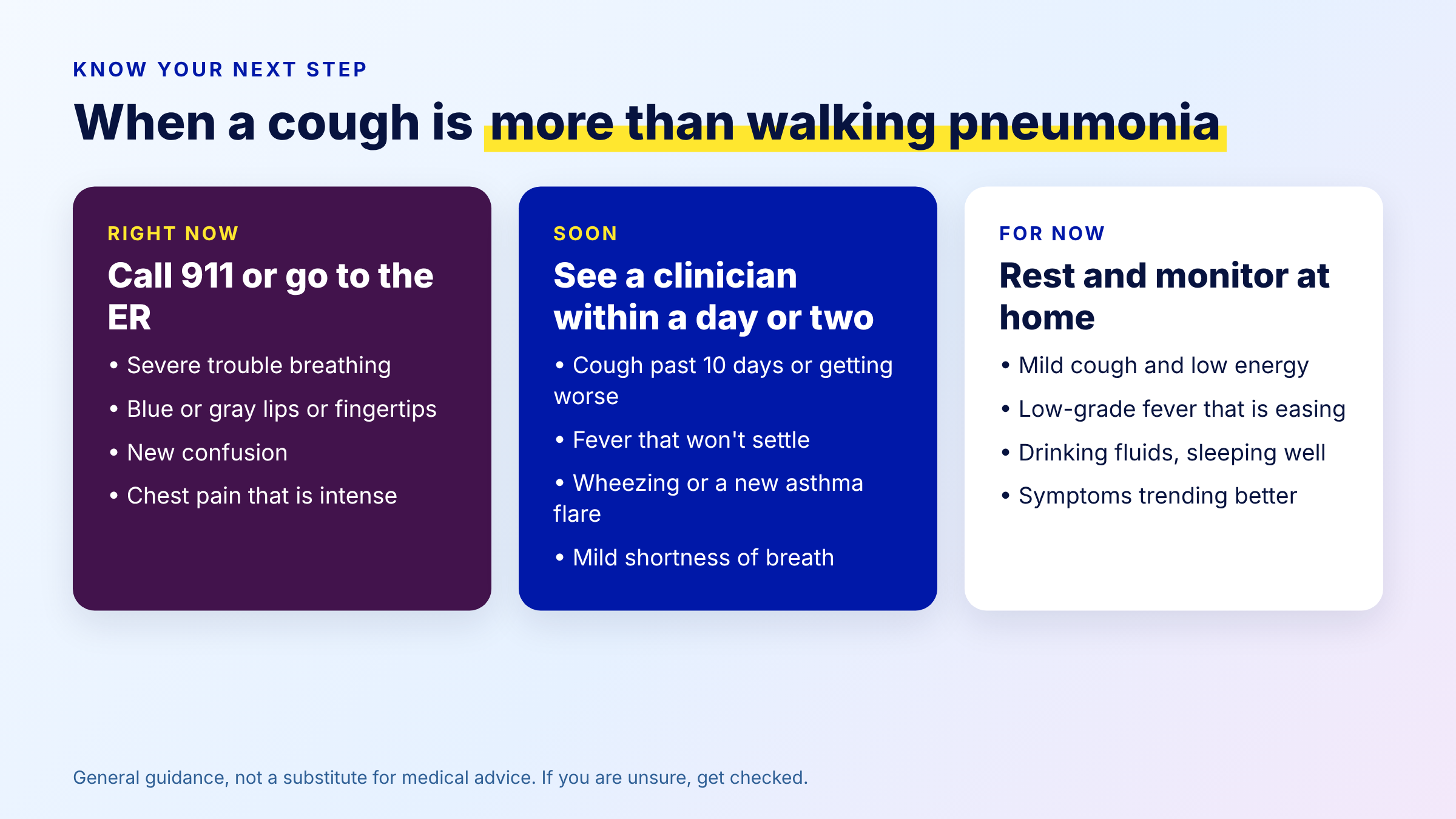
Go to the ER or call 911 if
- You have severe shortness of breath, or can’t speak in full sentences
- Your lips or fingertips look blue or gray
- You’re suddenly confused, or someone has trouble waking you
- You have intense chest pain
The American Lung Association lists difficulty breathing, bluish lips or fingertips, and chest pain among the signs to act on immediately.
See a doctor within a day or two if
- You’ve been coughing for more than ten days, or it keeps getting worse
- A fever won’t settle
- You’re wheezing, or your asthma is flaring
- You have mild shortness of breath doing normal things
When in doubt, get checked. An hour of your time is cheap compared with weeks of coughing through something treatable.
How walking pneumonia is diagnosed and treated
There’s no quick test for a diagnosis. The CDC says clinicians usually start with an exam and your history, and may order a chest X-ray of your lungs if pneumonia is suspected. A proper diagnosis also helps rule out flu, COVID-19 and other causes. Many don’t test for the specific germ in mild cases. When they do, it’s typically a nose or throat swab. The American Lung Association also describes listening to your lungs, checking your oxygen level with pulse oximetry, and sometimes blood tests.
Treatment depends on how sick you are. Many mild infections clear without medicine, but clinicians commonly treat this bacterial pneumonia with antibiotics. Ask whether treatment makes sense for you. Cleveland Clinic names macrolides, tetracyclines and fluoroquinolones among the options. The CDC warns that some strains resist certain antibiotics, so don’t pressure anyone for a prescription, and don’t stop one early.
Home treatment still matters:
- Rest, even if you “feel fine.”
- Drink plenty of fluids. Water, broth and tea all count, and fluids thin mucus.
- Use acetaminophen or ibuprofen for fever and aches, if they’re safe for you.
- Skip smoke and vapor while your lungs heal.
Mayo Clinic describes it as a bacterial infection that usually doesn’t call for bed rest or a hospital stay. That’s reassuring. It’s also not a reason to push through a full workweek.
How long does it last, and is it contagious?
Recovery is slow, so be ready for a long tail. The CDC says symptoms can last several weeks. MedlinePlus puts pneumonia recovery at about a week for some people and a month or more for others. The lingering hack and tiredness are the last to leave.
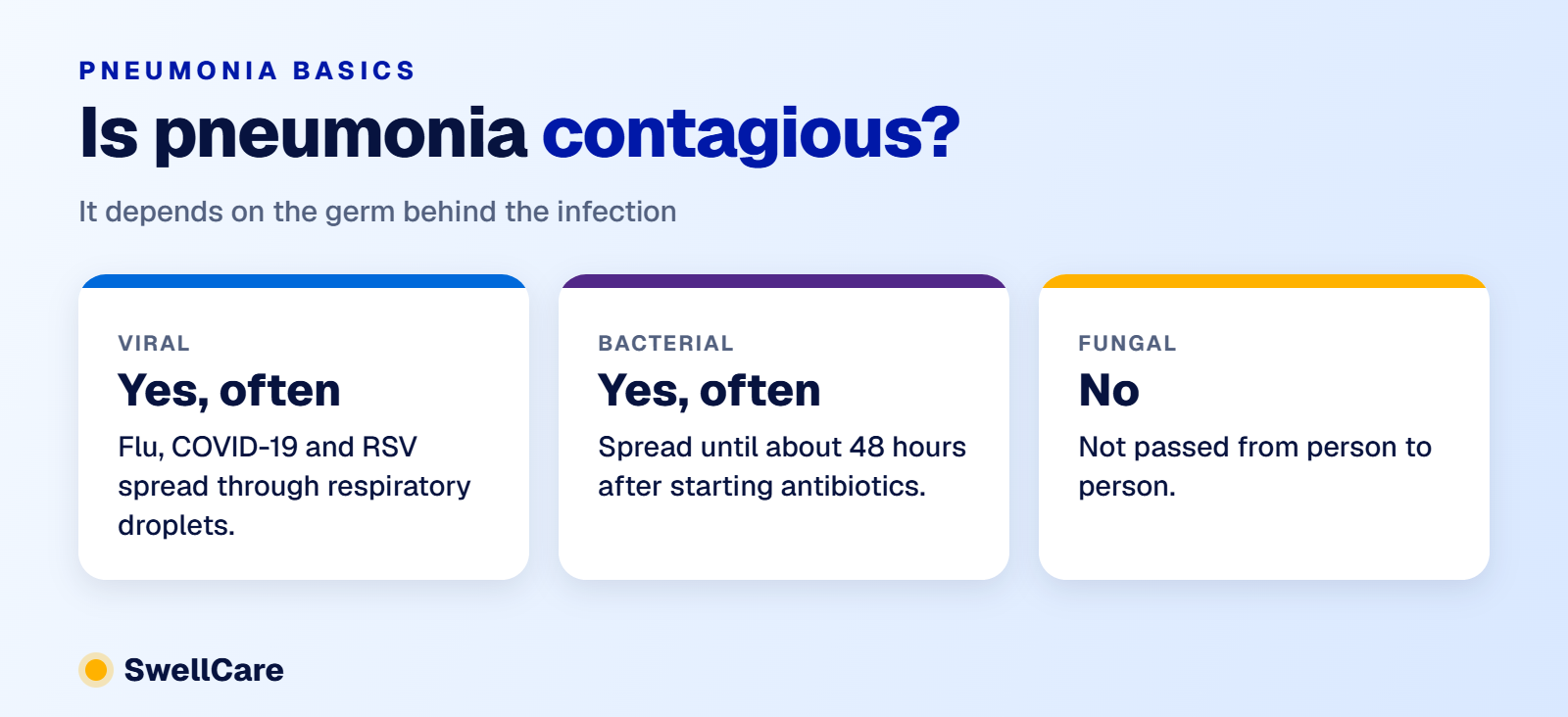
And yes, it’s contagious. It spreads by coughing and sneezing, so stay home while you’re running a temperature, cover coughs, and wash your hands. You’re likely to be most contagious before you realize it’s more than a cold.
How to protect yourself and the people around you
Prevention is imperfect, but a few habits cut your odds and protect others:
- Wash your hands with soap and water, and cover your mouth and nose around others.
- Stay home when you’re sick.
- Don’t smoke.
- Ask your doctor about vaccinations. The pneumococcal and flu vaccines lower your risk of other forms of pneumonia, though they don’t prevent walking pneumonia itself.
Not sure if your cough needs a clinician? Start here
If you’re reading about walking pneumonia symptoms in adults because your own cough won’t quit, don’t wait for it to get worse. A licensed Swell clinician can review what’s going on, explain what can be handled online, and tell you which treatment or next step makes sense, including whether you need urgent care or an in-person exam and chest X-ray. Care is available around the clock, with a free screening first. If you have trouble breathing, call 911 or go to the nearest emergency room instead.
Talk to a Swell clinician about your symptoms
Questions people ask about walking pneumonia
What are the first signs of walking pneumonia?
Usually a sore throat, fatigue and a mild fever, followed by a dry cough that slowly worsens over several days. Because it feels like a cold at first, many people don’t think twice until the symptoms hang around past a week or so.
Does walking pneumonia go away on its own?
Some mild cases do. The CDC says most people recover without medicine, but clinicians routinely treat this infection with antibiotics. You can’t tell at home which camp you’re in, so get a doctor’s opinion if symptoms last beyond ten days or worsen.
Is walking pneumonia contagious?
Yes. It spreads through droplets from coughing and sneezing, and symptoms can take one to four weeks to appear after exposure. Handwashing, covering your mouth and staying home while feverish help protect the people around you.
Can you get walking pneumonia more than once?
You can. Having it once doesn’t guarantee lasting protection, and other germs can cause pneumonia too. If a familiar lingering cough returns, treat it as new and get it checked.
What happens if walking pneumonia goes untreated?
Often it resolves slowly by itself. But complications are possible, including serious pneumonia and, rarely, problems such as encephalitis or hemolytic anemia, according to the CDC. Older adults and people with chronic conditions face higher risk.
How long does walking pneumonia last?
Symptoms can last several weeks, per the CDC. Recovery from the fever and the worst of the illness is often quicker, while the lingering hack and tiredness can last a month or more. If you’re getting worse instead of better, call your doctor.
Trusted references
Public-health, research, and medical-society resources related to this guide.