You’ve got an itchy, red patch on your hands. Or maybe it’s the same spot on your elbow that flares up every winter. Is it something you touched, or something your body is doing on its own?
Contact dermatitis vs eczema: the short answer
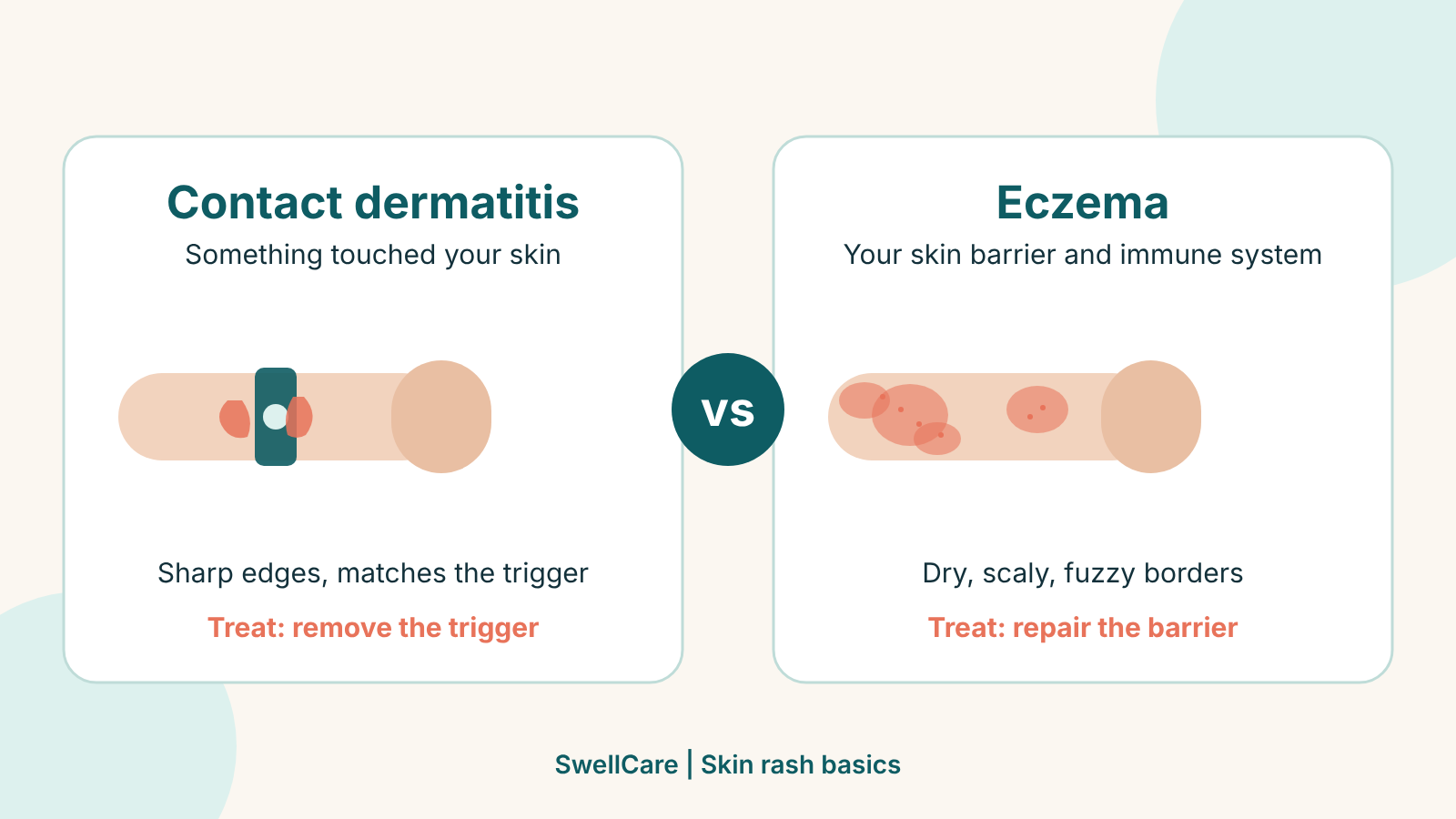
Contact dermatitis vs eczema comes down to one question: what’s setting off your skin? Contact dermatitis is a rash caused by something that touched you, like nickel or poison ivy. Eczema, which usually means atopic dermatitis, starts from the inside. A genetic tendency toward a weak skin barrier meets an overactive immune system.
Both itch. The symptoms overlap enough to fool almost everyone. Doctors even file contact dermatitis under the wider eczema family, alongside seborrheic dermatitis. But the fix differs, so it pays to know which one you’re dealing with.
What is contact dermatitis?
Contact dermatitis is a skin reaction to something your skin touched. It comes in two forms.
Irritant contact dermatitis is the common one. Soap, detergents and constant hand-washing wear the skin down until inflammation sets in. Any irritant can do it if the exposure is harsh or frequent enough, and the symptoms look a lot like eczema: itching, redness, dry skin and sometimes cracks.
Allergic contact dermatitis is pickier. Your immune system learns to react to one specific allergen, such as nickel in a belt buckle or the oil in poison ivy, and then it reacts every time. The American Academy of Dermatology says more than 15,000 substances can set off an allergic reaction on the skin.
The rash usually shows up hours or days after contact and stays where the substance touched. It isn’t contagious.
What is eczema?
When people say eczema, they almost always mean atopic dermatitis, the most common type. The National Eczema Association estimates that about 16.5 million US adults and 9.6 million children have it. It often begins in the first months of life, and it tends to run in families that also have asthma or hay fever.
Some kids outgrow it. Plenty don’t. Eczema is chronic, with long quiet spells and sudden flare-ups.
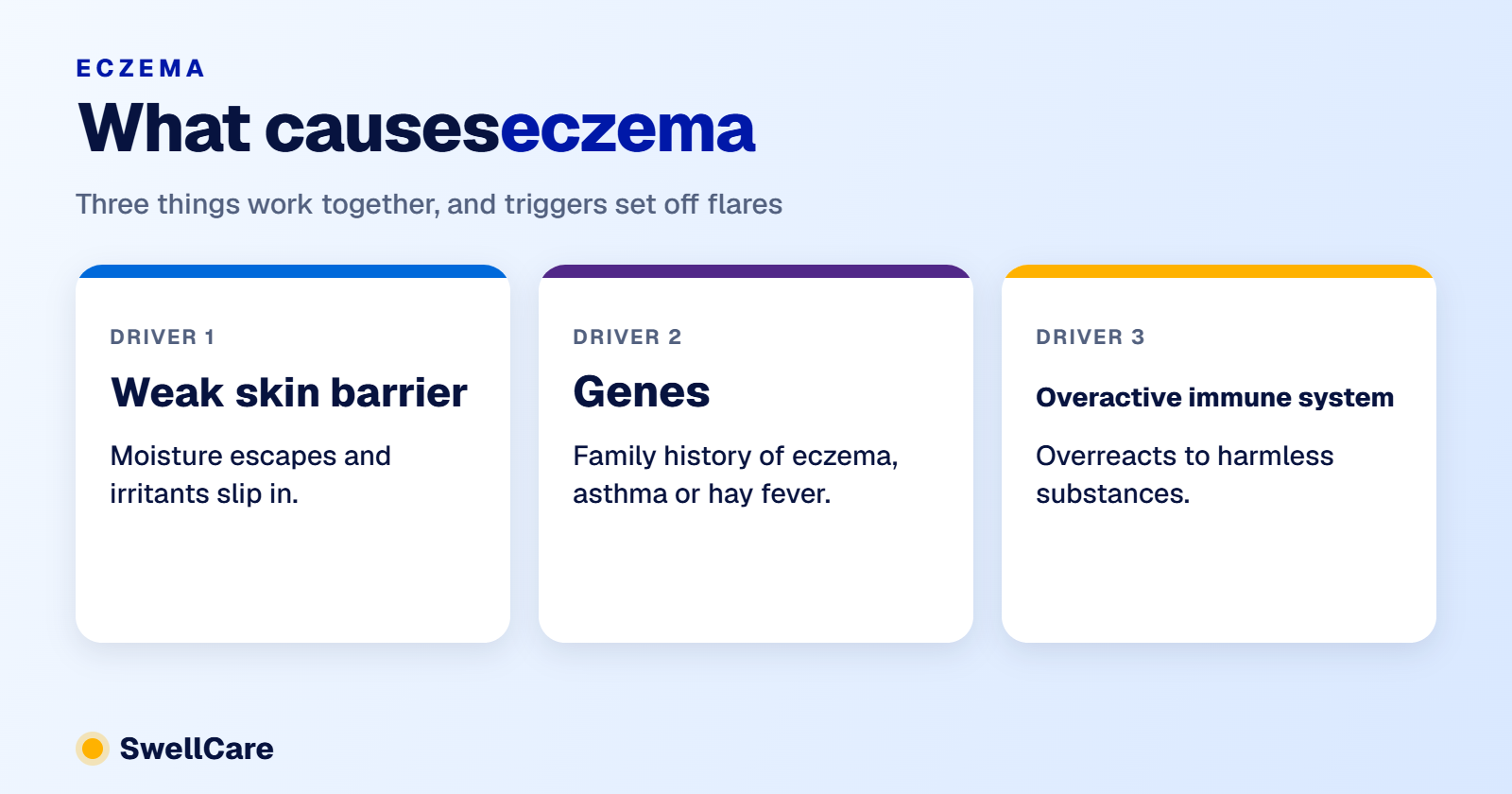
Many people with atopic dermatitis carry a genetic change that lowers filaggrin, a protein that holds the skin barrier together. With a weak skin barrier, moisture escapes and irritants get in. The result is dry skin and itching, and the immune system answers with chronic inflammation.
What causes each one?
Contact dermatitis has an outside cause. Find the allergen or irritant, remove it, and the inflammation can settle. That’s the whole story, which is why the detective work matters.
Eczema has a built-in tendency plus irritants and other things that set off flare-ups. Common ones include dry air and sweat. Rough fabrics, harsh detergents, scented products and stress count too. Emotional stress alone can make the itching worse, and scratching feeds more inflammation. Two people can use the same laundry soap, and only the one with a fragile skin barrier flares.
Fragrance deserves a special mention. It sits on both lists. It irritates some people, provokes a true allergy in others, and aggravates eczema in many.
How each rash looks and where it shows up
The location often gives it away.
| Contact dermatitis | Eczema (atopic dermatitis) | |
|---|---|---|
| Main cause | Skin touched an irritant or allergen | Genes, a leaky barrier and the immune system |
| Where | Wherever the trigger touched: hands, eyelids, wrists under a watch, neck | Inner elbows, backs of knees, face, though it can spread anywhere |
| Looks like | Red or darker patches with sharp edges, sometimes blisters or weeping | Dry, scaly, sometimes thickened patches with fuzzy borders |
| Feels like | Itching or burning | Intense itching, often worse at night |
| Timing | Hours to days after contact, clears when the trigger is gone | Chronic, with flare-ups that often began in childhood |
| Family history | Not usually | Often, with asthma or hay fever |
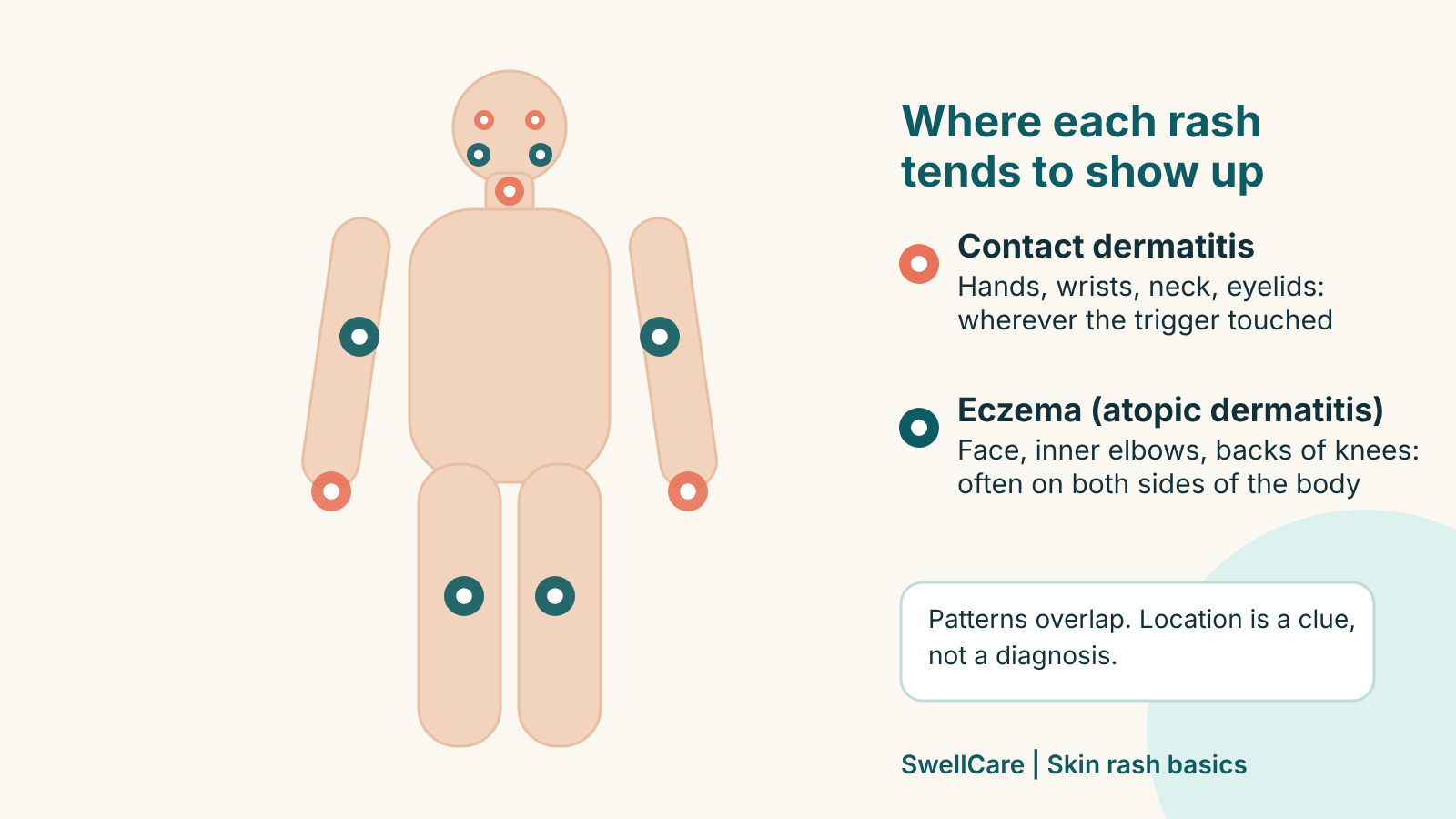
Skin tone changes what you see. On brown or Black skin, redness can be hard to spot, and Mayo Clinic notes that contact dermatitis can be missed for that reason. Look for patches that look darker brown, purple or gray, and feel for texture changes.
How to tell them apart at home
You can’t diagnose yourself with certainty, but these four steps help you make sense of your symptoms.
- Trace the shape. A rash that matches the outline of a watch band, glove or earring points to contact dermatitis.
- Check the calendar. Did you start a new soap, hair dye, job or piece of jewelry in the past few days?
- Think back. Childhood eczema, asthma or allergies in you or your family leans toward atopic dermatitis.
- Try a clean break. Pause the suspect product for a couple of weeks. If the rash fades, that’s a strong clue. If it doesn’t, ask a dermatologist about a patch test.
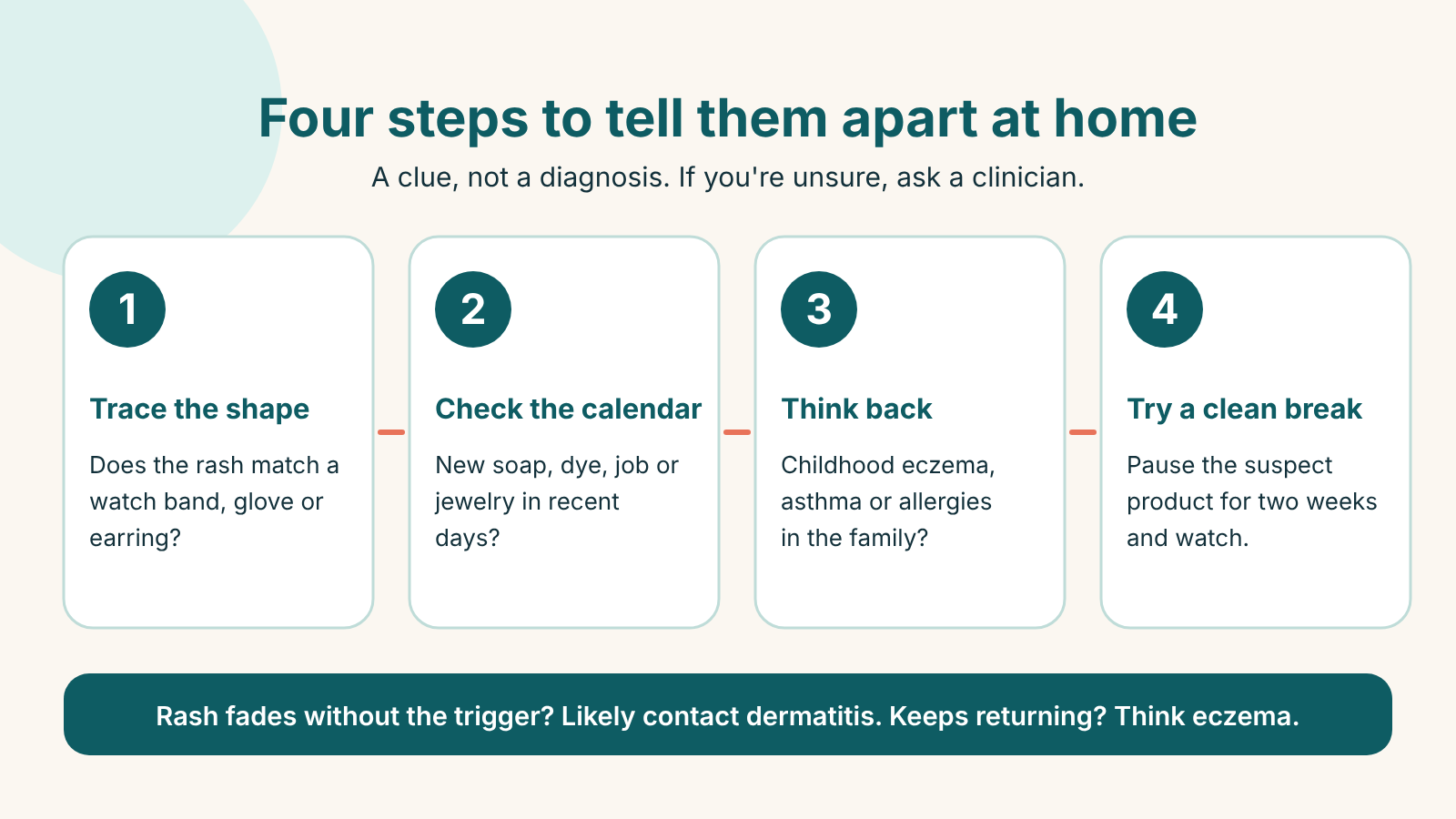
If steps point both ways, that’s normal. Keep reading.
Contact dermatitis vs eczema treatment
The best treatment for contact dermatitis is removing the cause. Everything else just eases symptoms while the skin heals.
For contact dermatitis, that means:
- Cool compresses for 15 to 30 minutes, a few times a day.
- Over-the-counter 1% hydrocortisone or calamine lotion on itchy patches.
- Help from a dermatologist if the cause stays a mystery. A patch test tapes small amounts of suspected allergens to your back for two to three days to see which one reacts.
- Prescription steroid cream if home care isn’t enough.
Eczema treatment works on the barrier, the inflammation and the symptoms between flare-ups:
- Thick moisturizer once or twice a day to soothe dry skin, applied right after a short lukewarm bath. Creams and ointments beat watery lotions, according to the NIH.
- Mild, fragrance-free cleansers; moisturizer again after every hand wash.
- Prescription topical corticosteroid during flares, or a non-steroid calcineurin inhibitor.
- For severe cases, newer options like biologic injections.
Notice the difference. Treatment here is mostly about taking something away. Eczema treatment is mostly about adding something daily.
Can you have both at once?
Yes, and it’s more common than people think. A damaged barrier lets allergens in easily, so people with eczema are more likely to develop allergic contact dermatitis on top of it. Irritant contact dermatitis is common too, since dry, cracked skin reacts to ordinary soaps. If a flare suddenly stops responding to your usual routine, suspect something new.
Another look-alike is seborrheic dermatitis, the greasy, flaky kind that favors the scalp and sides of the nose. It’s another form of dermatitis, and it can sit alongside either condition.
When to see a doctor
Mild symptoms often calm down once you avoid the cause and look after your skin. Get checked if:
- The skin is oozing, crusting or painful, or feels warm to the touch. Those can mean infection.
- The rash is on your face, near your eyes or covers a large area.
- Itching keeps wrecking your sleep, night after night.
- Two weeks of avoiding the likely trigger changes nothing.
- It turns chronic and keeps coming back, whatever you try.
Call 911 for swelling of the lips or face, or any trouble breathing.
Get your rash looked at today
Clinicians can look at the pattern, ask the right questions about your products and routine, and suggest a plan. Swell offers clinician-led virtual care 24/7. Per swellcare.health, the first screening is free, and a completed consultation is $45 with no membership.
Virtual care can’t do a patch test. It can help you work out whether you need one, and what to do in the meantime.
Questions people ask about contact dermatitis vs eczema
Is contact dermatitis a type of eczema?
Yes, in the broad sense. The American Academy of Dermatology lists contact dermatitis among the eczema types. In everyday talk, though, “eczema” usually means atopic dermatitis, which has internal causes rather than a single outside trigger.
Can contact dermatitis turn into eczema?
Not exactly. They’re different conditions. But repeated irritation can break down your skin barrier, which makes a flare of existing eczema more likely, and chronic hand irritation can look and behave a lot like eczema.
How long does contact dermatitis last compared with eczema?
Many cases settle within a few weeks once you stop touching the cause. The longer it’s been going, the longer healing takes. Eczema is chronic and cycles between calm spells and flares, so the goal is control rather than a quick cure.
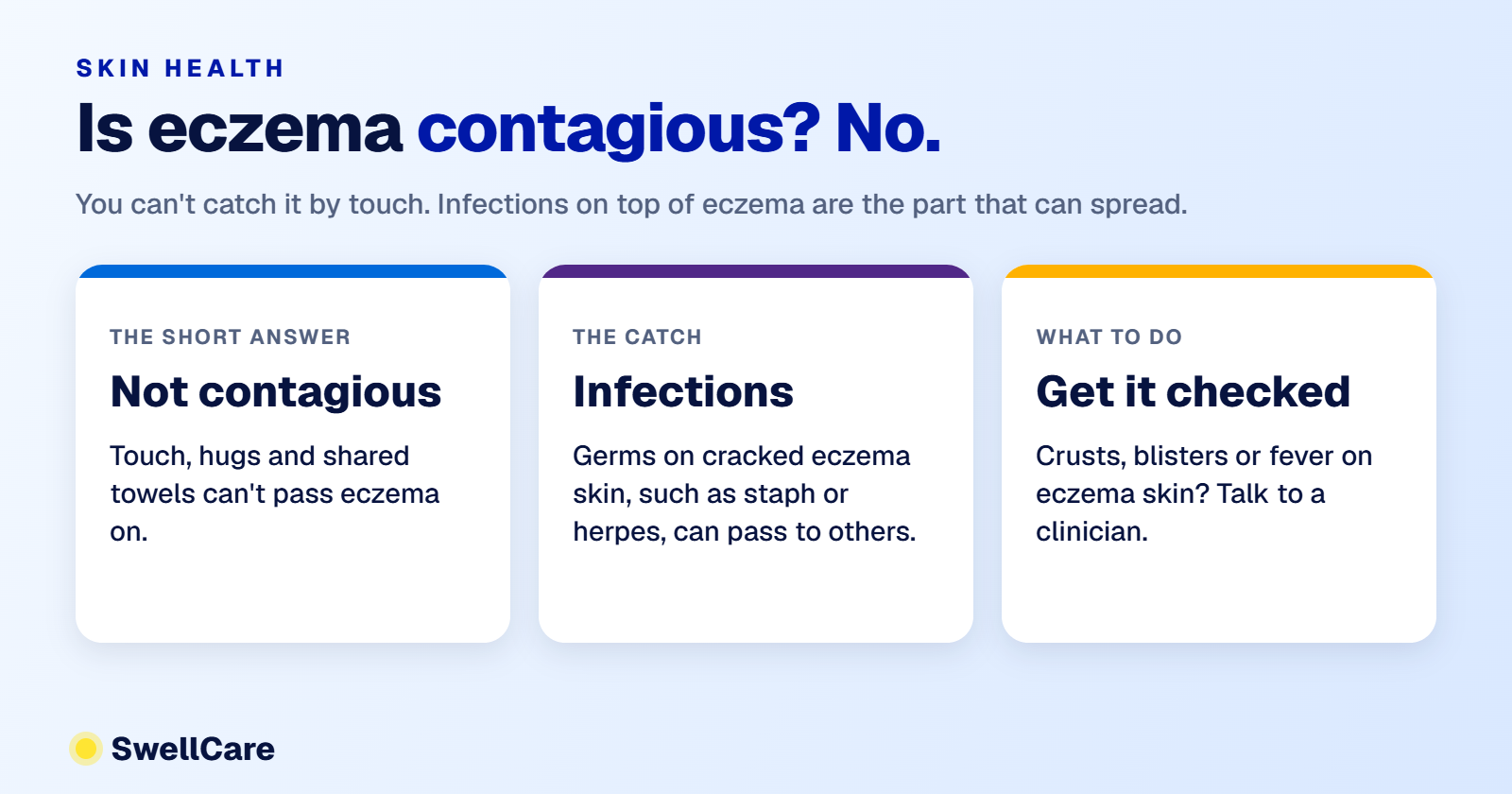
Is contact dermatitis contagious?
No. You can’t catch it from someone else, and you can’t spread it by touching your own rash. Fluid from blisters doesn’t carry the condition to other parts of your body either. What spreads is the trigger, if it’s still on your hands.
Which is worse, contact dermatitis or eczema?
Neither is worse by default. Both involve inflammation, and contact rashes can be intense but often end once the cause is gone. Eczema is chronic and can affect sleep and mood for years. Severity depends on the person, so see a doctor if either one disrupts your days.
If your rash won’t settle, talk to a Swell clinician and start with a free screening.
Trusted references
Public-health, research, and medical-society resources related to this guide.