You woke up scratchy, stuffy and tired, and now you’re staring at the thermometer. Is it a cold or the flu?
Here’s the short answer. A cold creeps in and stays mostly above the neck. The flu hits fast and flattens your whole body. Cold vs flu symptoms overlap enough that you can’t always be sure, but a few clues point the right way, and getting it right can change what you do in the next 48 hours.
Cold vs flu symptoms side by side
Both are contagious respiratory illnesses, and both can leave you coughing into a pillow. These upper respiratory infections spread through droplets when someone coughs, sneezes or talks. But they come from different viruses. The flu is caused only by influenza viruses. A common cold can come from more than 200 viruses, and rhinovirus is the usual culprit, according to MedlinePlus.
The CDC puts it plainly: the flu is generally worse than a cold, with symptoms that are more intense and start more suddenly. Colds tend to stay milder and rarely lead to serious problems like pneumonia. That’s why the common cold feels like an annoyance and the flu feels like an event.
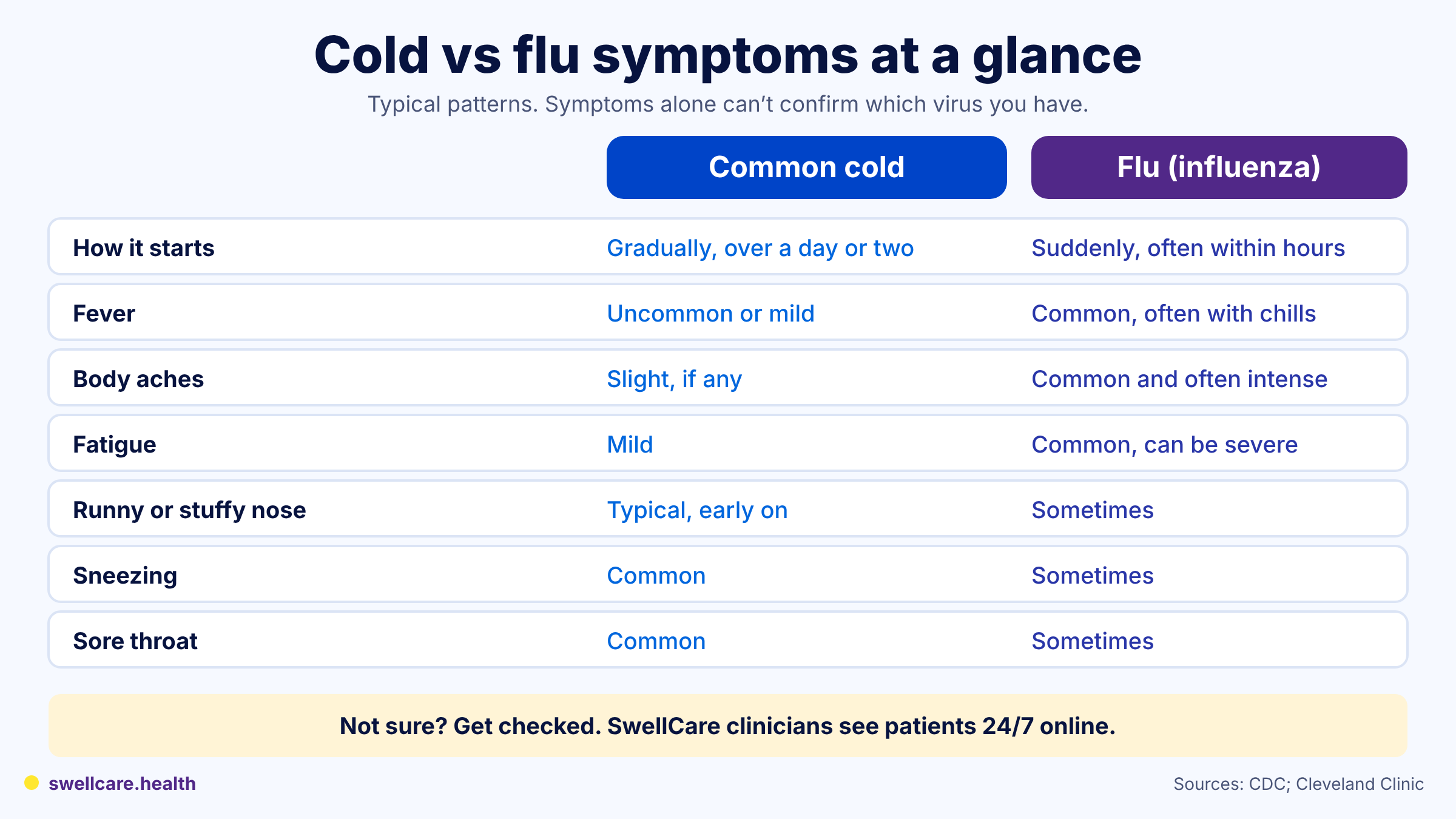
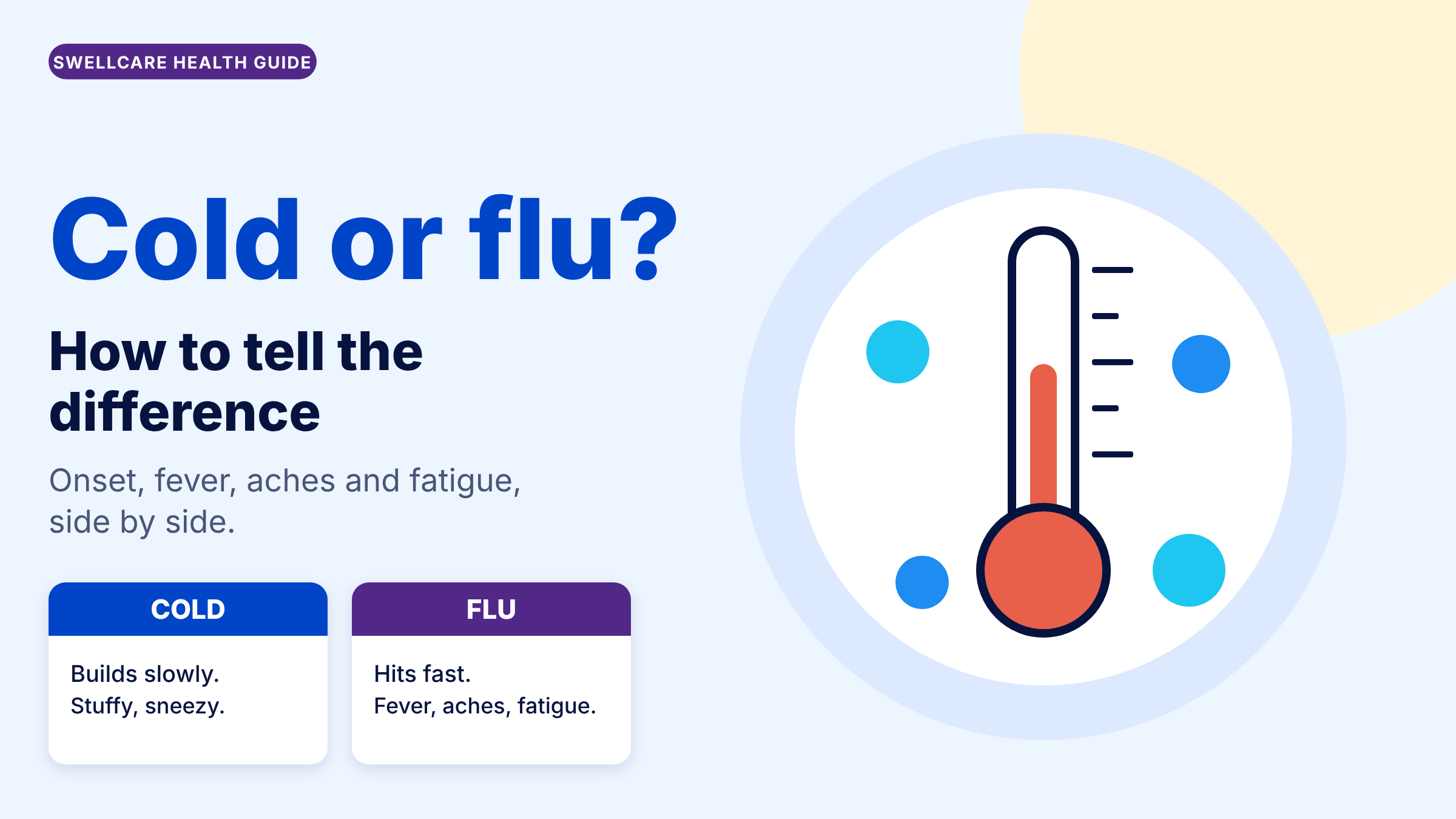
The chart above gives the typical pattern. Here’s the same idea in plain words. Cold symptoms center on the nose and throat: sneezing, a runny nose, a stuffy head, a sore throat and a mild cough. Flu symptoms add the full-body stuff, such as fever, chills, a pounding headache, muscle pain and bone-deep fatigue.
| Common cold | Flu (influenza) | |
|---|---|---|
| Start | Gradual, over a day or two | Sudden, often within hours |
| Fever | Uncommon or low | Common, often with chills |
| Body aches | Slight | Common, can be intense |
| Fatigue | Mild | Common and sometimes severe, the kind that keeps you in bed |
| Runny nose, sneezing | Typical | Sometimes |
| Sore throat | Common | Sometimes |
See the pattern? Cold symptoms stay put in your head and throat, while flu symptoms take over your whole body.
Five signs it’s the flu, not a cold
No single symptom settles it. Together, though, these five tell a pretty clear story. Cold symptoms rarely hit all five.
It hit you like a truck
Think about the moment it started. If you felt fine at breakfast and wrecked by dinner, that’s the flu talking. Colds build over a day or two, with a scratchy throat first and a stuffy nose later.
Your temperature spikes
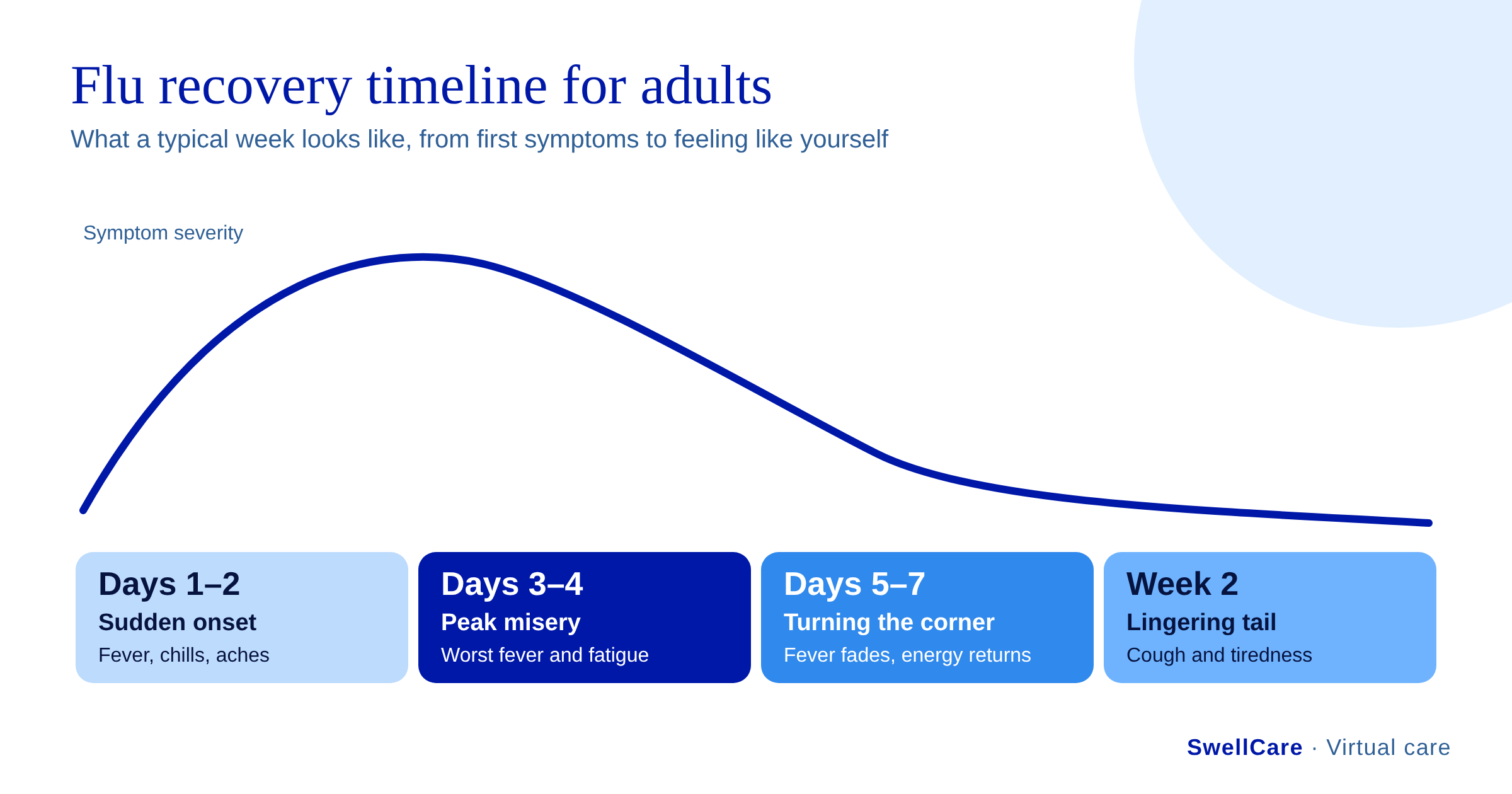
A fever or chills is a classic flu symptom, and it usually lasts three to four days. Not everyone with the flu runs a temperature, so don’t rule it out if your thermometer stays normal. A cold, on the other hand, rarely brings a high fever.
Your whole body aches
Flu pain isn’t polite. It settles into your back, legs and arms, and even your skin can feel sore. A cold might leave you a little achy at most.
You’re completely wiped out
A cold makes you want a nap. Flu fatigue means you can’t get off the couch to pour a glass of water. If a headache comes along for the ride, that points toward the flu as well.
The congestion isn’t the main event
With a cold, a runny nose and sneezing usually lead the way. With the flu, they show up less often, and a dry cough tends to take over. Children get vomiting and diarrhea with the flu more often than adults do.
How long each one lasts
Timing helps you tell them apart, and it tells you when something’s off.
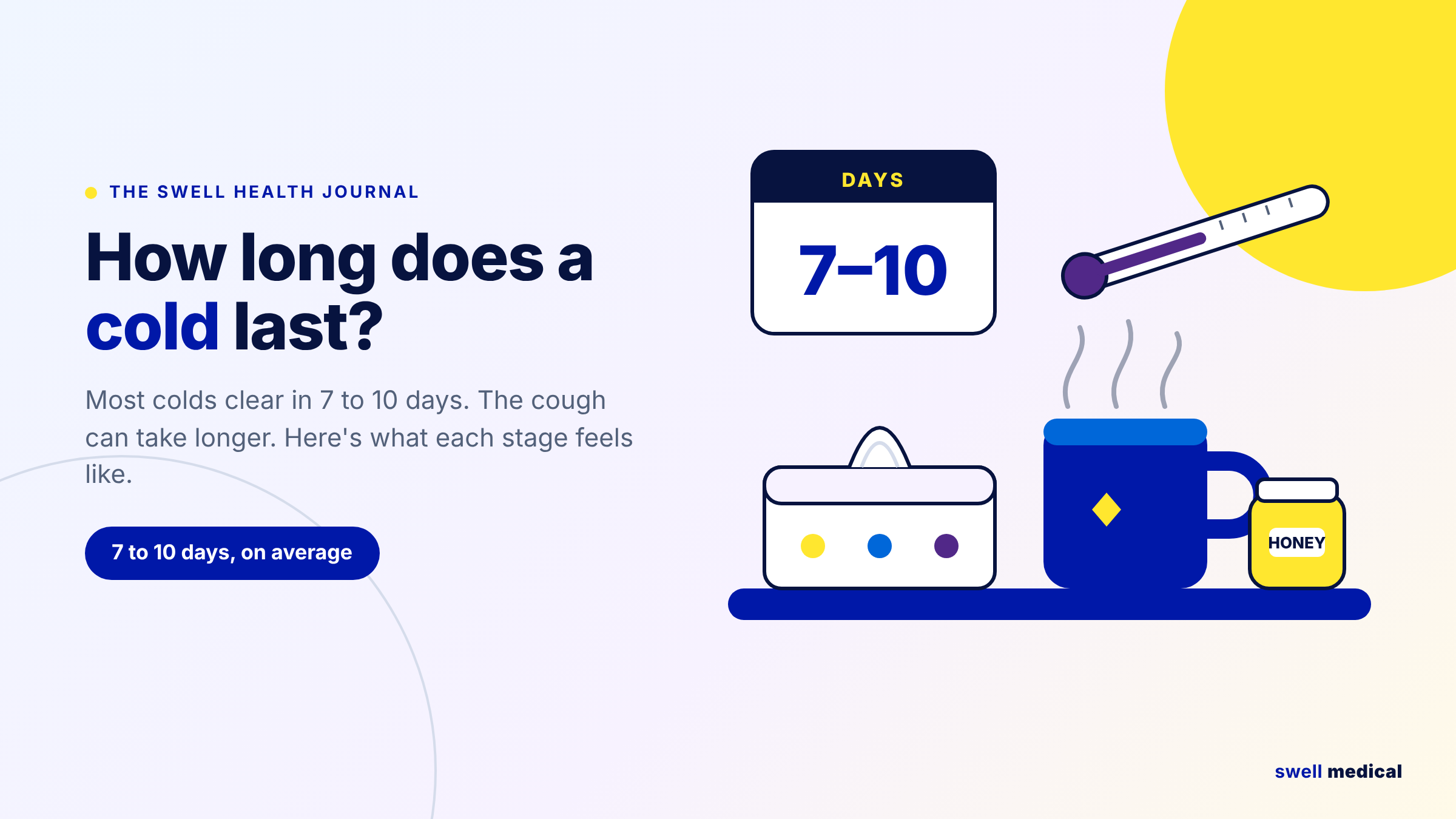
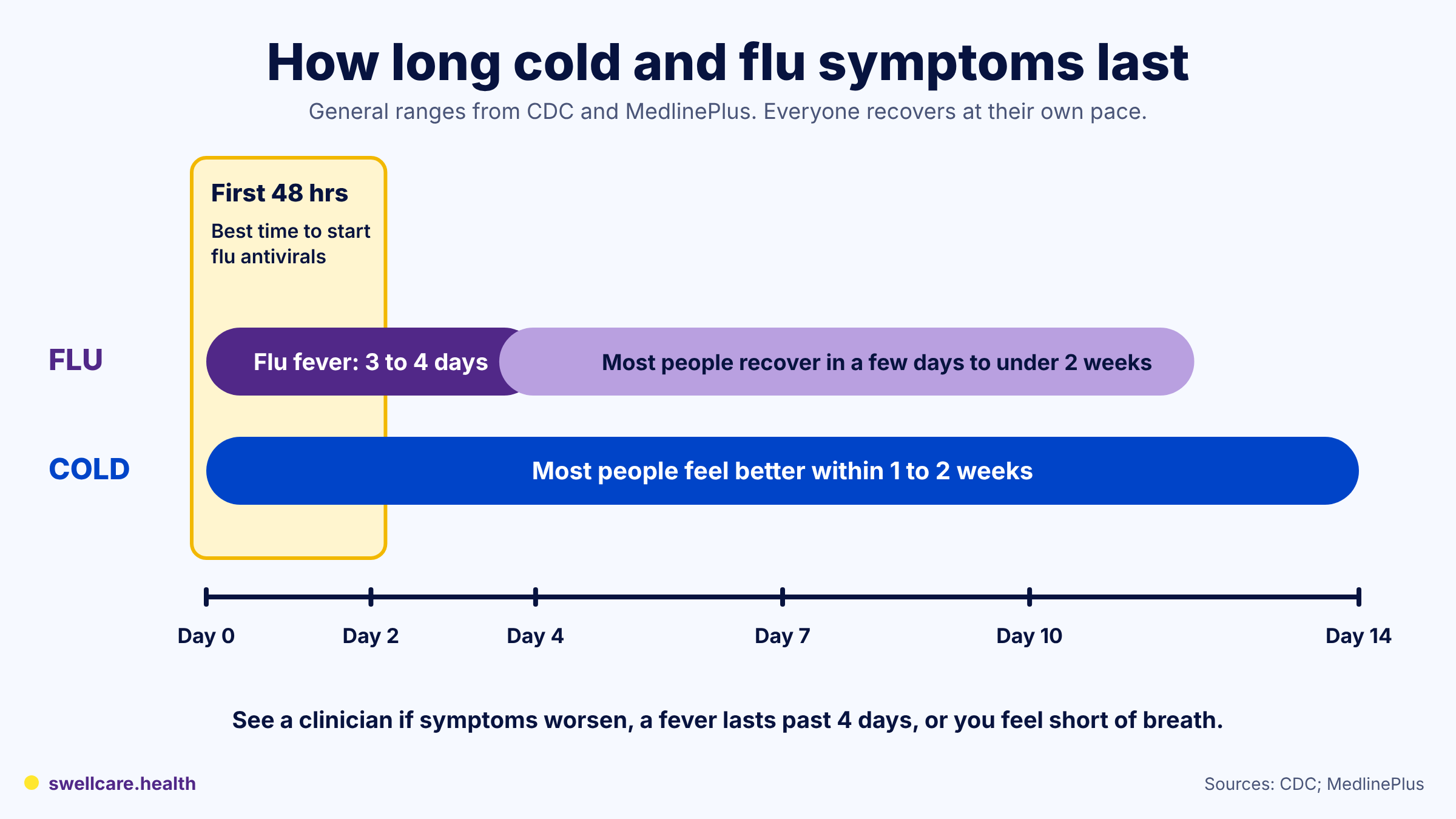
A common cold is the more familiar of the two. Adults average two to three colds a year, and children get more. Most people feel better within a week or two. Cold symptoms usually start two to three days after infection and typically last 2 to 14 days, says MedlinePlus. Flu usually runs shorter on the fever side, and most people recover in a few days to under two weeks.
Neither one has a cure, so home remedies are about comfort. Rest, plenty of fluids, a humidifier or cool mist, saline spray and warm salt water gargles all help. Warm broth or tea soothes your throat, so keep sipping fluids all day. These home remedies won’t kill the virus, but they make the days easier. Over-the-counter pain relievers can take the edge off, but check labels on combination cold products so you don’t double up on the same ingredient. Children and teens shouldn’t take aspirin.
Colds and the flu are both viral, so antibiotics won’t help either one.
Why catching influenza early matters
Why bother telling them apart at all? Because the flu has a treatment clock that colds don’t.
Prescription antiviral drugs can shorten the flu and may lower the odds of complications. Complications are the real worry with influenza, from ear infections to respiratory failure. Antiviral medicines work best when you start within 48 hours of your first symptoms, the CDC notes. Oral oseltamivir and oral baloxavir are two examples. An antiviral for influenza won’t end the illness overnight, but it can cut it short. Miss that window and they may still help people who are very sick or high risk, but the benefit shrinks.
Some people should move fast. Influenza is more likely to turn serious if you’re 65 or older, pregnant, or have a chronic condition such as asthma, diabetes or heart disease. Children under 5 are also at higher risk, especially those under 2. If you’re in one of those groups and think you have the flu, don’t wait it out. A flu test can confirm it, though treatment decisions for high-risk patients often don’t wait for the result. Preventing those complications is the whole point of acting early.
The best protection is a yearly flu vaccine, which most people call the flu shot. Get it before flu season ramps up if you can. No vaccine stops every case, but a flu vaccine lowers your odds of a bad one. There’s no vaccine for the common cold, so for colds it comes down to habits: hand washing for at least 20 seconds, staying home when you’re sick and keeping unwashed hands off your face. Those habits help during flu season too.
What about COVID-19?
Here’s where it gets messy. COVID-19 can look just like a cold or the flu, with fever, cough, sore throat and aches. All three are respiratory viruses. Seasonal coronaviruses that cause colds are a different thing from the virus behind COVID-19, but you can’t sort them out by symptoms alone. A test is the only way to know. If you have a fever and a cough in flu season, ask for a flu test and a COVID-19 test together.
When to see a doctor
Most cases of the common cold and mild flu clear up at home. But some situations call for a clinician, and a few call for the emergency room.
See a provider if a fever lasts longer than four days, symptoms hang around past 10 days without improving, or you start to feel better and then get worse again. That last pattern can signal a secondary infection or another complication. Call sooner if you have asthma or another lung condition, or a weakened immune system.
Emergency signs in adults
Flu symptoms can turn serious fast, and a common cold can too in someone with a weakened immune system or a chronic respiratory condition.
Go to the ER or call 911 for trouble breathing or shortness of breath, ongoing chest or belly pain or pressure, confusion, severe weakness, seizures, or not urinating. Symptoms that improve and then return worse are also a warning sign.
Emergency signs in children
Get emergency help for fast or labored breathing, bluish lips, ribs pulling in with each breath, dehydration (no urine for 8 hours, no tears when crying), or a child who isn’t alert or won’t interact. A fever above 104°F that medicine doesn’t control counts too. So does any fever in a baby younger than 12 weeks.
These lists aren’t complete. If something feels wrong, trust that.
Get care from home with Swell
Feeling awful is hard enough without a waiting room. Swell’s online urgent care lets you talk to a real clinician 24/7 from your couch. A clinician can review your symptoms, help you figure out whether it looks like a cold, the flu or something else, and tell you if you need testing or in-person urgent care. You can also see the conditions we treat.
Not sure whether your symptoms need attention today? Start a visit, and let someone help you decide.
Questions people ask about cold vs flu symptoms
Can you have a cold and the flu at the same time?
Yes, though it’s uncommon. Different viruses cause each one, so you can catch both close together. If symptoms get sharply worse partway through a cold, such as a sudden spike in temperature or deep body aches, check in with a clinician.
Do antibiotics help a cold or the flu?
No. Both are caused by viruses, and antibiotics only work on bacteria. Your clinician may prescribe them only if you develop a bacterial complication, like a bacterial sinus infection or pneumonia.
How long am I contagious with a cold or the flu?
Both are contagious before you feel sick, and they spread most easily when symptoms are at their worst. Stay home until your fever is gone and you’re feeling clearly better, cover coughs and sneezes, and make hand washing a habit.
Can the flu shot give me the flu?
No. The flu shot can’t cause the flu. Some people get a sore arm, a few aches or a low temperature for a day or two afterward. That’s your immune system doing its job, not the illness itself.
Trusted references
Public-health, research, and medical-society resources related to this guide.