You’ve got a dull ache high on one side of your back, a fever that won’t quit, and a sinking feeling that this isn’t your usual bladder trouble. So you do what everyone does. You search: how long does a kidney infection last?
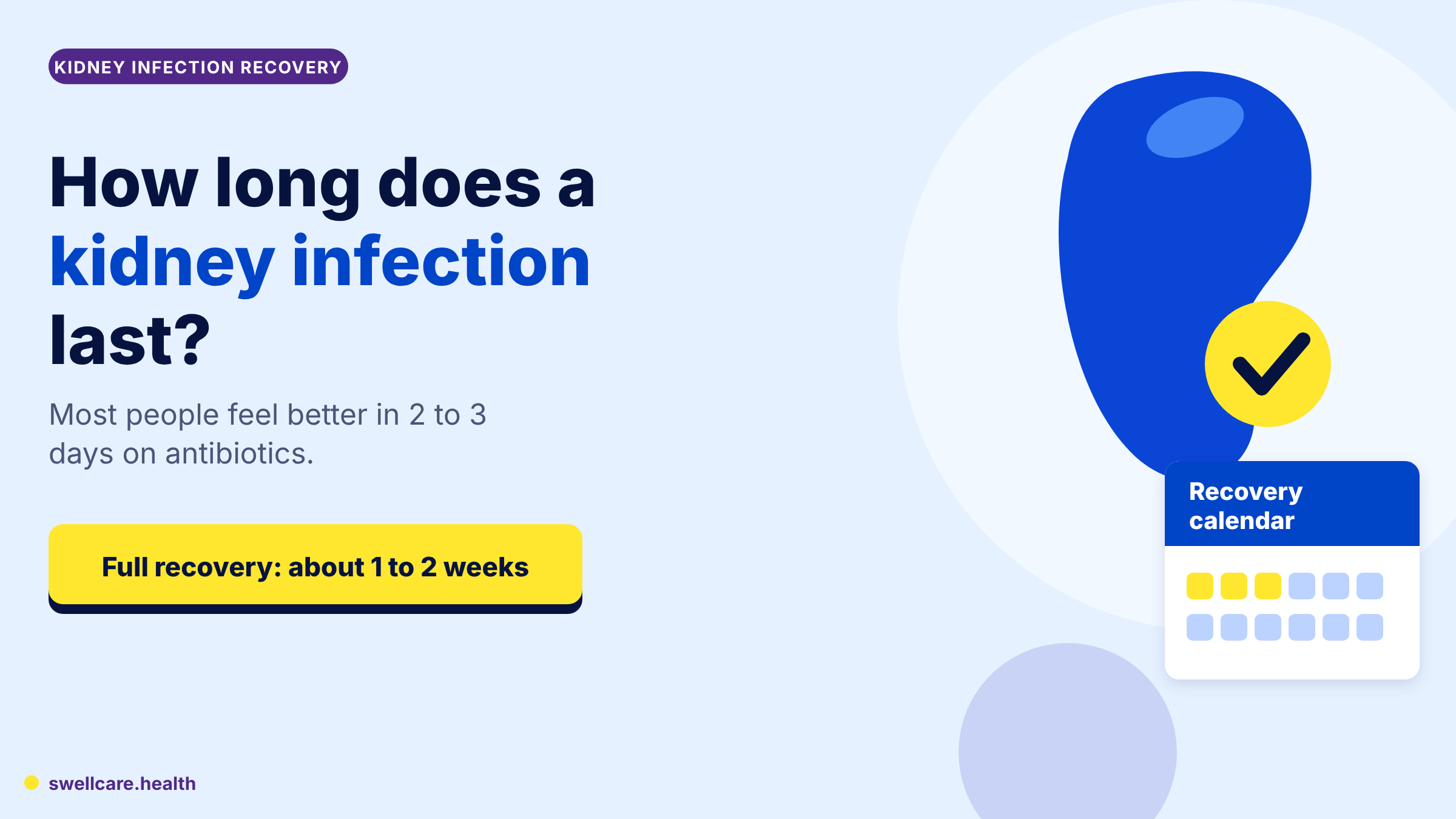
Here’s the blunt answer. With the right antibiotics, most people start to feel better within 2 to 3 days and are back to normal in about 1 to 2 weeks. Without treatment, a kidney infection can drag on, get worse, or spill into your bloodstream.
That second part is why this isn’t a “wait and see” illness. Below you’ll find a day-by-day recovery timeline, the things that slow healing down, and the exact moment to stop toughing it out.
How long does a kidney infection last with treatment?
A kidney infection, also called pyelonephritis, is a urinary tract infection that has climbed from the bladder up to one or both kidneys. It’s usually caused by bacteria, and it responds well to antibiotics when you start early.
Think of recovery as two separate clocks. The first is your symptoms. Chills and high temperatures often ease within 48 to 72 hours of starting the right medicine, and a family medicine review in American Family Physician notes that most people improve in that window. The second clock is the infection itself, which takes longer to clear completely.
The antibiotic course typically runs 7 to 14 days. Some drugs work in as few as 5 to 7 days, while others need 10 to 14. If a blockage is involved, you may need the longer course. Your healthcare provider picks the length based on the drug, your health and what the lab finds.
So the honest range looks like this: feeling noticeably better in 2 to 3 days, finishing treatment in roughly 1 to 2 weeks, and being fully back to your old energy a little after that. Tiredness tends to hang around longer than the fever does.
Kidney infection vs bladder infection: why the timeline differs
A bladder infection is a lower urinary tract infection. It stays in the bladder, irritates the lining, and a simple UTI like that often settles within a few days of a short antibiotic course. A kidney infection is the same kind of bacteria, just higher up. They’ve reached the kidneys, where the tissue is deeper and harder for medicine to reach, so treatment runs longer and the symptoms look different. Chills, nausea and flank pain point toward the kidneys, while burning and urgency alone usually point to the bladder.
Leave a bladder infection or other urinary tract problem untreated and the bacteria can climb. That’s how most cases of pyelonephritis begin.
A day-by-day kidney infection recovery timeline
Every body heals at its own pace. Still, most uncomplicated cases follow a pattern you can use as a rough map.
| When | What you’ll probably notice | What to do |
|---|---|---|
| Day 1 to 3 | Chills and high temperatures start to settle. Flank pain eases but doesn’t vanish. Burning with urination may linger. | Take every dose on time. Drink fluids. Rest. |
| Day 3 to 7 | Most symptoms fade. Appetite returns. You may still feel wiped out. | Keep taking the antibiotics, even if you feel fine. |
| Week 2 | Pain is gone and your temperature is normal. Energy slowly comes back. | Finish the full course. Book follow-up if your provider asked for it. |
| After treatment | Back to normal, though some people feel tired for several more days. | Watch for symptoms returning. |
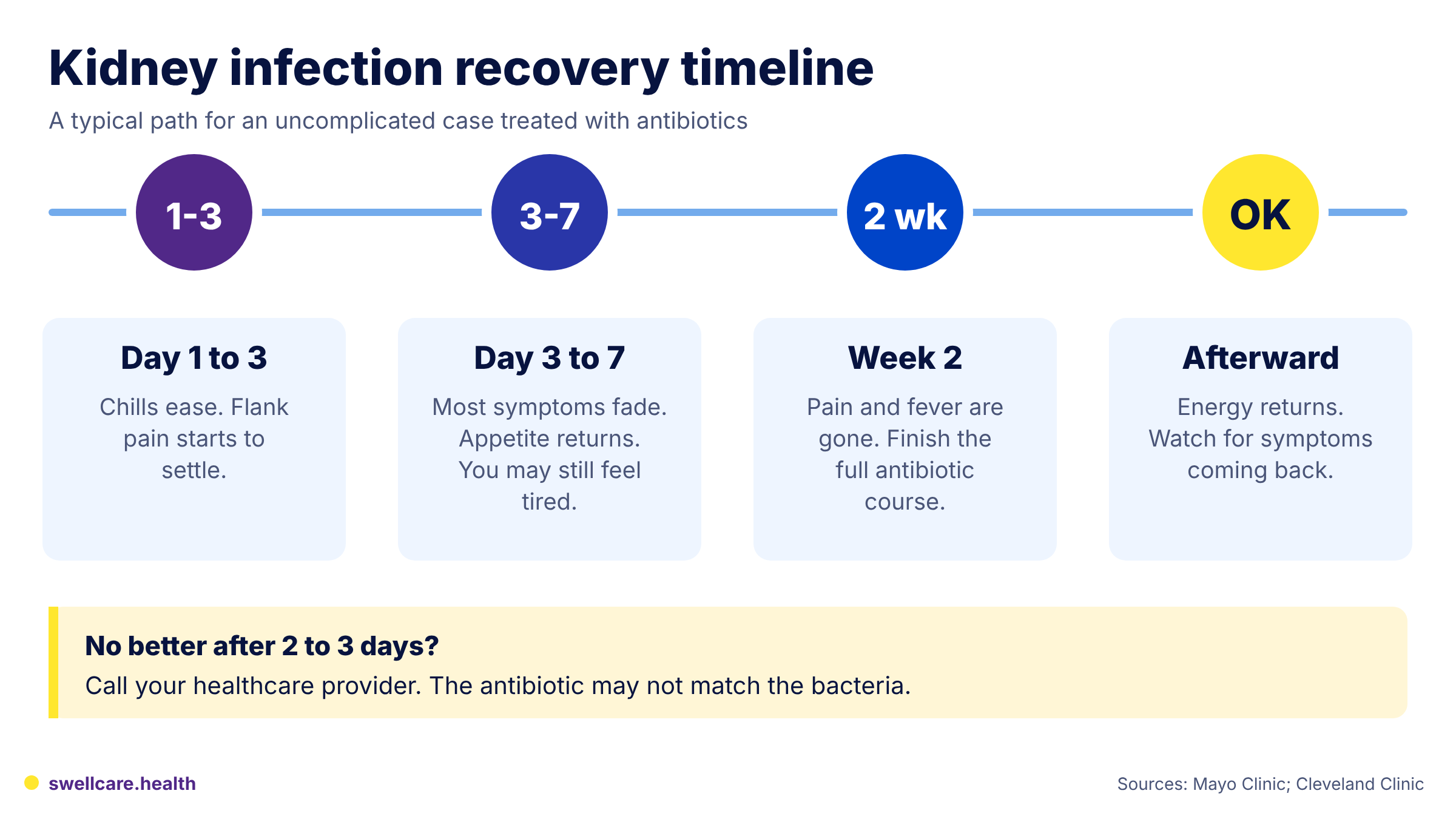
So, how long does a kidney infection last for you personally? It depends on the bacteria, your health and how soon treatment began. Recovery also isn’t a straight line. A good morning can be followed by a rough evening, and that’s normal as long as the overall trend points up.
One rule beats the whole table. If you’re not clearly improving after 2 to 3 days of treatment, call your healthcare provider. Mayo Clinic advises telling your clinician when urinary symptoms persist past that point. It often means the bacteria aren’t responding to the antibiotic you were given, or something is blocking urine flow.
How long does a kidney infection last without antibiotics?
Short version: you don’t want to find out.
A kidney infection rarely clears up on its own. Bacteria keep multiplying, and the longer they have, the more trouble they cause. Symptoms can simmer for days, then flare. There’s no reliable timeline, and that unpredictability is the danger.
Mayo Clinic lists the main risks of letting it go. Repeated or untreated infection can scar the kidneys, which can lead to chronic kidney disease, high blood pressure and, in severe cases, kidney failure. Bacteria can also enter the bloodstream and cause sepsis, a life-threatening reaction that needs hospital care. Once infection reaches the bloodstream, treatment moves from a pill bottle to an IV line. Pregnancy adds risks of its own, including low birth weight.
Kidney damage is the part people underestimate. Scarring doesn’t announce itself, and once it’s there it’s permanent. Prompt treatment is the simplest way to prevent kidney damage, even when symptoms feel mild. Repeated infections raise the odds of lasting kidney damage, so a second round of symptoms deserves a call, not a shrug. Early antibiotics protect your kidneys and keep the bloodstream clear.
If you can’t get to a clinic today, that is still not a reason to wait. Speak with a clinician the same day, even if it’s online. More on that near the end.
What slows down kidney infection recovery?
When a kidney infection lingers past the first few days, there’s usually a reason. These are the most common ones:
- Stopping antibiotics early. You feel better on day 4 and the pills go in a drawer. The National Institute of Diabetes and Digestive and Kidney Diseases (NIDDK) is clear that you should finish the entire course, even after symptoms disappear.
- Resistant bacteria. Some germs shrug off the first antibiotic. A urine culture identifies the bacteria and shows which drugs work, so your provider can switch if needed.
- A blockage. Kidney stones, an enlarged prostate or a narrowed urethra can trap urine, and trapped urine feeds bacteria. These cases may need a procedure on top of medicine.
- A weaker immune system. Diabetes, certain medicines and some chronic conditions make it harder to fight bacteria.
- Catheters, stents or reflux. Anything that gives bacteria an easier path to the kidneys can prolong the problem.
- Dehydration. Too little fluid means less urine flowing through to flush bacteria out of the urinary tract.
Notice that most of these are fixable once someone spots them. That’s why a second look matters if you plateau. AAFP guidance suggests a repeat urine culture and sometimes imaging, such as a CT scan or ultrasound, for people who aren’t improving by 48 to 72 hours.
What speeds up kidney infection recovery at home?
Antibiotics do the heavy lifting in a kidney infection. Home care just makes the days easier and keeps you from undoing the progress.
Do:
- Drink fluids steadily through the day. Water is best, and pale yellow urine is a decent sign you’re keeping up.
- Rest. Your body is fighting an infection, so cancel what you can.
- Use a heating pad on your back or side for flank pain.
- Take acetaminophen for pain or a high temperature if your clinician says it’s fine. Ask before using ibuprofen, because anti-inflammatory drugs aren’t always a good idea when your kidneys are under stress.
- Set phone alarms for every antibiotics dose.
Don’t:
- Skip doses or quit when you feel better.
- Treat cranberry juice or supplements as a cure. They haven’t been shown to treat an active infection.
- Hold your urine. Go when you need to.
- Drink caffeine or alcohol until you’re better. They can worsen urgency.
- Push through work like nothing’s wrong. Fatigue is part of the illness, not a character flaw.
Many people ask what helps “flush out” a kidney infection. Water helps dilute urine and keeps it moving, which is useful. But fluids alone won’t kill the bacteria. Antibiotics do that.
Hospital treatment for a severe kidney infection
Most kidney infections are treated at home with oral antibiotics. Some aren’t. A hospital stay sounds scary, but it’s really a safety net for people who need closer watching.
You may need to be admitted if you can’t keep pills down, if you’re pregnant, if there are signs of sepsis, if a blockage is suspected, or if outpatient treatment hasn’t worked. Older adults and people with weakened immune systems are also more likely to be watched in the hospital.
There, you’ll usually get IV antibiotics and IV fluids. Many people switch to pills once their temperature settles and they can eat and drink again, then finish the rest of the course at home. The NHS says most people who are admitted go home after about 3 to 7 days. So how long does a kidney infection last when you’re admitted? The total length of treatment is often still about 1 to 2 weeks, but the first days in the hospital are far better supervised, and your care team can adjust the antibiotics as soon as the lab results come back.
When to see a doctor or go to the ER
Call your healthcare provider the same day if you have a fever, back or side pain, and urinary symptoms such as burning, urgency or cloudy urine. Don’t wait for it to pass.
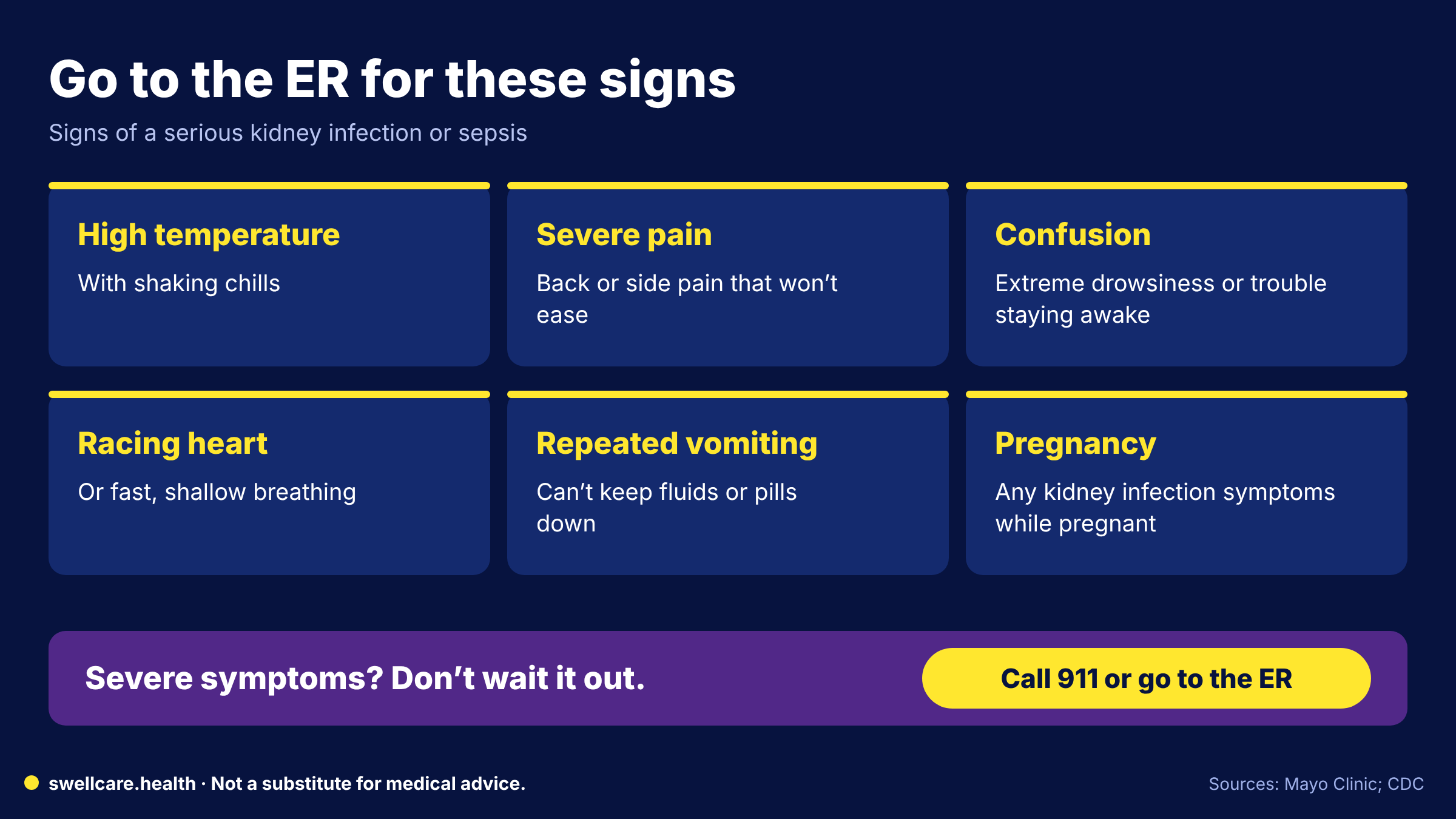
Go to the emergency room or call 911 if you have any of these. Don’t drive yourself if you feel faint or confused:
- A high temperature with shaking chills
- Severe pain in your back or side that doesn’t ease
- Confusion, extreme drowsiness or trouble staying awake
- A racing heart or fast, shallow breathing
- Vomiting that keeps you from holding down fluids or medicine
- Blood in your urine along with fever
- Any symptoms like these while you’re pregnant
These can be signs of a serious infection or sepsis. Sepsis moves fast, so treat it as an emergency, not an inconvenience. Early emergency care changes outcomes.
It also helps to know what else can feel like a kidney infection. Kidney stones, a simple bladder infection, a pulled back muscle and even appendicitis can cause similar pain. A urine test and a clinician’s exam are how you tell them apart, which is one more reason not to self-diagnose.
Can a kidney infection come back?
It can. Some people get a repeat kidney infection weeks or months later, especially if something structural is behind it.
If symptoms return after treatment, see your healthcare provider right away. NIDDK notes that they may order another urine culture or imaging and may prescribe a different antibiotic or a longer course.
You can’t prevent every infection, but you can tilt the odds, and a few habits that prevent UTIs also prevent kidney infections. Drink enough water, urinate soon after sex, wipe front to back, and don’t hold your urine for hours.
Treat bladder infection symptoms early rather than hoping they fade, because most kidney infections start as a lower UTI that was ignored. If you have diabetes, steady blood sugar helps your body fight bacteria.
Have you had two or more infections? Ask your provider about the cause. A stone or another structural issue may need attention, and fixing it is the best way to prevent a third.
Get seen today if you think you have one
If this article sounds a lot like your week, don’t spend another night guessing.
Swell offers 24/7 online care. You start with a free screening chat, and a licensed clinician reviews your concern to decide whether it can be handled safely online. You may get treatment, home-care advice, testing or a recommendation to be seen in person.
Kidney infection symptoms often need a urine test, so being sent to a lab or an in-person visit is a real possibility. When it happens, it’s the right call. A completed consultation is $45, with medication and lab costs separate.
Start with UTI symptoms or see all Swell urgent care options. Swell isn’t emergency care. If you have severe symptoms, call 911.
Questions people ask about kidney infection recovery
Can a kidney infection go away on its own?
It’s unlikely, and it isn’t worth the gamble. Bacteria can keep multiplying, reach your bloodstream, trigger sepsis or scar the kidneys. A mild infection might ease for a bit, but without antibiotics it usually returns or worsens. Get evaluated and treated rather than waiting for it to resolve by itself.
How soon do antibiotics start working for a kidney infection?
Most people notice less fever and pain within 48 to 72 hours of starting the right antibiotic. Full recovery takes longer. If nothing has improved after 2 to 3 days, contact your provider, since the bacteria may be resistant or something may be blocking urine flow.
What helps flush out a kidney infection?
Drinking plenty of fluids keeps urine flowing and helps clear bacteria from your urinary tract. But hydration supports treatment, it doesn’t replace it. You still need the full antibiotic course your provider prescribed, taken exactly as directed, even once you feel better.
How do you know when a kidney infection is severe?
Warning signs include high fever with shaking chills, severe back or side pain, repeated vomiting, confusion, a fast heartbeat and fast breathing. These can point to sepsis. Pregnancy, older age or a weakened immune system means you should seek care sooner. Severe symptoms mean the ER or a hospital, not a wait-and-see approach.
Can I go to work with a kidney infection?
Most people with a kidney infection need to rest for the first few days, especially while there’s fever and pain. You’re not contagious in the way a cold is, but your body needs the energy. Many return to work once their temperature is normal and they feel steady, though fatigue can linger. Ask your provider.
How do I know my kidney infection is gone?
Your fever, flank pain and urinary tract symptoms disappear, and your energy returns. For uncomplicated cases, a repeat urine test isn’t always needed, though some providers order one to confirm the infection has cleared. Follow-up is more likely if you’re pregnant, if you didn’t improve as expected, or if symptoms come back after treatment.
What gets mistaken for a kidney infection?
Kidney stones, a bladder infection, muscle strain in the back and appendicitis can all cause pain that feels similar. Shingles can also cause one-sided pain before a rash appears. The difference usually shows up in a urine test and an exam, which is why a clinician should check any fever with back or side pain.
Trusted references
Public-health, research, and medical-society resources related to this guide.