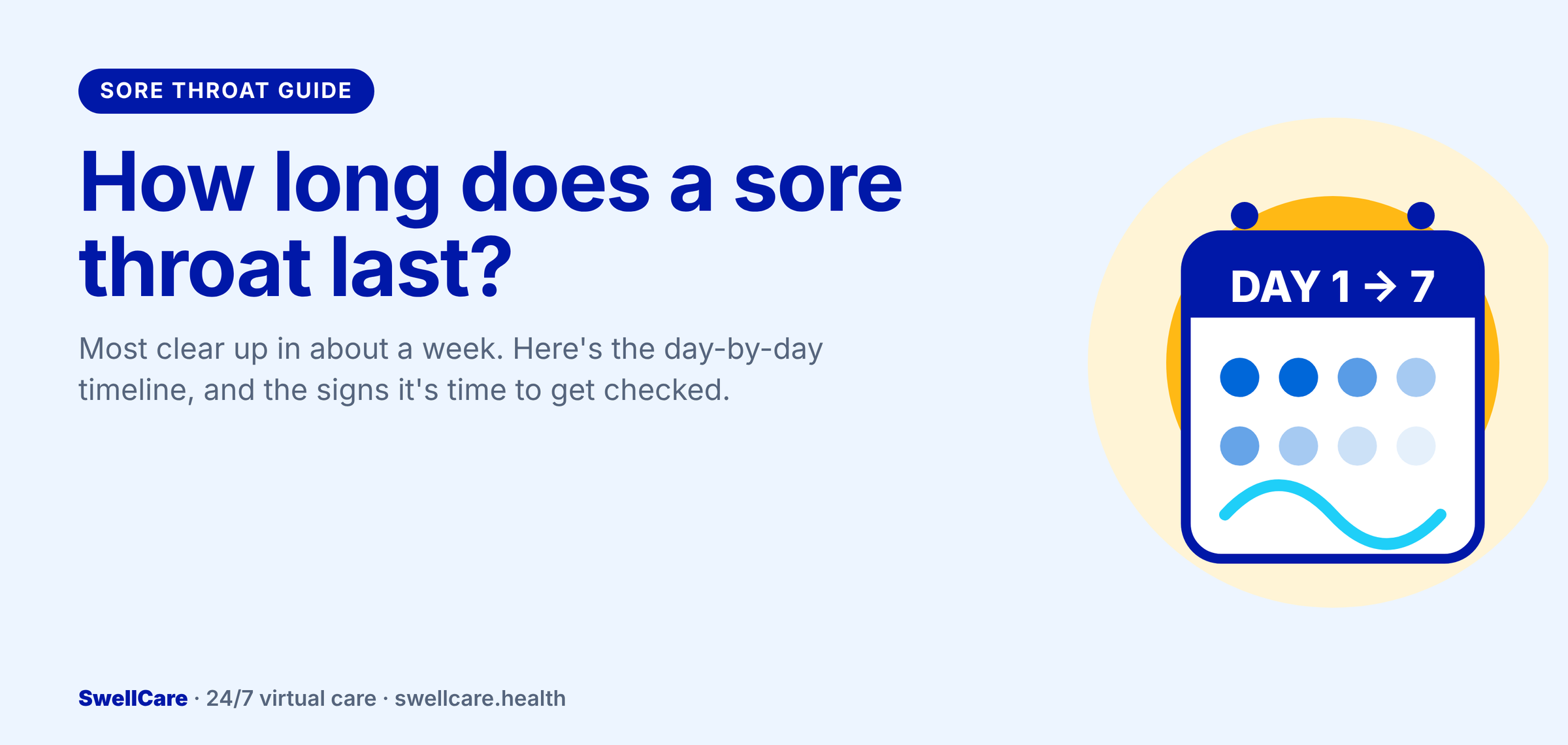
You woke up with that scratchy, swallow-and-wince feeling, and now you want a number. So here it is: most sore throats clear up on their own in about a week, according to the CDC. That’s the answer to how long does a sore throat last for the typical cold-type case.
But “about a week” hides a lot. Some last two days. Some drag past ten. A few need a prescription, and a handful need care today.
Let’s sort out which one you’ve got.
The short answer: how long does a sore throat last?
Think of a week as the default. A viral infection causes most sore throats, and your immune system usually wins the argument within seven days or so. A bacterial infection, mainly strep, is the exception. The symptoms look alike from the outside: pain, scratchiness, a swollen feeling, sometimes a hoarse voice. The cause sets the duration. The NHS says the same: sore throats often clear up by themselves in about a week.
The cause matters, though. Here’s how the duration shifts.
| Cause | What to expect |
|---|---|
| Cold or flu | Usually better within about a week |
| Strep throat | Needs a test; treatment with antibiotics can help you feel better faster |
| Allergies, dry air, irritants | Lasts as long as you’re exposed to the trigger |
| Acid reflux | Comes and goes, often worst in the morning |
Cold and flu: the usual culprits
A viral infection behind a common cold or the flu is the most likely explanation. The sore throat is often the first of your symptoms to arrive and the first to fade. A cough, runny nose or hoarse voice points toward a viral infection, and so does pink eye. Flu adds fever and body aches. Another viral infection, such as mono, can drag things out, so a throat that outlasts the cold deserves a second look.
Strep throat
Strep throat is a bacterial infection, and it’s the one worth ruling out. The CDC notes it comes on quickly and often brings fever, painful swallowing and red, swollen tonsils. Only about 1 in 10 adults with a sore throat has strep throat, but about 3 in 10 children do.
Allergies, dry air and irritants
Post-nasal drip from allergies can leave your throat raw by morning, and that irritation builds the longer the drip goes on. Dry winter air, smoke and reflux cause similar irritation. Acid reflux is often worst first thing in the morning. None of it follows a one-week script. Think of these sore throats as tied to the trigger, and expect them to fade only when it does.
A day-by-day timeline of a typical viral sore throat
Here’s the pattern most people describe with a cold-type sore throat. It isn’t a promise, just a map.
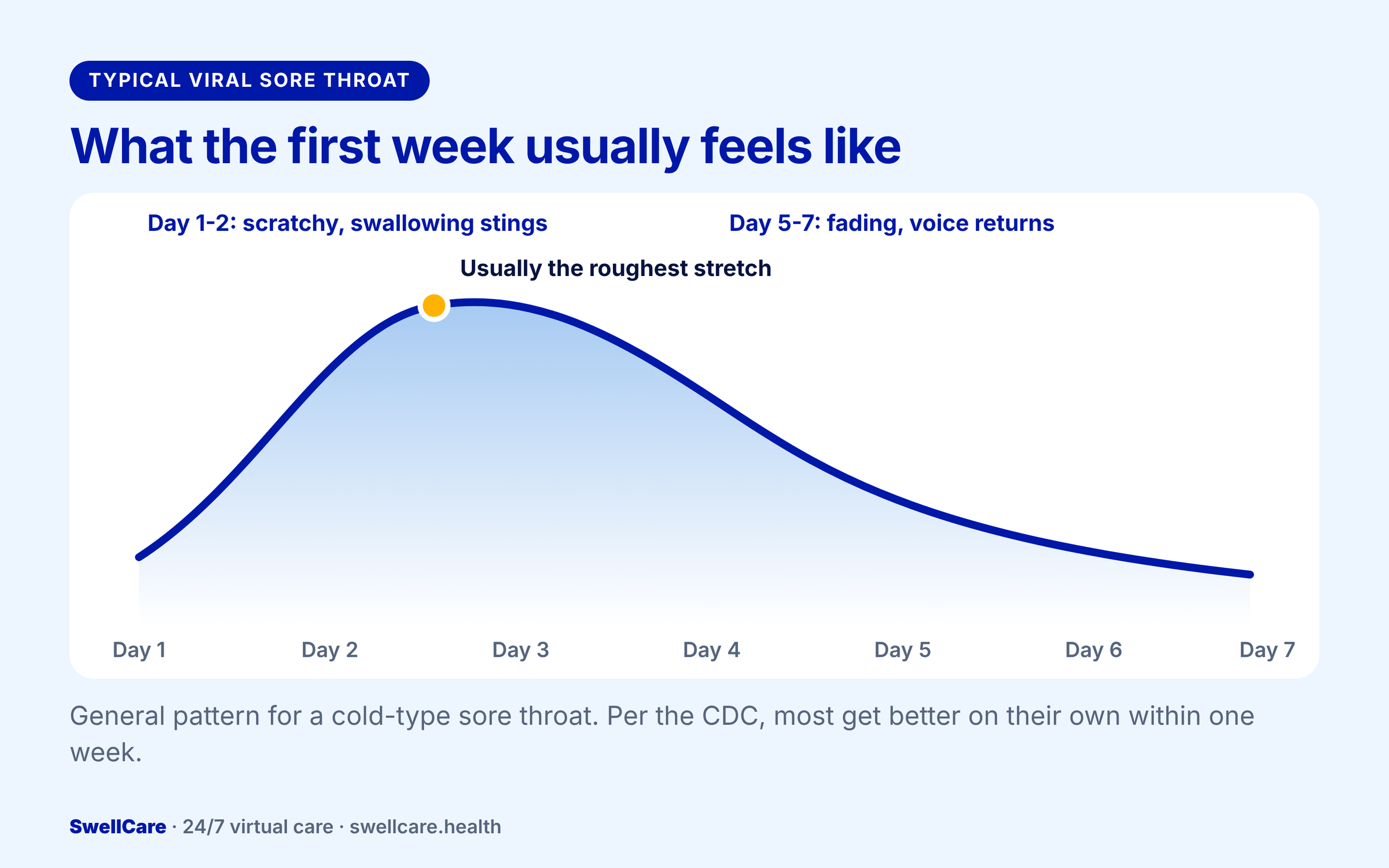
Days 1 and 2. Scratchy, dry, a little tender. Mild irritation turns into pain when you swallow. You might feel run down, and early symptoms like a stuffy nose often start here.
Days 3 and 4. Often the worst stretch. Pain peaks, the throat looks red, and swelling in your neck glands makes them tender. Other symptoms, like congestion and a cough, tend to show up now, with a low fever for some people.
Days 5 to 7. The fog lifts. The pain fades, swallowing gets easier, your voice comes back, and recovery starts to feel real. You stop thinking about your throat every five minutes.
If you’re still hurting on day 7, or your symptoms are getting worse instead of better, that’s your cue to get it looked at.
What makes a sore throat last longer
Same virus, different recovery. A few things stretch the duration of a sore throat.
- Ongoing irritation. Smoking and secondhand smoke keep the lining in a state of inflammation. So does shouting at a ball game. Throat irritation like this stretches the duration of any infection.
- Dry air. Heated indoor air in winter pulls moisture from your throat overnight.
- Poor sleep and no rest. Your body repairs itself while you sleep, and pushing through a week of late nights slows recovery.
- Dehydration. A dry, tacky throat hurts more, so hydration matters.
- A second problem hiding underneath. Allergies or acid reflux can keep inflammation going long after the common cold is gone.
Inflammation and swelling are what make swallowing hurt. Anything that calms the swelling, or stops adding to the inflammation, shortens the duration. Rest buys more recovery than people expect.
Viral or strep? How to tell
You can’t diagnose strep by looking in the mirror. Even clinicians usually confirm it with a rapid strep test or throat culture. But some clues help.
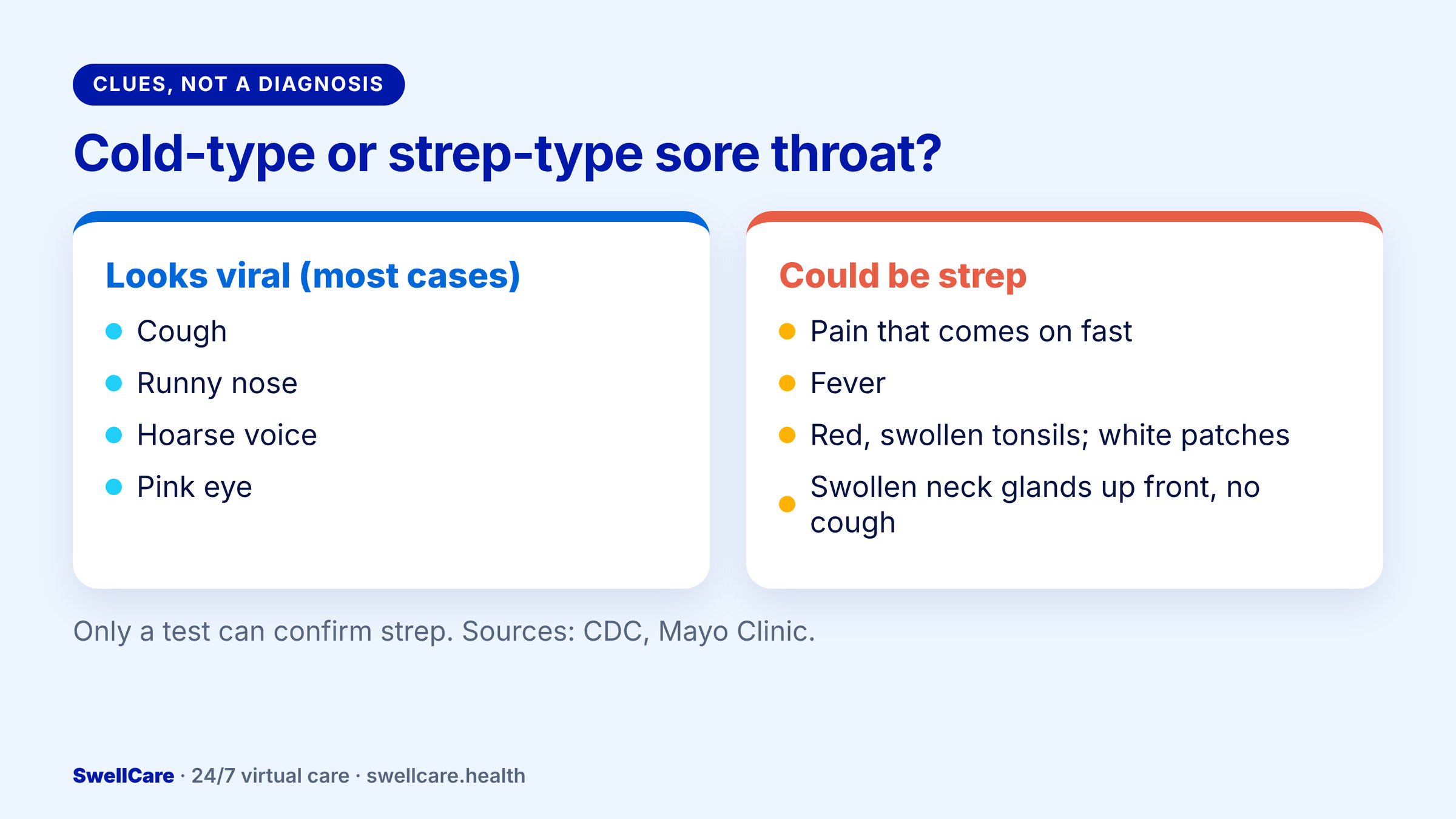
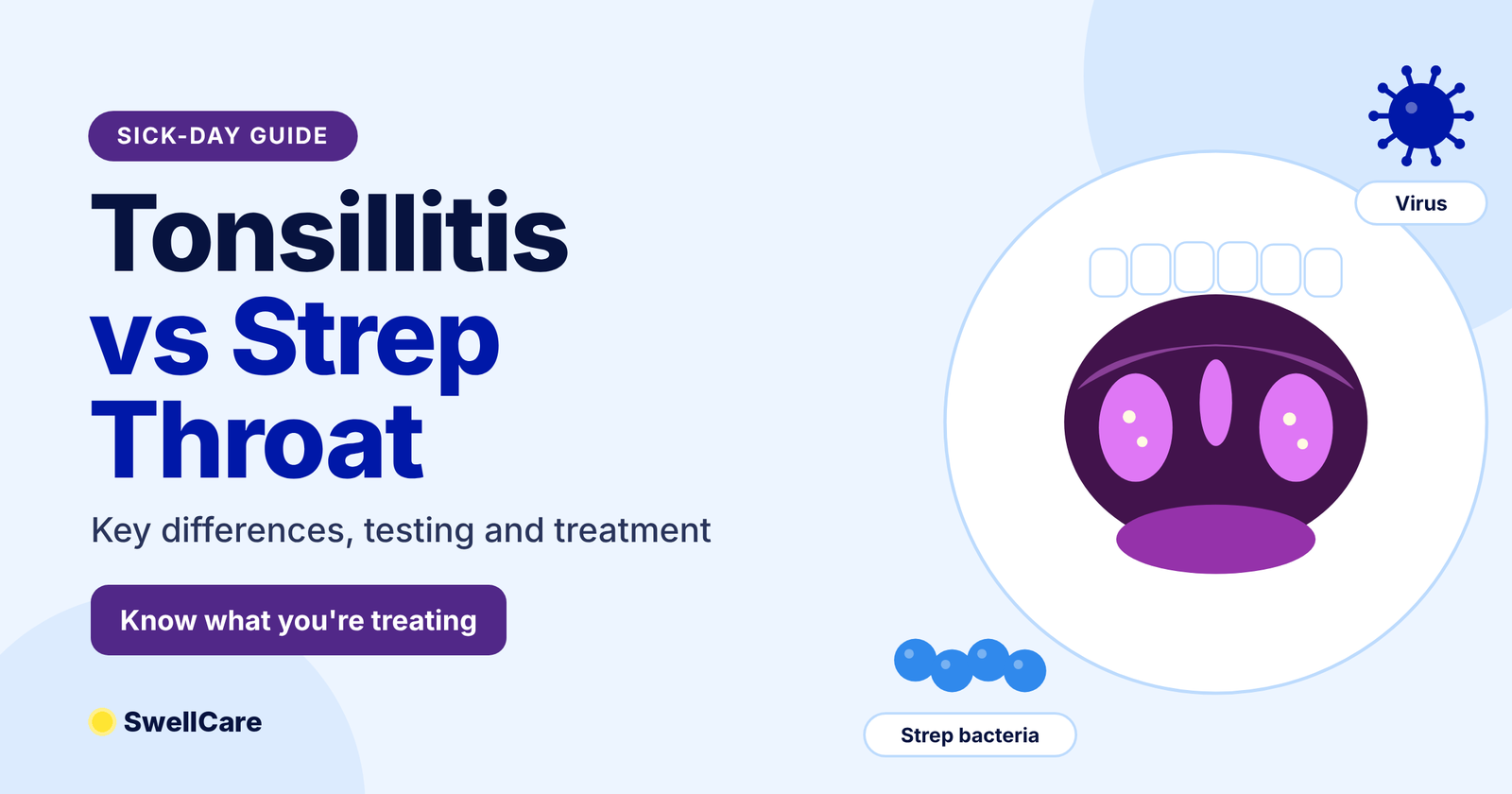
Strep throat tends to show up fast, with fever, swollen tonsils (sometimes with white patches) and tender lymph nodes at the front of the neck, usually with no cough. Those strep symptoms differ from a viral infection, which arrives with the cold’s usual entourage: stuffy nose, cough, hoarseness.
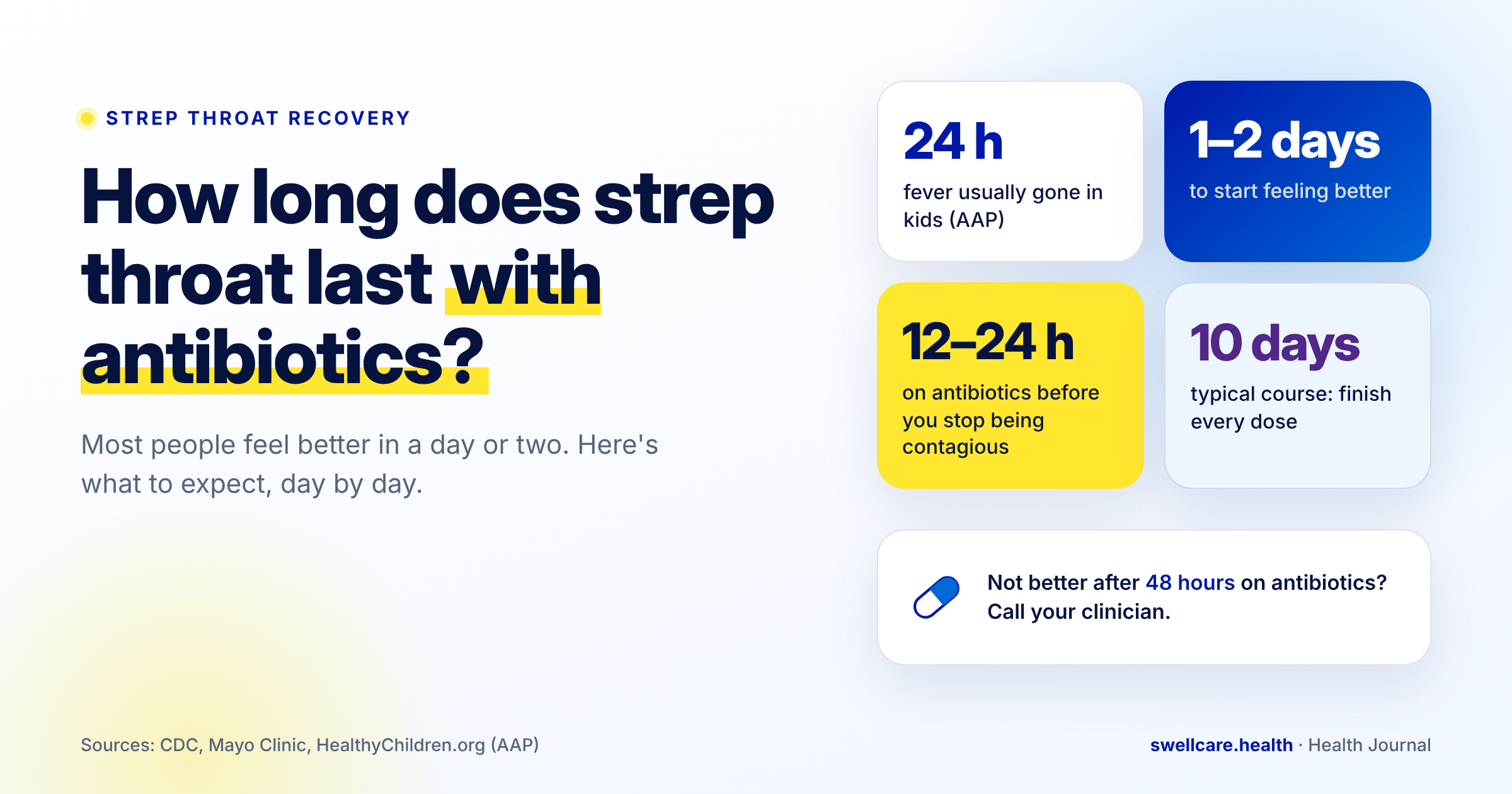
Why bother knowing? A bacterial infection like strep can spread to other places if nobody treats it, while a virus mostly needs time. The CDC lists abscesses, ear and sinus infections and, rarely, rheumatic fever. Strep throat is also contagious, as are most virus-driven cases, so it’s wise to stay home while you’re feverish and feeling rotten.
What helps a sore throat feel better faster
You can’t shorten a viral infection much. You can make the days easier, and that counts as real treatment. Most remedies are about comfort, hydration and rest.
Home remedies that are worth your time
Start with the boring stuff. Home remedies work better than their reputation.
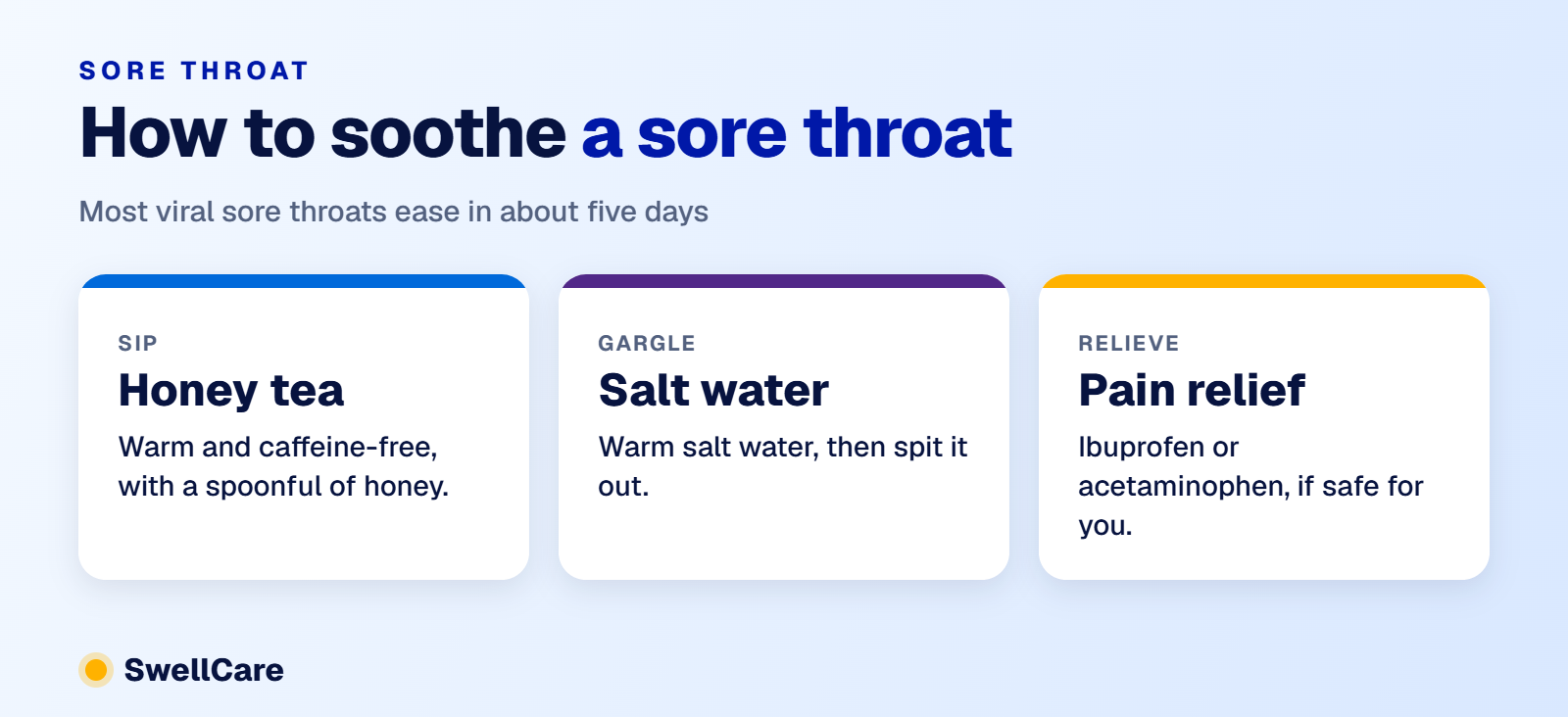
- Saltwater gargle. Mix half a teaspoon of salt into a cup of warm water, gargle, spit it out. MedlinePlus recommends this several times a day.
- Fluids and hydration. Warm tea with honey, broth or plain water. Cold works too: ice chips and popsicles numb the pain.
- Lozenges and hard candy. Skip them for young children because of the choking risk. The CDC says no lozenges under age 4.
- A cool-mist humidifier. Keep it clean, or it becomes its own problem.
- Rest. Boring, effective.
These remedies won’t cure anything, but they soothe the irritation. They take the edge off while your body does the work.
Over-the-counter medicine
Over-the-counter acetaminophen or ibuprofen can ease the pain and bring down a fever. Follow the label, and ask a pharmacist if you’re pregnant or take other medicines. Never give aspirin to children. Check dosing with a clinician for kids.
Numbing sprays and medicated lozenges are fine for short-term relief, though the evidence for sprays alone is thin.
Do antibiotics help?
Only if a bacterial infection is behind it, and strep is the main bacterial cause. Antibiotics do nothing against a viral infection, and they come with real risks, including allergic reactions and resistant bacteria, the CDC warns. If your strep test is positive, treatment with antibiotics makes sense. If it’s negative, skip them.
When a sore throat needs a clinician
Most sore throats don’t need a clinician. Some symptoms do, and the list is short enough to remember. Medical treatment is warranted for these.
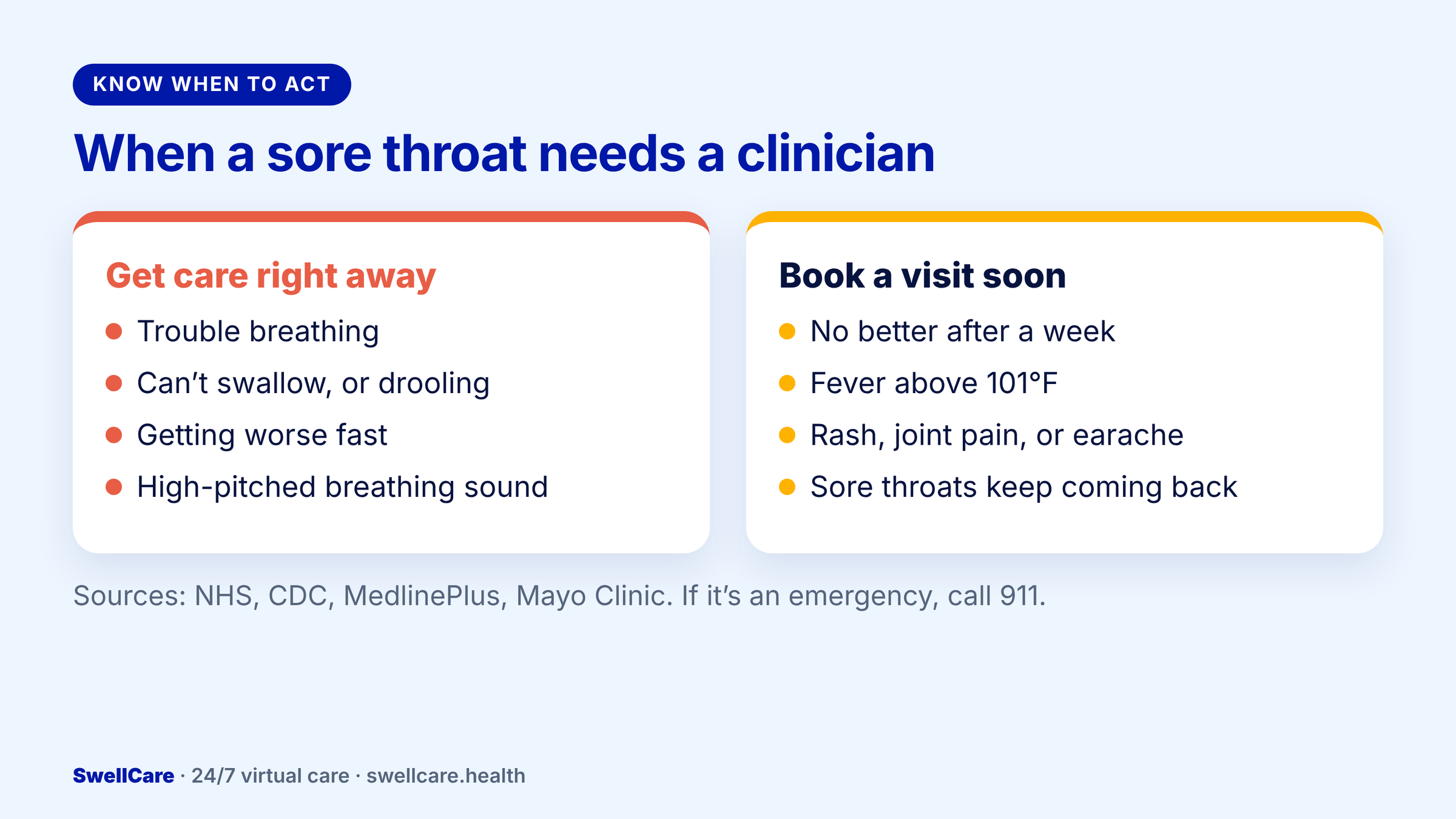
Get care right away if
- You have trouble breathing, or you hear a high-pitched sound when you breathe
- You can’t swallow, you’re drooling, or saliva keeps pooling in your mouth
- You’re getting worse quickly
- Your neck or face is swelling
Those signs can mean an abscess or swelling that narrows your airway. Call 911 or go to the nearest emergency room. Don’t drive yourself.
Book a visit this week if
- It hasn’t improved after a week. The NHS and Mayo Clinic both use about a week as the line.
- Your fever is above 101°F
- You’ve developed a rash, joint pain or an earache
- Sore throats keep coming back
- Hoarseness lasts more than two weeks
Getting your sore throat checked with Swell
A sore throat at 10 p.m. on a Sunday isn’t an emergency, but it isn’t something you want to guess about either. That’s where our virtual urgent care comes in.
Swell is clinician-led virtual care, available 24/7 for non-emergency concerns. The screening is free, and a completed consultation is $45. A clinician can talk through your symptoms, help you work out whether this looks viral or bacterial, and tell you if you need an in-person test such as a rapid strep test. Not sure how it works? See how it works.
It’s not emergency care. If you can’t breathe or swallow, call 911.
Ready? Start a visit and get clear next steps tonight.
Questions people ask about how long a sore throat lasts
How long does a sore throat last without treatment?
When a virus is behind it, about a week, and often less. The CDC says most get better on their own within one week. Strep throat is bacterial, so it needs treatment, can linger and can cause complications, which is why a test matters if you have strep symptoms: fever, swollen tonsils and no cough.
How long does a sore throat last with a cold?
Usually the sore throat is the first of the common cold symptoms to arrive and the first to fade, somewhere around days 3 to 7. Congestion and cough can hang around a few days longer than the pain does.
Is a sore throat contagious?
If a virus or strep is behind it, yes. Viruses spread through coughs and sneezes, and strep spreads through respiratory droplets and shared cups and utensils. A sore throat from allergies, dry air or reflux irritation isn’t contagious.
How do you get rid of a sore throat faster?
You can’t speed up a virus, but you can ease the symptoms: simple home remedies like saltwater gargles, fluids, rest, a humidifier, lozenges for adults and older kids, and over-the-counter pain relievers. If a test shows strep, antibiotics can help you feel better sooner.
When does a sore throat become an emergency?
When you struggle to breathe or swallow, drool, make a high-pitched sound as you breathe, or get worse fast. Those need emergency care. A sore throat that simply hasn’t improved after a week needs a regular visit, not the ER.
Trusted references
Public-health, research, and medical-society resources related to this guide.