It’s 2 a.m. You’re on the bathroom floor, and even a sip of water comes back up. Here’s the short answer on how to stop vomiting: give your stomach a short rest, then take tiny sips of a clear fluid, and stay upright until the waves pass.
Most vomiting from a stomach bug fades within one to three days, according to the CDC’s norovirus page. That alone rarely hurts you. Losing more fluid than you can replace does.
Below you’ll find a first-hour plan, the foods and drinks that tend to stay down, what the research says about ginger and acupressure, and a plain home, call or ER chart so you know when to stop toughing it out.
How to stop vomiting at home, step by step
Think of this as a slow ramp, not a quick fix. Your gut is irritated, and anything big or fast sets it off again.
Rest first, then start with sips
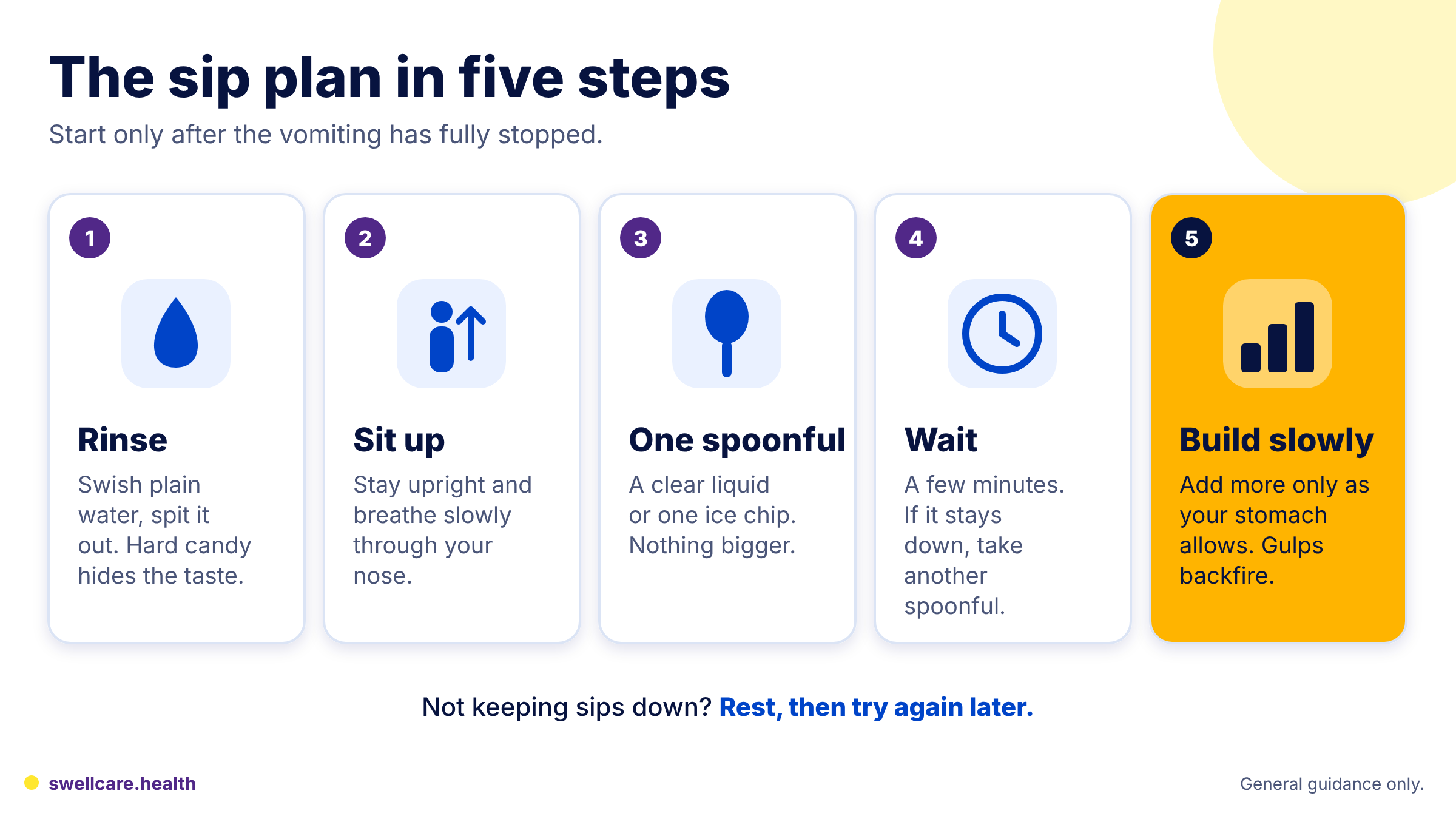
While you’re actively throwing up, don’t force anything down. If you’re in bed, lie on your side so you don’t breathe in vomit. The American Cancer Society says to wait until it has fully stopped before you try fluids. Then go small:
- Rinse your mouth with plain water and spit it out. Hard candy can cover the sour taste.
- Sit upright and breathe slowly through your nose.
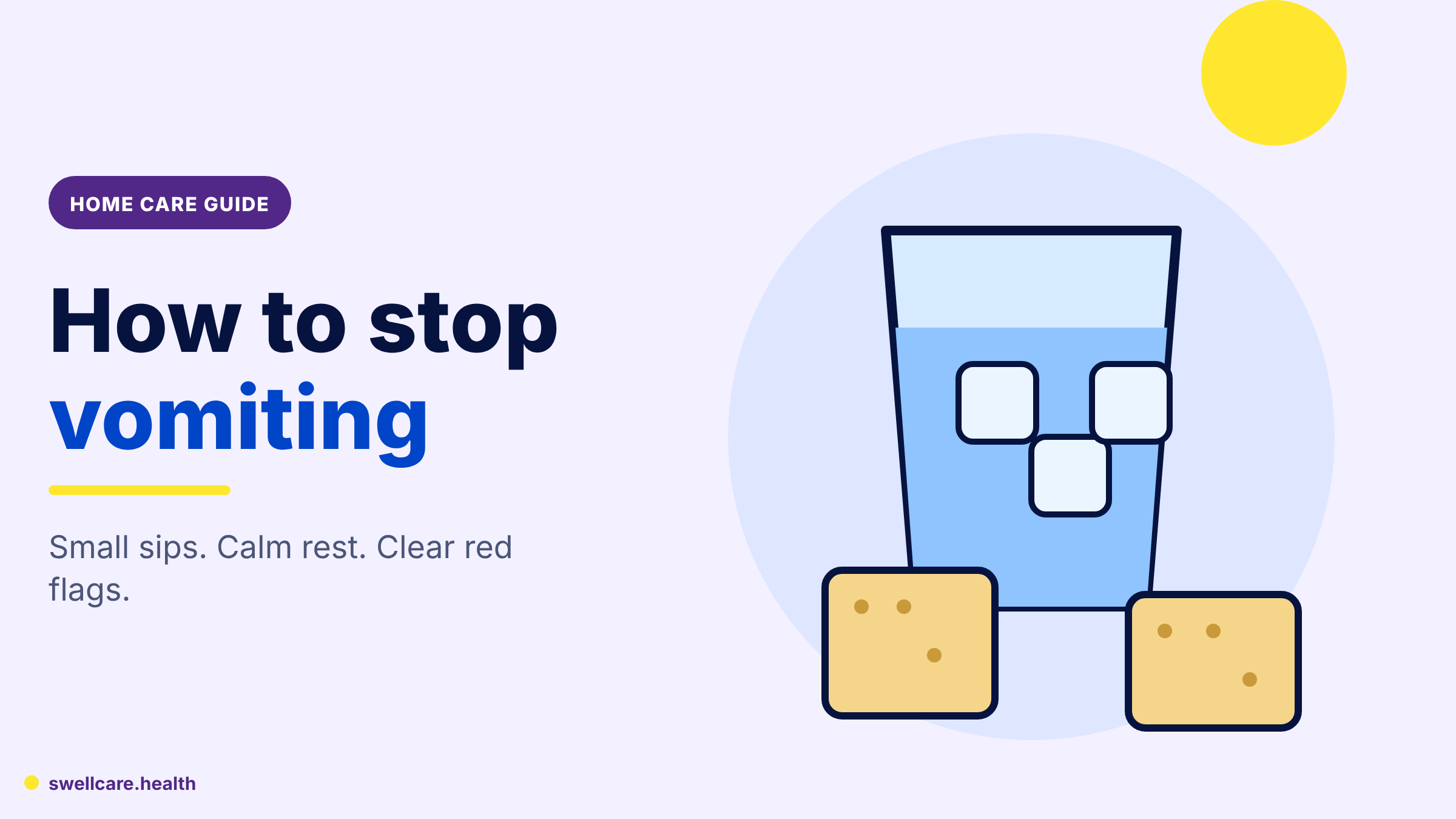
- Take one spoonful of a clear liquid, or let an ice chip melt on your tongue.
- Wait a few minutes. If it stays down, take another. If it doesn’t, rest and try again later.
- Build up the amount only as your stomach allows.
Sips beat gulps every time. A big glass stretches the stomach and often triggers another round.
What to drink and what to eat when it settles
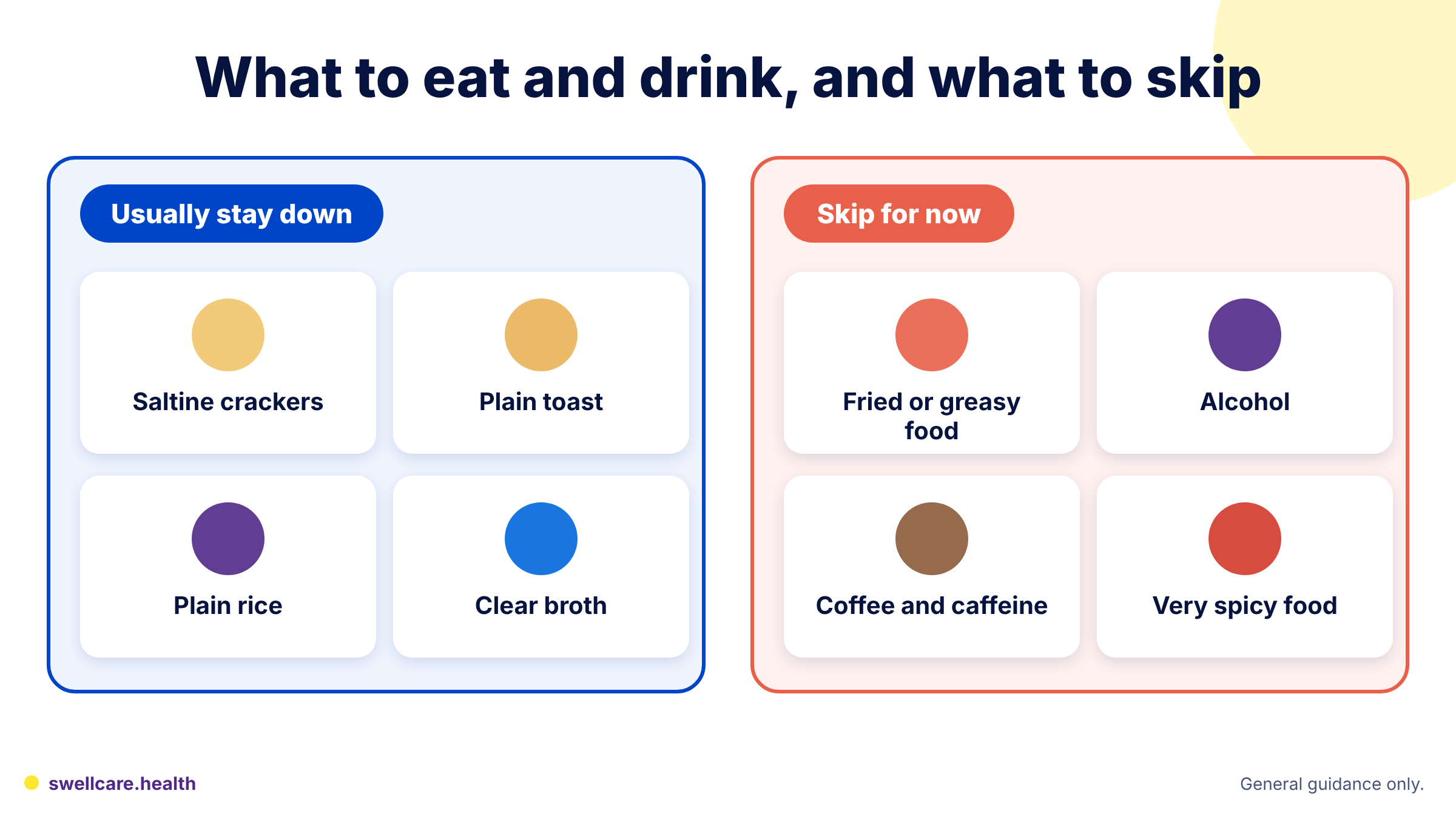
Once sips stay down, choose fluids that replace salts as well as water. An oral rehydration solution is built for exactly this job. Sports drinks and broth also work, as does plain water, according to the NIDDK. Flat soda is fine once the bubbles are gone. MedlinePlus puts the daily goal at 8 to 10 cups of clear liquids when you’re past the worst.
Food comes later. Try six to eight small meals instead of three big ones, starting with bland foods such as saltine crackers, toast, rice, potatoes or baked chicken. UPMC suggests waiting about half a day after your last episode before a full meal. If the crackers stay down, you’re on track.
What makes vomiting worse
Some habits keep the cycle going. Skip them until you’ve been steady for a day.
Alcohol and caffeine irritate your digestive tract and pull fluid out of you. Greasy, fried or very spicy food sits heavy. Strong smells from cooking, perfume or smoke can set off nausea all on their own, so ask someone else to cook and open a window. Lying flat right after drinking is another common mistake. The American Cancer Society advises sitting upright for at least an hour afterward.
Do ginger, acupressure and medicine actually help?
Some do. Some are mostly hope.
Ginger is the one everyone mentions. The National Center for Complementary and Integrative Health calls the research mixed and limited. Ginger may ease nausea and vomiting in pregnancy, including morning sickness, but most studies haven’t shown a benefit for motion sickness, and it can cause heartburn. A cup of ginger tea is harmless for most people. Just don’t count on it to settle things by itself.
Wrist bands that press an acupressure point are low risk, and the American Cancer Society lists them among the complementary methods people try. Treat them as a bonus, not a plan.
Medicine is more dependable when it’s severe. Over-the-counter motion sickness tablets can help on car, boat or plane trips. For a stomach bug with diarrhea, adults can use loperamide or bismuth subsalicylate, but NIDDK says to skip both if you have a fever or bloody diarrhea. Antibiotics won’t help a virus. In severe cases, a doctor can prescribe an antiemetic, and medicines for nausea and vomiting usually take 30 to 60 minutes to work. Can’t keep a pill down? Ask about a dissolving tablet or a suppository.
Pregnant and dealing with morning sickness, or giving medications to a child? Check with a clinician first.
Why you’re throwing up in the first place
The cause shapes the plan, so a quick look is worth it.
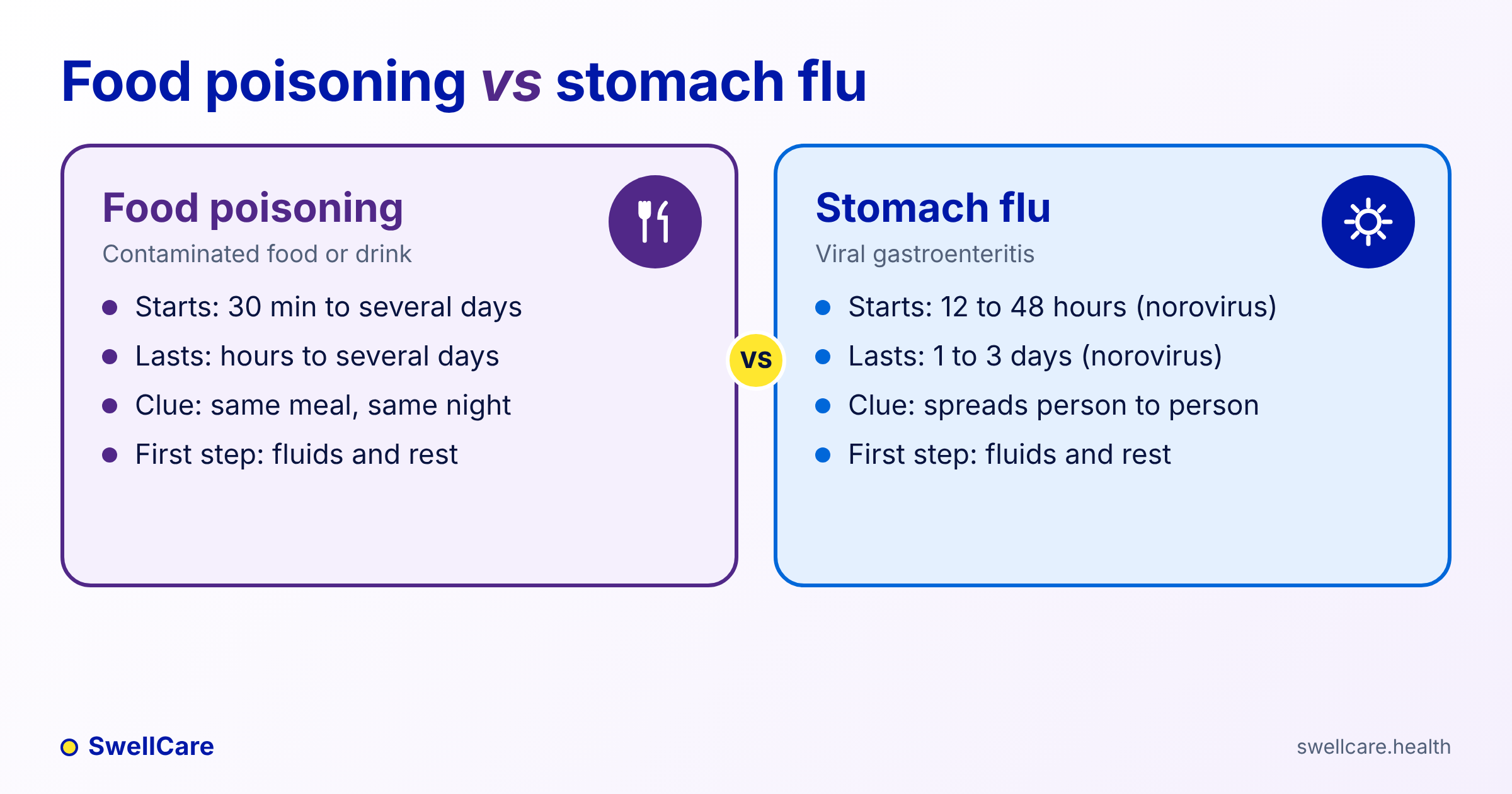
The most common culprit is the stomach flu, also called viral gastroenteritis. Norovirus is the leading cause of vomiting and diarrhea illness in the United States, and it spreads fast. Shared food, touched surfaces and unwashed hands all carry it. Food poisoning looks similar, but it often hits within hours of a meal and may bring a fever. Migraine, pregnancy-related morning sickness and some prescriptions can trigger nausea and vomiting too. And regular heavy cannabis use can cause repeated cycles of vomiting known as cannabinoid hyperemesis syndrome.
If it’s norovirus, wash your hands with soap and water for at least 20 seconds. Then stay home until 48 hours after your symptoms stop, per the CDC.
Signs of dehydration and when to get care for vomiting
Whether the cause is a virus or food poisoning, dehydration is what turns a rough bout of nausea and vomiting into a medical problem. Watch for these symptoms: dark urine or very little of it, a dry mouth, dizziness when you stand up, a racing heartbeat, sunken eyes or unusual sleepiness. Not peeing in eight hours or more is a clear red flag, says MedlinePlus, and a reason to call your doctor.
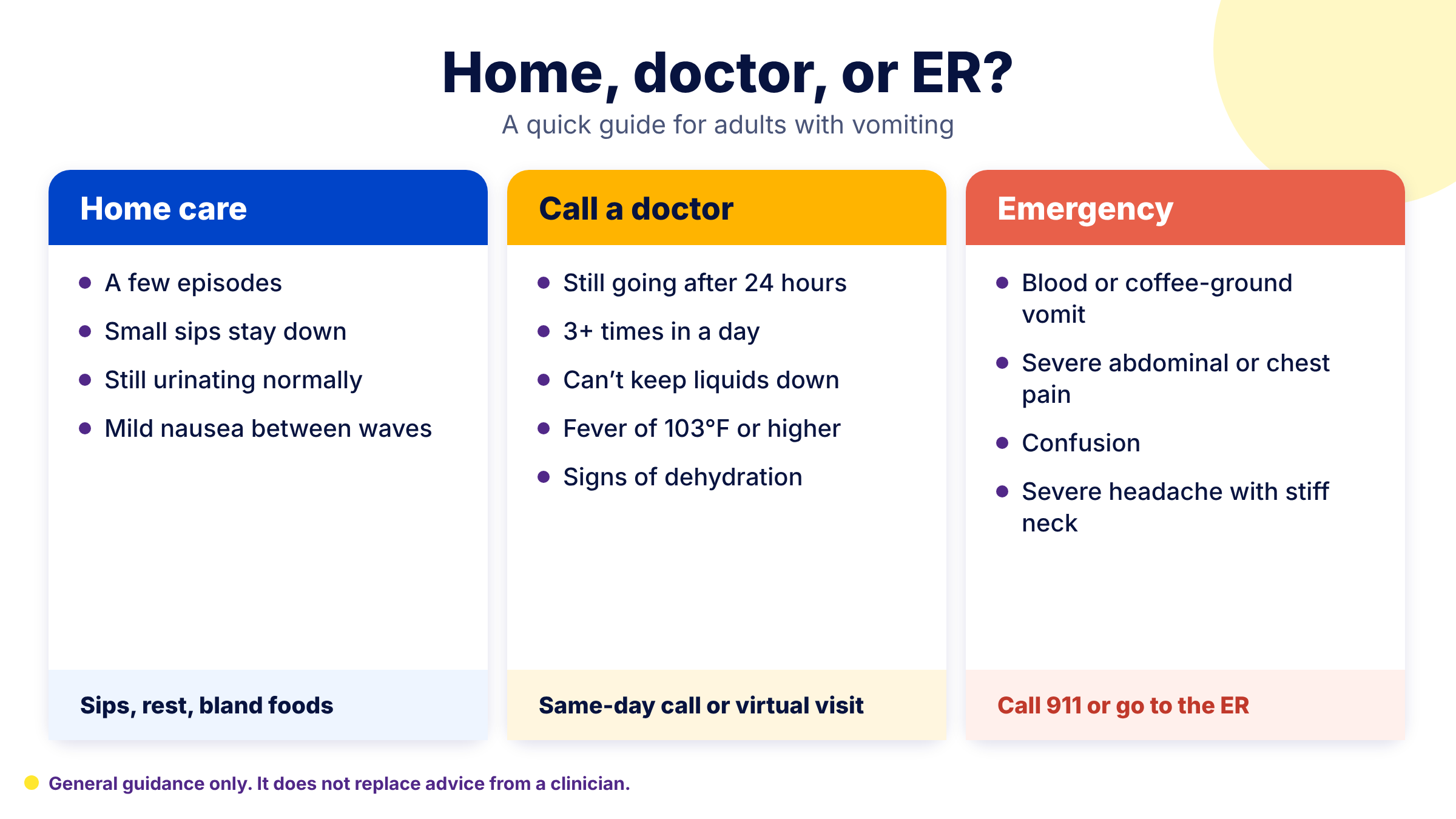
Use this chart to pick your next move.
| Level | What you’re seeing | What to do |
|---|---|---|
| Home care | A few episodes, small sips stay down, you’re still urinating normally | Sips, rest, bland foods as it eases |
| Call a doctor | Vomiting past 24 hours, three or more times in a day, can’t keep any liquid down, fever of 103°F or higher, signs of dehydration | Same-day call or a virtual visit |
| Emergency | Blood or coffee-ground material in vomit, severe abdominal pain, chest pain, confusion, severe headache with a stiff neck | Call 911 or go to the ER |
Two more situations deserve a call even if you feel okay. One is diabetes, because prolonged vomiting can throw off blood sugar. The other is vomiting that comes with unplanned weight loss. For adults, Mayo Clinic says a visit is due when vomiting lasts more than two days.
Get care for vomiting from home
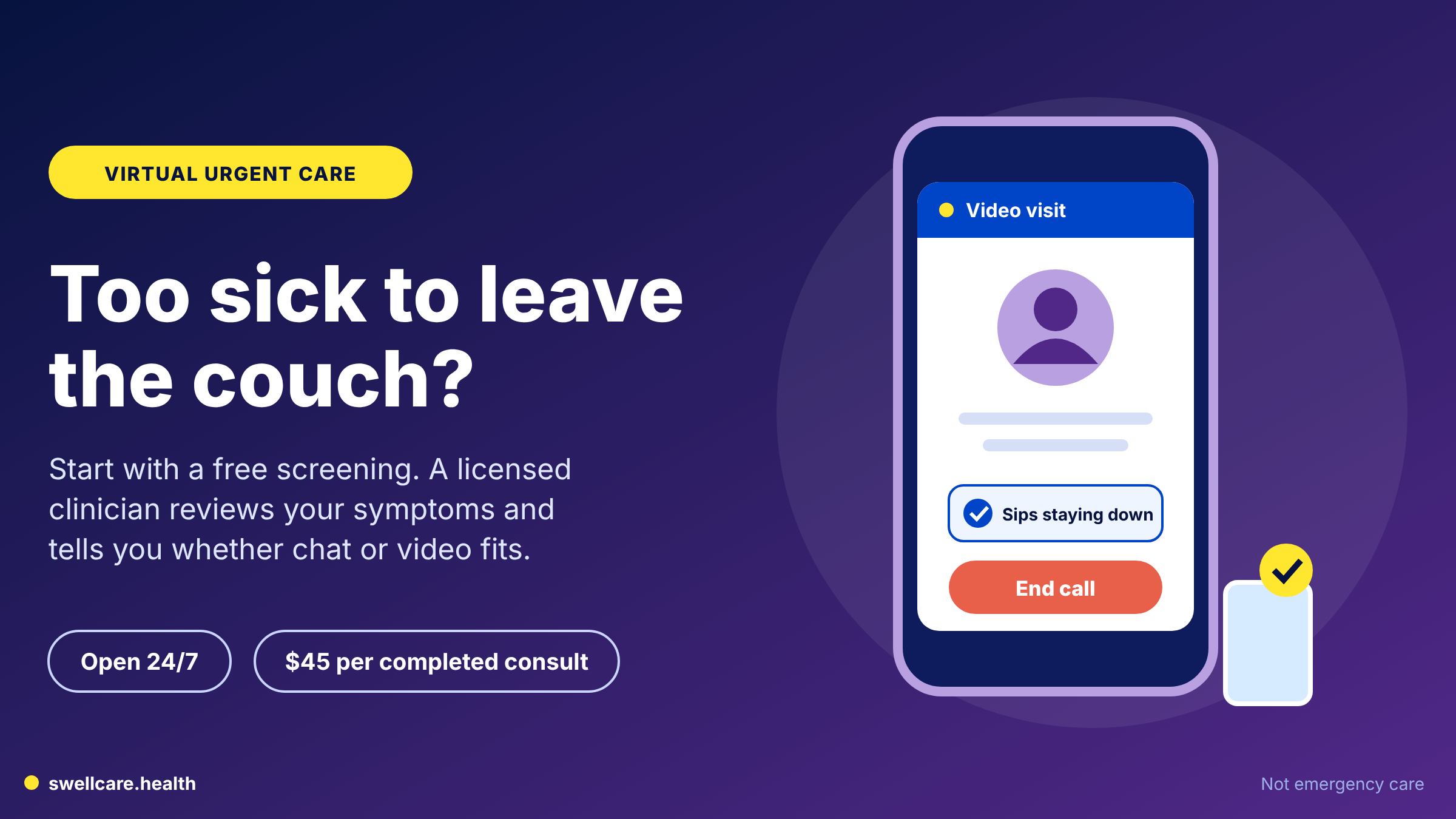
A waiting room is the last place you want to be with a stomach bug. If you’ve been sick for more than a day, you can’t hold down fluids, or you’re just unsure, Swell’s virtual urgent care is open 24/7. You start with a free screening. A licensed clinician reviews your symptoms and history, then tells you whether chat or video makes sense. A completed consultation is $45, and medication or lab costs are separate.
Know the limits. Prescriptions are never guaranteed, and Swell doesn’t prescribe controlled substances. It isn’t emergency care either. If you see anything in the emergency row above, call 911 or head to the nearest ER first.
Ready? Start free. Or read how Swell handles nausea and diarrhea, plus the motion sickness page for travel.
Questions people ask about stopping vomiting
What will stop vomiting fast?
Nothing works instantly, but this comes closest. Stop eating and drinking until the vomiting settles, sit upright, breathe slowly, then take spoonfuls of an oral rehydration solution. If you’re still being sick after several hours, or you’re getting weak, a clinician can prescribe a medicine for nausea and vomiting that works better than home remedies.
Which drink is best when you can’t stop throwing up?
An oral rehydration solution is the best choice because it replaces fluid and salts together. Sports drinks, broth and water are fine backups, and ice chips help when even sips feel like too much. Skip coffee, alcohol and fizzy drinks until you’ve kept fluids down for a day.
How do you stop the urge to throw up?
Get fresh air. Sit upright, and breathe slowly in through your nose and out through your mouth. Avoid strong smells, including cooking odors. Cool, mild foods like crackers or a sip of cold water smell less and settle easier. Pressure-point wrist bands won’t hurt, though the evidence is limited.
How long does vomiting last?
It usually lasts about a day, and most people feel better within one to three days. If it keeps coming back after 24 hours, call a doctor. For adults, Mayo Clinic puts the visit threshold at more than two days. Severe pain, confusion or blood in your vomit needs emergency care now.
Can you stop vomiting without medicine?
Often, yes. Most cases run their course with rest and fluids alone. Medicine becomes worth it when it’s severe, keeps you from drinking, or comes with dehydration. A doctor can prescribe an anti-nausea medicine, and a virtual visit can be the quickest way to ask.
Should I go to the ER for vomiting?
Go if you see blood or coffee-ground material in your vomit, have severe belly or chest pain, feel confused, or have a severe headache with a stiff neck. Also go if you can’t stay awake or haven’t urinated in many hours. For milder cases, urgent care or a virtual visit is usually enough.
Trusted references
Public-health, research, and medical-society resources related to this guide.
- MedlinePlus: Nausea and vomiting self-care
- Mayo Clinic: Nausea, when to see a doctor
- CDC: About norovirus
- NIDDK: Viral gastroenteritis treatment
- NCCIH: Ginger
- American Cancer Society: Managing nausea and vomiting
- Cleveland Clinic: Cannabis hyperemesis syndrome
- UPMC HealthBeat: Treat vomiting at home