It’s 11 p.m. The pizza was great. Now there’s a hot, sour line climbing behind your breastbone, and you want it gone.
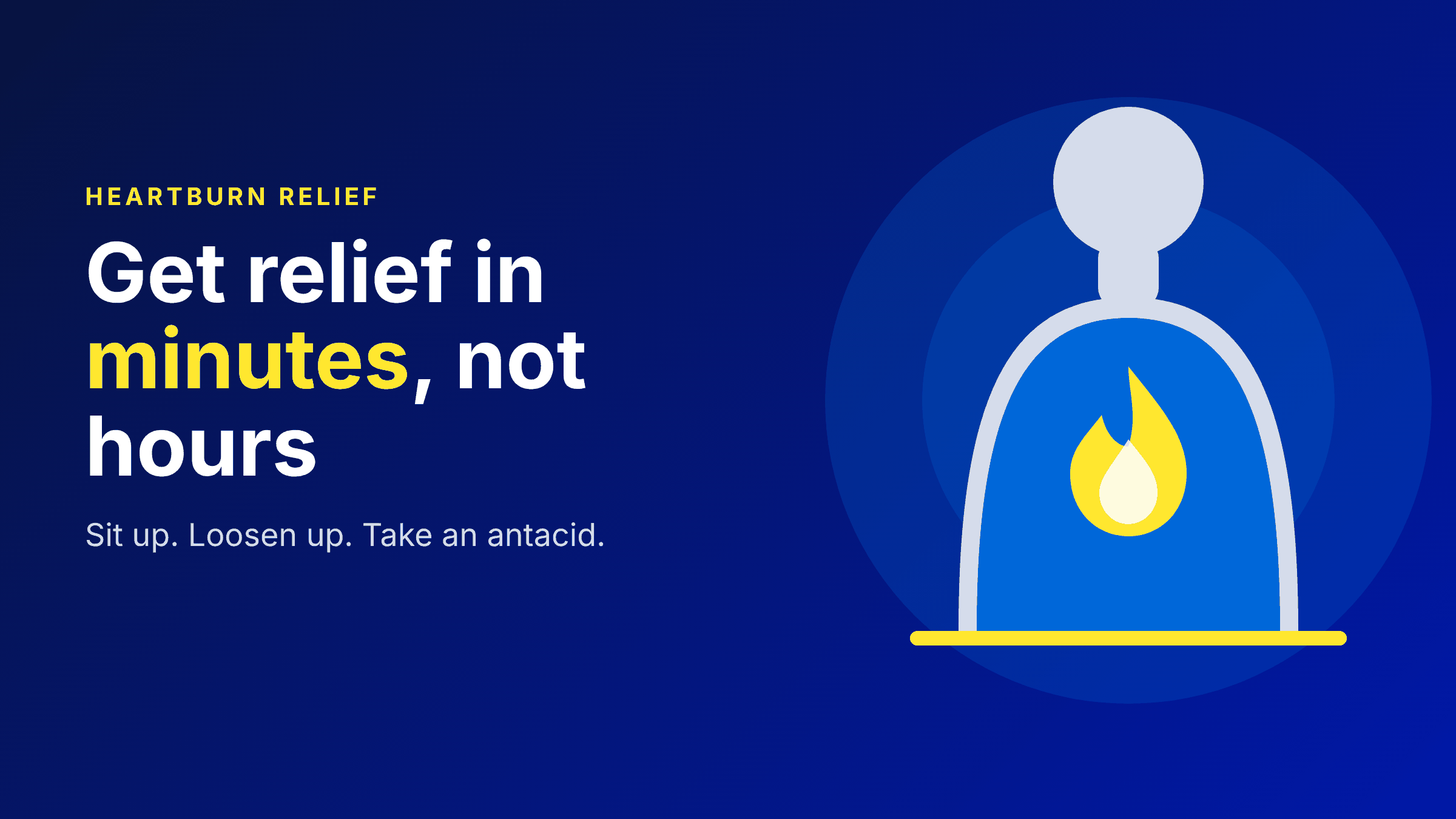
Here’s how to get rid of heartburn fast: sit upright, loosen your waistband, and take an antacid. Most people feel real heartburn relief within minutes. If the burn keeps coming back, or you’re reaching for tablets several times a week, that’s a sign something deeper needs attention, and we’ll cover that too.
Below you’ll find what works in the first five minutes, why the burn happens, which medicines act quickly and which don’t, and a few home remedies worth trying (plus the ones I’d skip).
What to do in the first five minutes
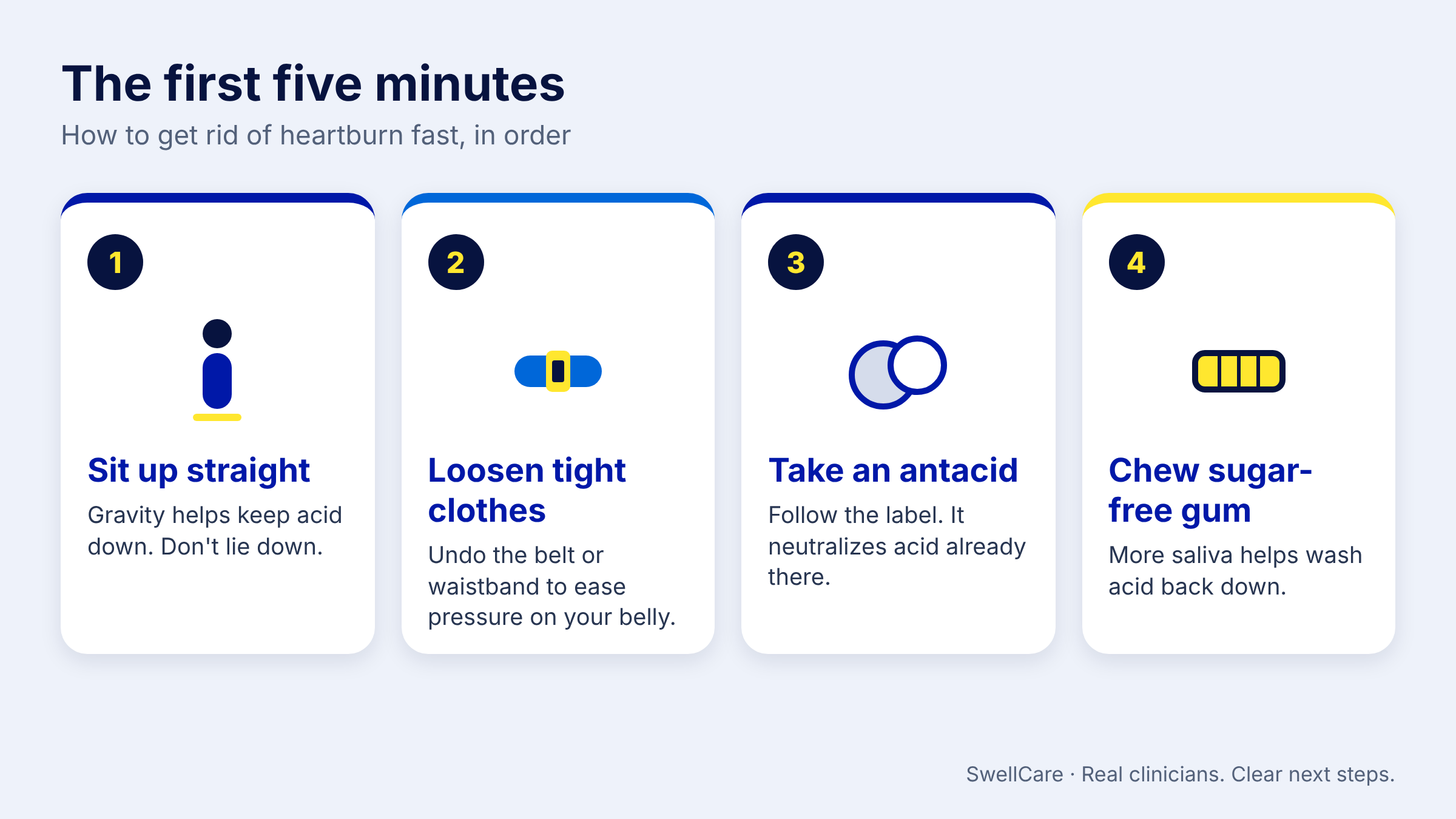
Start with the simple physical moves. They cost nothing, and gravity does a surprising amount of the work.
Sit up and loosen anything tight
Stand or sit tall. Slouching squeezes your belly and pushes stomach acid toward your esophagus, and that’s exactly what feeds the burn. Undo the belt, unbutton the jeans, take off the shapewear. Good posture takes pressure off the valve at the bottom of your esophagus, which is the whole point. Poor posture after a big meal is a classic setup for heartburn.
Don’t lie down. Not even for a few minutes.
Take an antacid
Antacids are the fastest over-the-counter option for heartburn relief. They neutralize stomach acid that’s already there, so the burn eases quickly. Tablets with calcium carbonate are the classic choice, and the label will tell you how many to take. Take the dose on the label and no more.
The catch is that antacids wear off. They treat tonight’s burn, not the reason it started. The NIDDK also advises against relying on them every day without checking with your doctor first.
Chew sugar-free gum
It sounds like folk wisdom, but there’s logic behind it. Chewing makes you swallow more and makes more saliva, and saliva helps wash acid back down and buffer what’s left. Try a piece of gum for about half an hour after a meal, since a minute of chewing won’t do much. Gum won’t fix the cause, but it can take the edge off. Skip peppermint flavors if peppermint tends to trigger you.
Why heartburn hits (and why it keeps coming back)
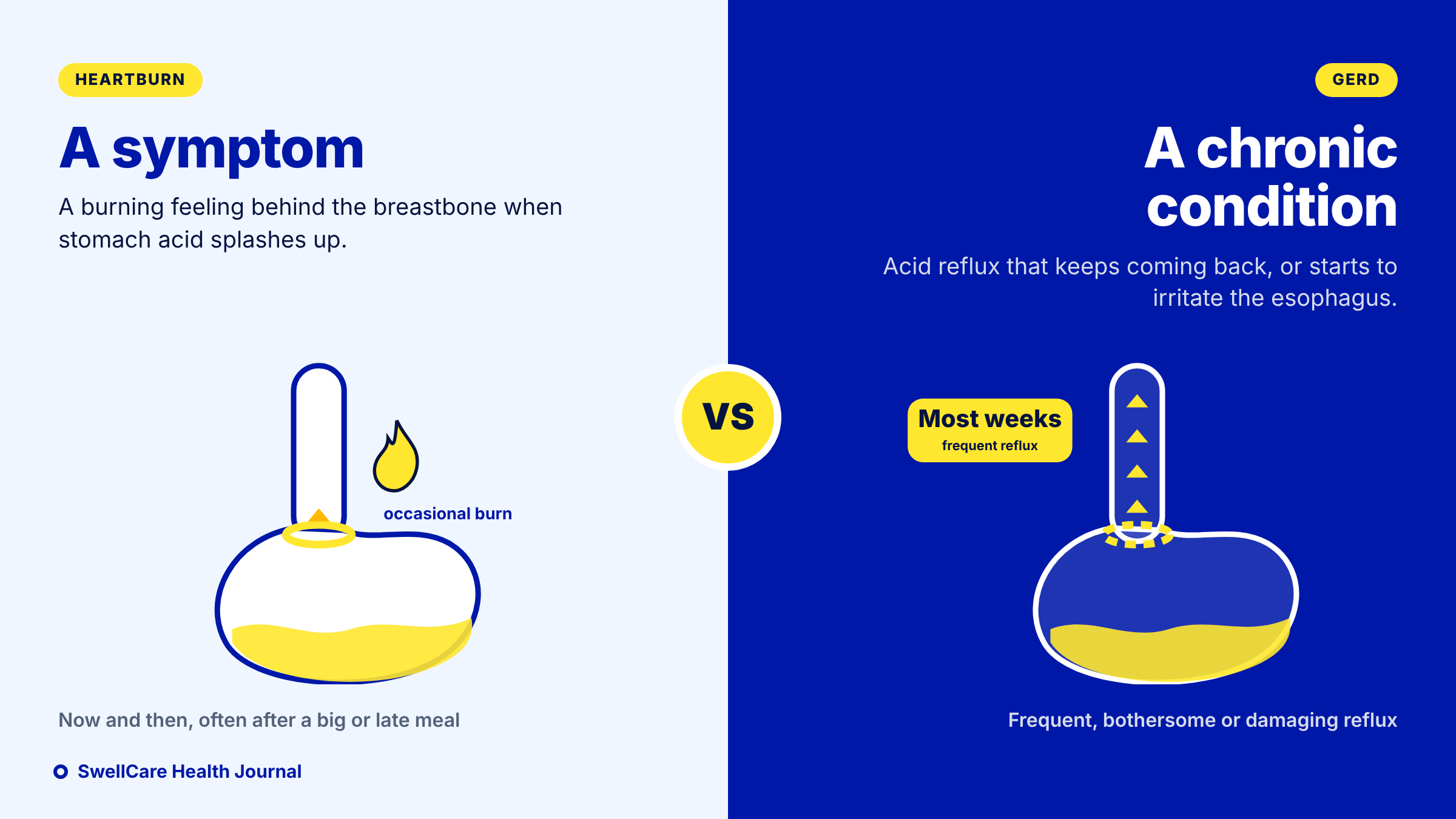
Heartburn is the burning feeling itself. The cause is acid reflux, when stomach acid washes up into the esophagus, the tube that carries food to your stomach. Doctors call the occasional kind acid reflux and the frequent kind GERD. A ring of muscle called the lower esophageal sphincter is supposed to stay shut after you swallow. When the lower esophageal sphincter relaxes at the wrong time, stomach acid slips through.
The lining of the esophagus isn’t built to handle acid. That’s why it burns.
Mayo Clinic describes the usual symptoms as burning pain behind the breastbone, often after eating or at night, sometimes with a sour or bitter taste. Those symptoms get worse when you bend over or lie down, and acid reflux symptoms like these can show up after any big meal.
Common triggers
Triggers vary from person to person, but the usual suspects are fatty or fried food, tomato products, citrus, chocolate, peppermint, coffee, carbonated drinks, and alcohol. Big meals count too. So does eating close to bedtime.
Beyond food, extra weight, smoking, and stress all make acid reflux more likely, and alcohol relaxes the valve that keeps acid down. Pregnancy can do it as well. A glass of wine with a late, heavy dinner is a common recipe for heartburn. If you can spot your own trigger foods, you’ve found the cheapest prevention there is.
Heartburn medicine: antacids, H2 blockers and PPIs
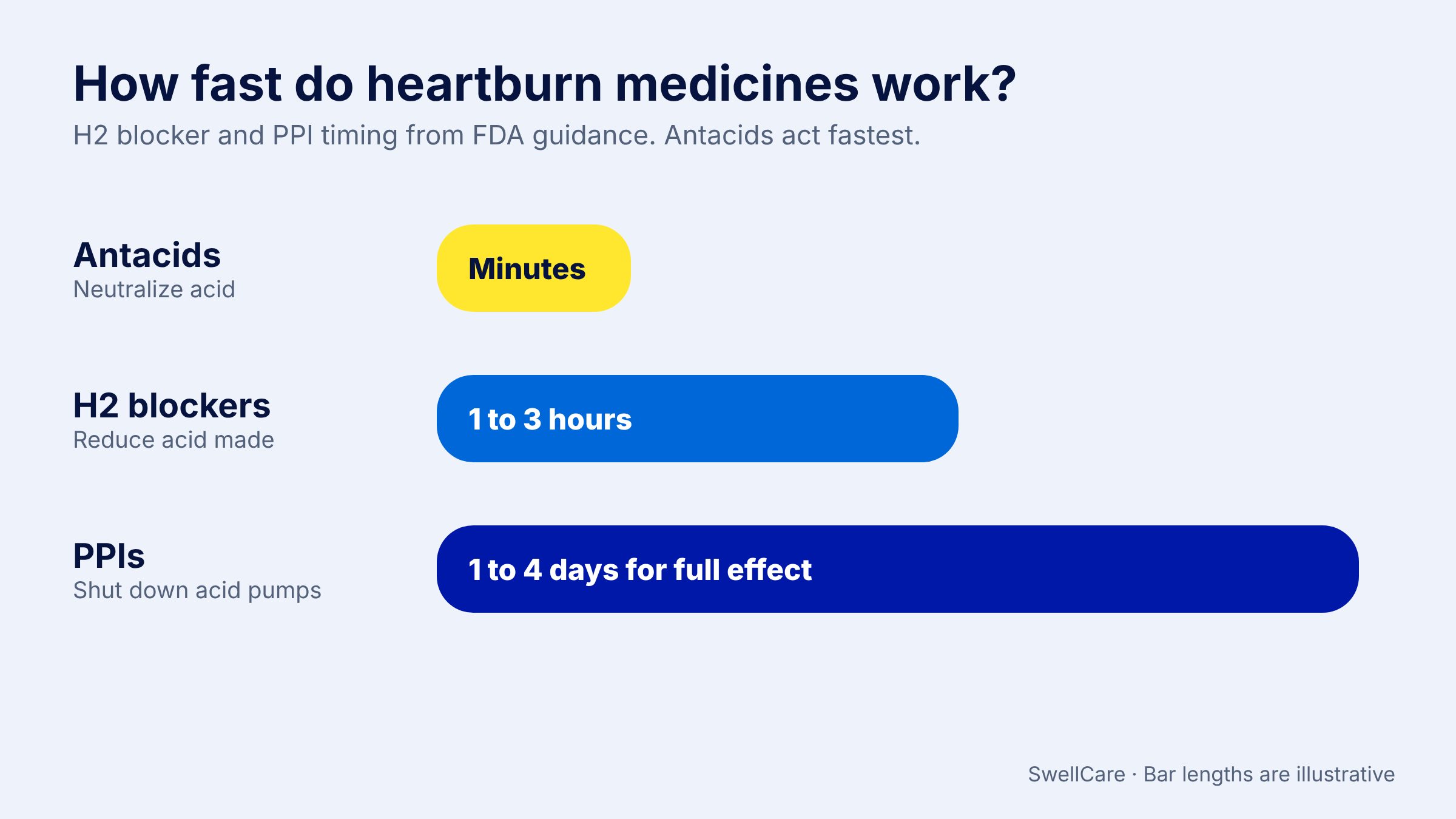
Not all over-the-counter medications work at the same speed, and heartburn medications fall into three groups. Picking the wrong one for a sudden attack is the most common mistake I see people make. Here’s the short version, based on FDA guidance.
| Type | How it works | When you’ll feel it |
|---|---|---|
| Antacids | Neutralize acid already in your stomach | Quickly, but they don’t last |
| H2 blockers | Reduce how much acid your stomach makes | Within 1 to 3 hours |
| Proton pump inhibitors (PPIs) | Shut down acid production more strongly | 1 to 4 days for full effect |
Antacids: fastest, shortest
Think Tums, Rolaids, or Mylanta. These are your go-to for a sudden attack. Side effects can include diarrhea or constipation, depending on whether the formula leans on magnesium or calcium.
H2 blockers: slower, longer
Famotidine (Pepcid AC) is the best-known example. It won’t help in the first few minutes, but famotidine holds acid down for several hours, so some people take it before a meal they know will cause trouble.
PPIs: not for emergencies
Omeprazole and other proton pump inhibitors are built for frequent heartburn, meaning two or more days a week. Proton pump inhibitors (PPIs) are the strongest of the three groups. The FDA says they aren’t meant for immediate relief. Over the counter, they’re limited to a 14-day course, up to three times a year. If you need more than that, it’s time for a conversation with a clinician.
If you take prescription drugs, check with a pharmacist before starting any acid reducer, because interactions are possible.
Home remedies for heartburn: what helps and what doesn’t
Plenty of home remedies float around online, and the best home remedies for heartburn are the boring ones. A few are reasonable. Others I’d leave in the cupboard.
Ginger tea. Low risk, soothing, and a lot of people like it. The research on ginger is limited, so treat ginger as a comfort measure and not a cure. A cup of weak ginger tea after dinner is a sensible habit.
Baking soda. It’s sodium bicarbonate, so it does neutralize acid, and it works fast. But it’s loaded with sodium, and it can leave you bloated and gassy. Cleveland Clinic says people with heart problems, kidney disease, or a low-sodium diet should check with their care team first, and that it shouldn’t be used beyond two weeks without guidance. I’d call it a last-resort option, not a routine one.
Apple cider vinegar. Popular, but there’s little solid evidence behind apple cider vinegar, and it’s acidic. Pouring more acid toward an irritated esophagus doesn’t strike me as a smart bet, so I’d skip apple cider vinegar.
Water. A few sips can rinse acid back down. A big gulp that fills your stomach can make reflux worse, so keep it small.
How to stop heartburn at night
Night-time attacks are the worst, because lying flat takes gravity out of the equation, and they wreck your sleep. Finishing dinner at least two to three hours before bedtime helps more than most people expect. Mayo Clinic notes that eating within two hours of bedtime can wake you with heartburn.
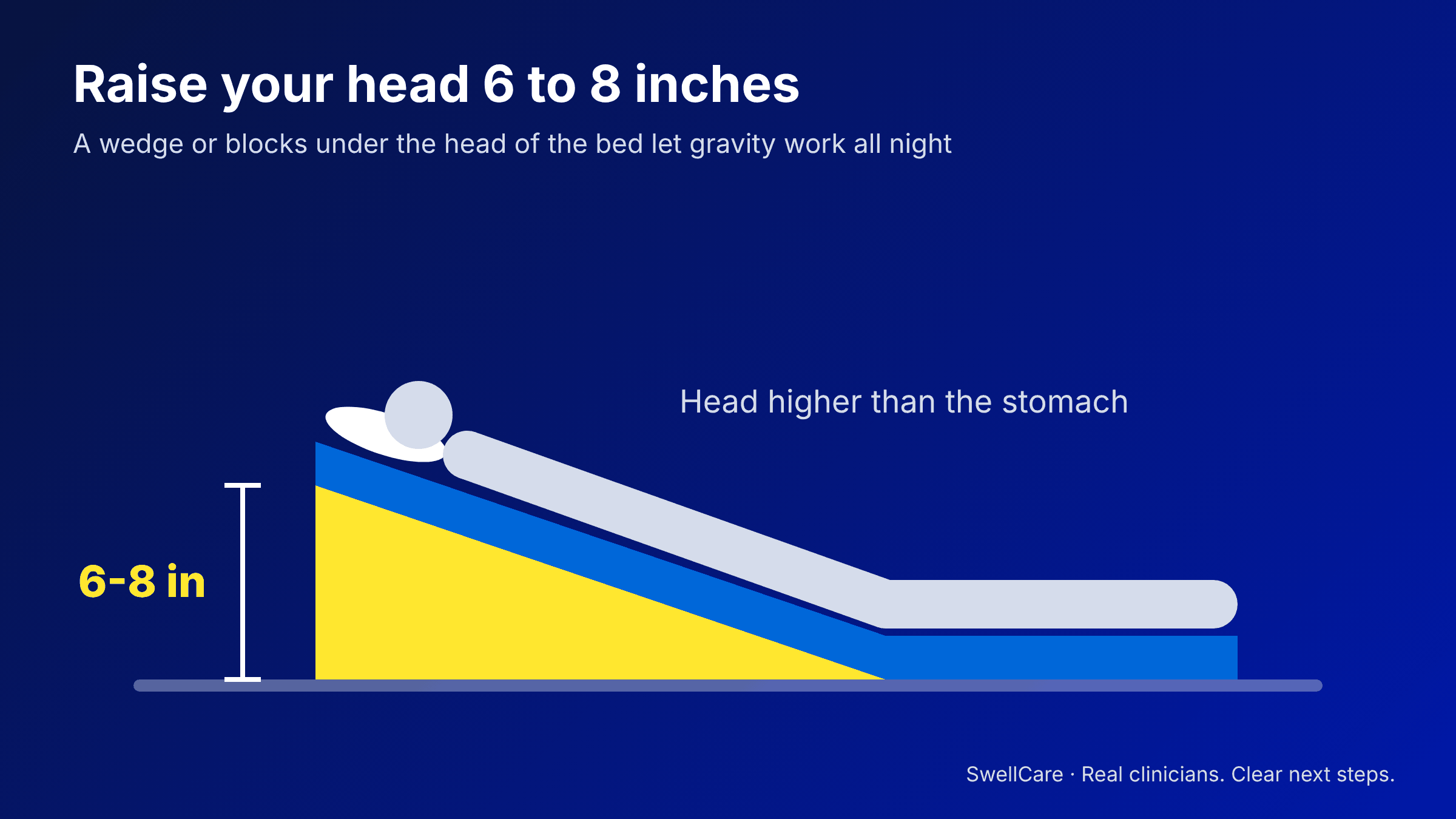
For the bed itself, the NIDDK suggests raising your head 6 to 8 inches, using a foam wedge or pillows under your head and upper back. Stacking pillows under your head alone just bends your waist, so build a gentle slope instead. Many people also find sleeping on the left side calmer than the right. Better sleep makes everything else easier, including stress.
If you’re also trying to lose weight, you’ve picked a double win. Even modest weight loss reduces the pressure on your stomach, and it’s one of the lifestyle changes the NIDDK lists for reflux. Quitting smoking is another. Stress management helps too, since stress makes many people more aware of their symptoms.
When heartburn isn’t just heartburn
This part matters more than everything above.
Heartburn and a heart attack can feel alike. Heartburn usually burns and comes after eating or when you lie down, and antacids tend to ease it. A heart attack more often feels like pressure, tightness, or squeezing, sometimes spreading to the arm, neck, jaw, or back, with shortness of breath, a cold sweat, or nausea. Mayo Clinic’s advice is plain: if chest pain lasts and you aren’t sure it’s heartburn, call 911.
For the ordinary kind, see a doctor if you have:
- heartburn more than twice a week
- symptoms that continue despite over-the-counter medicines
- trouble swallowing
- ongoing nausea or vomiting
- weight loss you can’t explain
Frequent heartburn can be GERD (gastroesophageal reflux disease), and untreated GERD can damage the esophagus over time. Mayo Clinic also links long-running GERD to Barrett’s esophagus. Persistent symptoms deserve a real workup. So if you’ve been searching for how to get rid of heartburn fast every week, the better question is how to stop it coming back. A Swell clinician can talk through your symptoms online and help you plan next steps.
Questions people ask about getting rid of heartburn fast
How long does heartburn last?
For many people it fades within an hour or two, especially after an antacid and a change of posture. If it lasts longer, keeps returning, or shows up several times a week, don’t wait it out. That pattern deserves a clinician’s attention.
Does drinking water help heartburn?
A few small sips can help rinse stomach acid out of the esophagus, but water doesn’t neutralize it. Drinking a lot at once can fill your stomach and bring more reflux. Sip, don’t chug.
What helps heartburn fast at night?
Sit up, take an antacid, and stay upright for a while before lying back down. Longer term, raise the head of your bed 6 to 8 inches, avoid late dinners, and try sleeping on your left side.
What home remedies don’t work for heartburn?
Apple cider vinegar has little evidence behind it, and baking soda is risky if you have heart or kidney problems or watch your sodium. Neither should replace medicine or a proper checkup if the burn keeps coming back.
Is acid reflux the same as heartburn?
Not quite. Acid reflux is the backward flow of stomach acid into the esophagus. Heartburn is the burning feeling it causes. You can have reflux without noticing it, but you can’t have the burn without it.
Sources: FDA: Over-the-counter heartburn treatment · NIDDK: Treatment for GER and GERD · Mayo Clinic: Heartburn symptoms and causes · Mayo Clinic: Heartburn or heart attack · Cleveland Clinic: Sodium bicarbonate tablets
Trusted references
Public-health, research, and medical-society resources related to this guide.