You blow your nose, or wake up on the pillow, and there is blood. For most people the panic lasts about ten seconds. Then the real question lands. So, can nosebleeds be a sign of something serious, or is this just one of those things?
Can Nosebleeds Be a Sign of Something Serious? The Short Answer
Rarely, but yes. The vast majority of nosebleeds are harmless and stop on their own with a few minutes of pressure. Doctors call a nosebleed epistaxis, and epistaxis is one of the most common reasons people worry about their nose.
The inside of your nose is lined with tiny, fragile blood vessels that sit very close to the surface. A little dryness or irritation is enough to make one of them bleed. That is why a single episode rarely means anything.
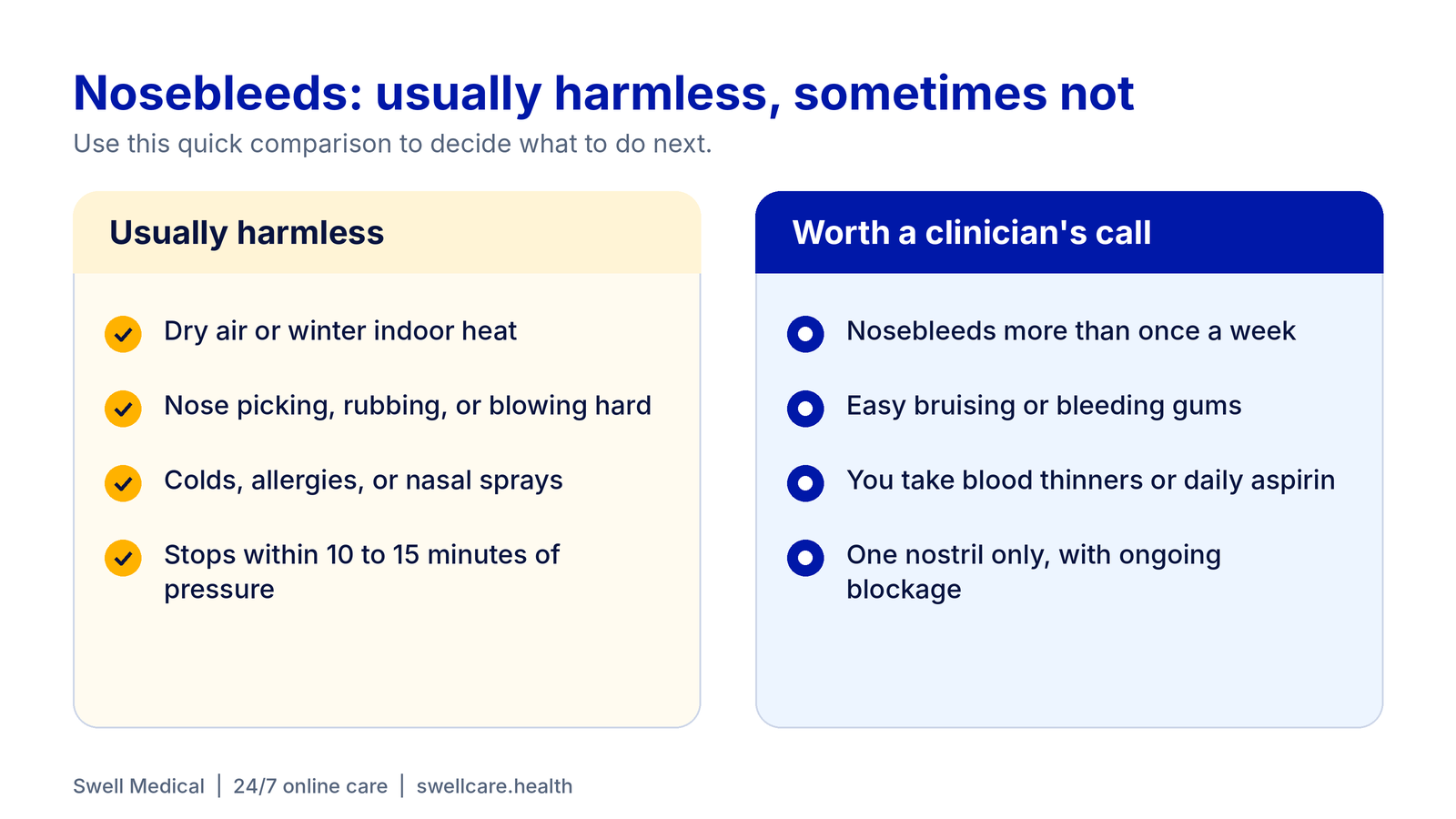
Still, a nosebleed can occasionally point to a more serious problem, such as a clotting problem like hemophilia, a medication effect, or another underlying condition. What matters is the pattern: how often it happens, how long it lasts, how heavy it is, and what other symptoms come with it. If you want the quick version, the graphic below sorts the usual suspects from the signs worth a call.
Why Do Nosebleeds Happen? Common and Usually Harmless Causes
Most nosebleeds (anterior epistaxis) start in the front of the nose, on the thin wall between the nostrils called the septum. Blood vessels there are easy to irritate. The most common triggers are simple:
- Dry air. Winter heating and desert climates dry out the nasal lining until it cracks and bleeds. Dry air is one of the most common triggers.
- Nose picking or rubbing. Fingernails scratch delicate tissue. Nose picking is especially common in children.
- Colds, sinus infections, and allergies. Congestion, frequent blowing, and inflamed tissue all raise the odds. Allergies that keep you sniffing and rubbing are a classic trigger.
- Nasal sprays. Steroid and decongestant sprays used for allergies or congestion can dry or irritate the lining, especially when a nasal spray is used daily.
- Injury. A bump to the face, or a broken nose, can start a nosebleed right away.
- Pregnancy. Hormonal changes and increased blood volume make pregnancy a common time for nosebleeds.
In these cases the blood usually comes from one nostril, light to moderate, and stops within 10 to 15 minutes. Allergies, dry air, and nose picking explain most of what people see in everyday life. If that sounds like you, skip ahead to the home care steps.
Serious Conditions That Can Cause Nosebleeds
Now for the part you came for. Nosebleeds are only occasionally linked to a serious condition, but several are worth knowing. Notice that in most of these, it is not the only clue.
High Blood Pressure and Nosebleeds
High blood pressure does not usually cause a nosebleed on its own. But it can make a nosebleed heavier and harder to stop, because blood vessels in the nose are under more strain. A nosebleed also does not mean your blood pressure is high. If episodes are frequent or hard to control, a blood pressure check is a sensible first step.
Blood Thinners and Bleeding Disorders
This is the most important group. Blood thinners and anticoagulant medicines such as warfarin, along with daily aspirin, make it harder for blood to clot, so even a minor nosebleed can last longer. Bleeding disorders do the same thing from the inside. Hemophilia, von Willebrand disease (the most common inherited clotting problem), and platelet problems are examples of blood clotting disorders that can show up first as frequent nosebleeds, along with easy bruising or bleeding gums. If you take blood thinners and have a nosebleed that will not stop, treat it seriously.
Rare Causes: HHT, Tumors, and Leukemia
Some causes are uncommon but worth knowing about. Hereditary hemorrhagic telangiectasia (HHT) is a genetic condition in which fragile blood vessels form and bleed easily. It often shows up as repeated, spontaneous nosebleeds that start in childhood and run in families. A deviated septum or nasal polyps can make bleeding more likely, and growths such as nasal tumors can cause bleeding from one side, usually with a blocked nose that does not clear up.
Nosebleeds are a possible symptom of leukemia, but it is almost never the first or only sign. The disease usually comes with other changes: fatigue, frequent infections, easy bruising, fever, or unexplained weight loss. A single nosebleed after a dry night is not a reason to panic.
Warning Signs: When to Worry About a Nosebleed
So when to worry? Think in two tiers: go now, or make an appointment soon.
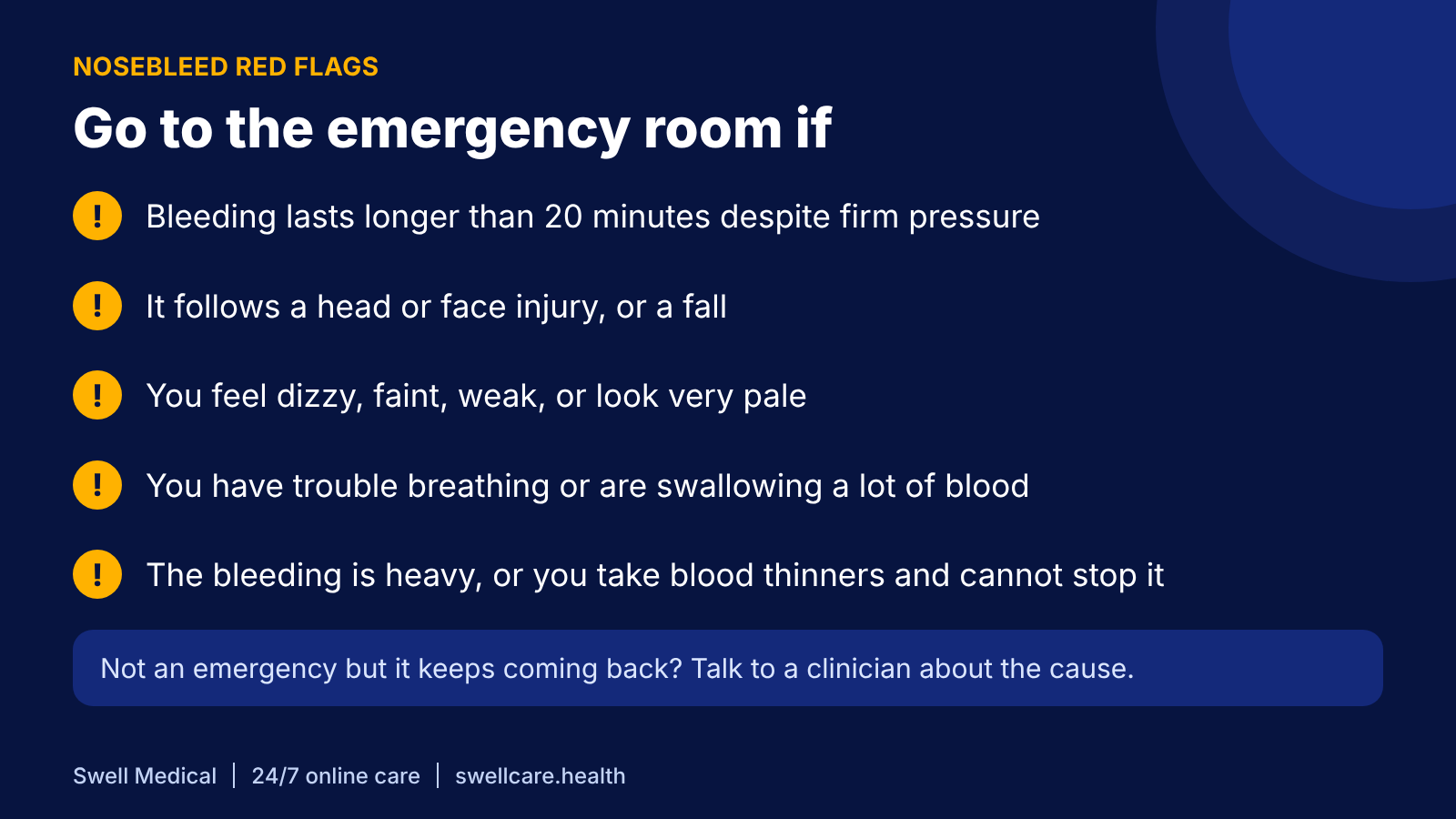
Go to the emergency room or call 911 if:
- The bleeding does not stop after 20 minutes of firm pressure.
- It follows a head or face injury, or a fall.
- You feel dizzy, weak, faint, or look very pale.
- You have trouble breathing, or you are swallowing a lot of blood.
- The bleeding is heavy, or you simply cannot control it.
Schedule a visit with a doctor if:
- You get nosebleeds more than once a week, or they keep returning.
- You also notice easy bruising, bleeding gums, or heavy periods.
- You take an anticoagulant or daily aspirin and have even short episodes.
- Bleeding is always from the same nostril, especially with a blocked nose.
- A family history of von Willebrand disease or other clotting problems.
- They started after a new medication.
If any of those fit, medical attention is worthwhile even if each nosebleed seems minor. Doctors can look inside the nose, check your blood pressure and blood counts, and treat the cause. Silver nitrate cauterization, for example, quickly seals a problem vessel.
How to Stop a Nosebleed at Home
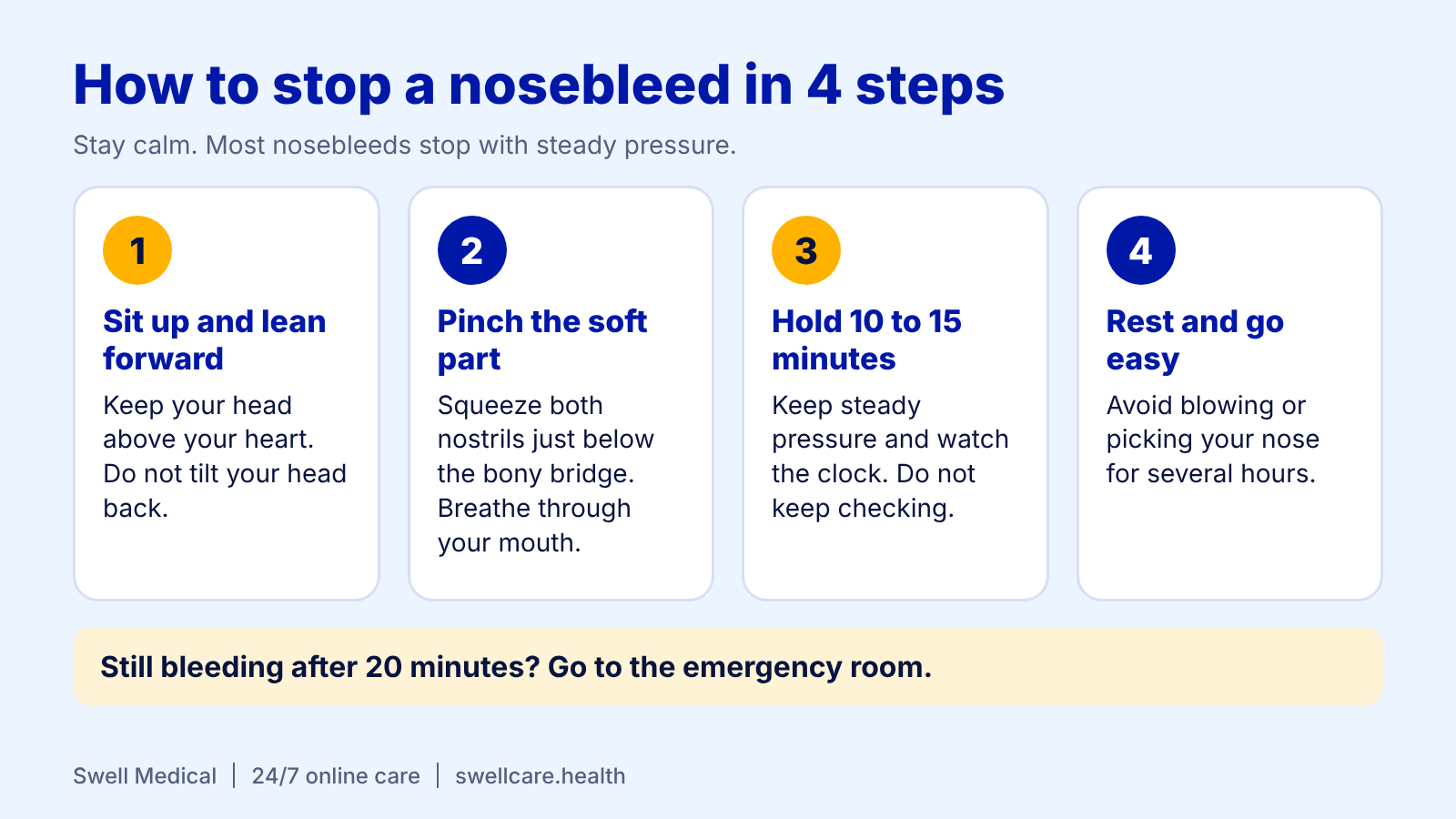
If blood is flowing right now, pinch and lean forward, then follow these steps. Most nosebleeds stop within 10 to 15 minutes.
- Sit up and lean forward. This keeps blood from running down your throat and frees your hands to pinch. Do not tilt your head back.
- Pinch the soft part of your nose. Use your thumb and index finger to pinch both sides closed, just below the bony bridge. Pinch firmly and breathe through your mouth.
- Hold the pinch for 10 to 15 minutes. Set a timer. Do not release the pinch to peek, because it restarts the bleeding.
- Rest afterward. Skip blowing your nose, bending over, or heavy lifting for several hours.
If blood keeps coming from one nostril, keep the pressure on both nostrils anyway rather than letting go to check. If it continues after 20 minutes, get emergency care. Do not stuff the nostril deeply with tissue, and do not lie flat.
How to Prevent Nosebleeds
Prevention is mostly about keeping the nasal lining moist and leaving it alone.
- Run a humidifier in your bedroom, especially in winter or in dry climates, to counter dry air.
- Use a saline nasal spray or saline gel a few times a day to keep the lining moist.
- Dab a little petroleum jelly just inside each nostril at bedtime.
- Stop nose picking and keep children’s nails short.
- Blow gently, one nostril at a time.
- Review medicines with your clinician if you use daily aspirin, warfarin, other blood thinners, or a nasal spray that dries you out. Never stop a prescribed medicine on your own.
When to See a Doctor and How Swell Medical Can Help
Now you know the pattern to watch. One nosebleed after a dry night is rarely a problem. Frequent nosebleeds, blood loss that is hard to stop, or any of the warning signs above deserve a conversation with a clinician.
If you are not sure whether your nosebleeds need attention, Swell Medical offers 24/7 clinician-led virtual care in all 50 states and DC. A clinician can review your history and medicines, ask the right questions, and tell you whether to watch, treat, or get tested. Start with a free screening, and book a consultation for $45 when you are ready.
One honest limit: virtual care is not the right place for active, heavy bleeding. If a nosebleed will not stop, go to the nearest emergency room.
Nosebleed FAQs
Are nosebleeds a warning sign?
Usually not. Most are caused by dry air, irritation, or minor injury. Frequent ones, or ones with fatigue or bleeding from elsewhere, can be a warning sign of an underlying problem.
How often is too often for a nosebleed?
More than once a week, or a pattern that keeps returning, is worth a visit. Even if each episode is short, the pattern matters.
Are nosebleeds the first sign of leukemia?
Rarely. They can occur, but typically appear alongside other symptoms such as fatigue and frequent infections rather than alone.
Can you die from a nosebleed?
It is extremely rare. Heavy bleeding that will not stop can be dangerous, especially in people taking anticoagulants, which is why the emergency room is the right call after 20 minutes of pressure.
This article is for general information and is not a substitute for medical advice, diagnosis, or treatment. If you think you have a medical emergency, call 911.
Trusted references
Public-health, research, and medical-society resources related to this guide.