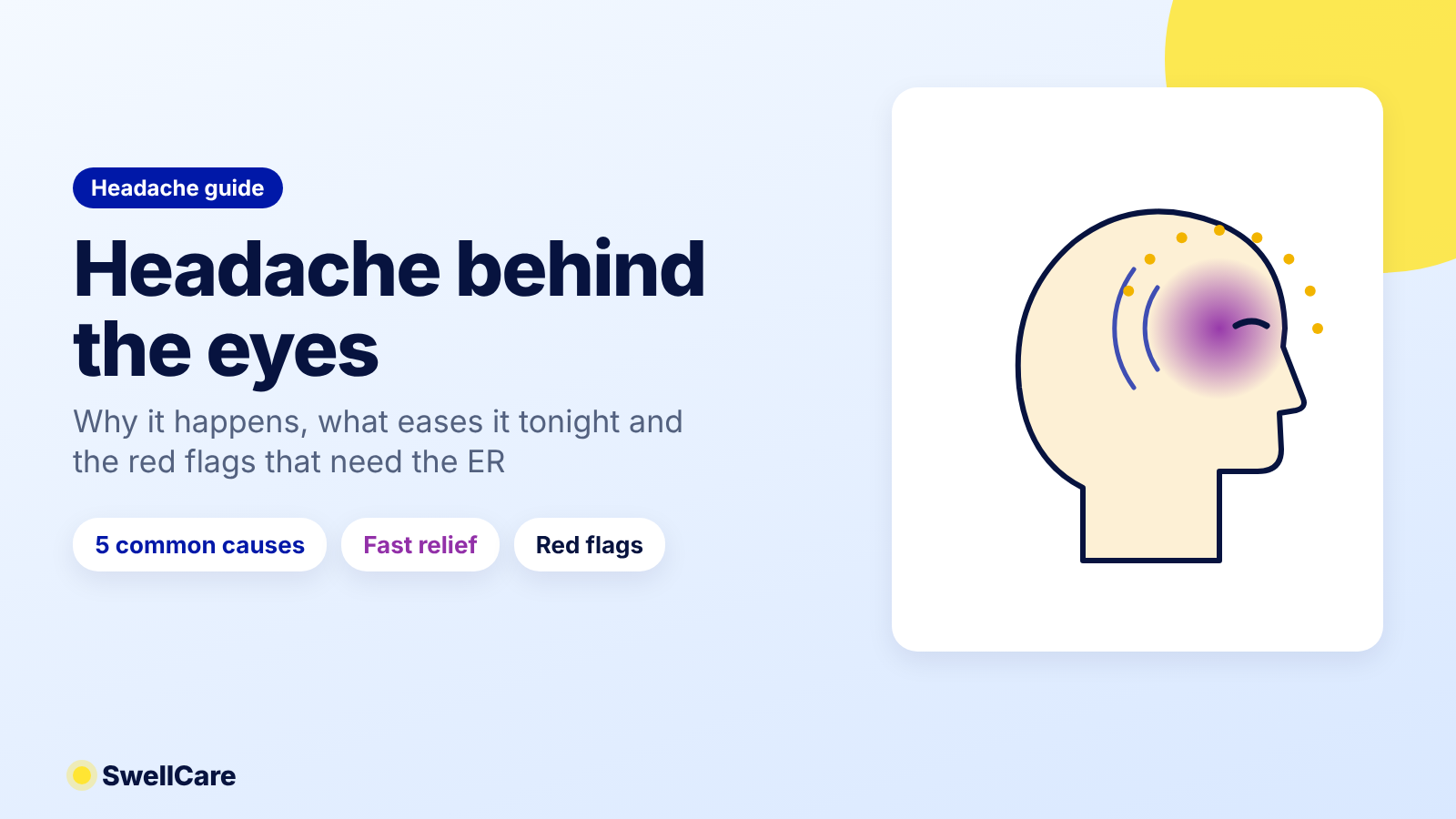
It starts as a dull push behind your eyes around 3 p.m. By dinner it’s a full ache, and the lamp feels too bright. Sound familiar? Most people get a headache behind eyes at some point, and it rarely means anything serious.
It’s usually one of five things: a tension headache, a migraine, eye strain, a sinus problem or a cluster headache. Most of them are uncomfortable but not dangerous. A few rarer causes, like acute glaucoma, can threaten your sight within days. This guide shows you how to tell them apart, what eases the pain tonight and when to stop guessing and get help.
What a headache behind the eyes usually means
Your eyes aren’t usually the problem. The pain is real, but it’s often coming from somewhere else.
The area behind your eyes is wired by the trigeminal nerve, the same nerve that carries feeling from your forehead, sinuses, scalp and jaw. When muscles tighten, blood vessels around the brain react, or the sinuses swell, that nerve can send the signal forward. Your brain then reads it as pain behind the eyes. Doctors call this referred pain.
So the location alone won’t give you the answer. The pattern will. How it feels (squeezing, throbbing, stabbing), whether it sits on one side or both, how long it lasts and what comes with it narrow things down quickly.
The good news: most headaches are primary headaches. The headache is the condition itself, not a sign of something else. Only a small share are secondary, caused by an eye disease, infection or a neurological condition that needs treatment of its own.
Common causes of a headache behind eyes
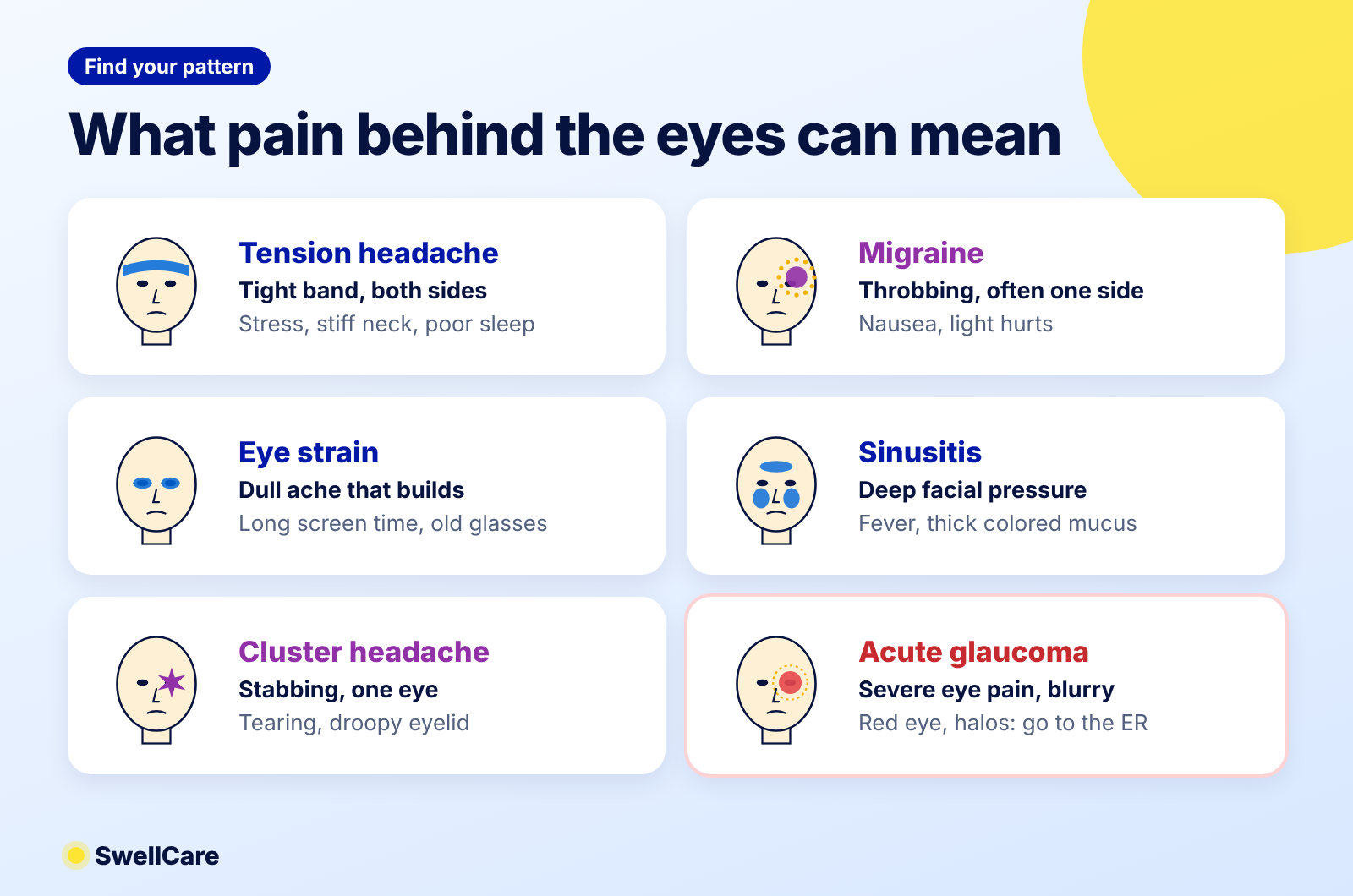
Tension headache
This is the most common headache there is, according to the National Institute of Neurological Disorders and Stroke (NINDS). It feels like steady pressure or a tight band, usually on both sides. Many people feel it across the forehead and behind both eyes at once.
A tension headache is mild to moderate. It doesn’t usually come with nausea or an aura, and walking around won’t make it worse. An episode can last 30 minutes or drag on for days.
Common triggers include stress, poor sleep, dehydration and alcohol. Posture matters too. Hours hunched over a laptop with your neck pushed forward is a classic setup, and work stress makes it worse. If your neck and shoulders feel like stone by the afternoon, start here.
Migraine
This one is a different animal. The pain is moderate to severe, often throbbing, and it usually sits on one side of the head. For many people, that side includes the area behind one eye.
Other clues help. Nausea and vomiting are common. So is light sensitivity, along with sensitivity to noise or smells, and the pain gets worse when you move. Some people get an aura first, such as zigzag lines, flashing lights or a blind spot.
It runs in families and affects women more often than men. Triggers vary from person to person. Skipped meals, poor sleep, stress and hormonal shifts are among the usual suspects.
Eye strain and an outdated prescription
Screens are hard work for your eyes. The American Optometric Association lists headaches, blurred vision, dry eyes and neck or shoulder pain as the main symptoms of digital eye strain. People who look at a screen for two or more hours without a break are at the greatest risk.
An old or wrong prescription adds to the load. Uncorrected farsightedness, astigmatism and age-related near-vision changes all make your eye muscles work harder. Glasses that work well for driving may also be wrong for a monitor 2 feet away.
Here’s the tell: eye strain headaches build during the day and ease after you rest. If yours always show up mid-afternoon on workdays and vanish on weekends, your screen habits are a prime suspect. An optometrist or ophthalmologist can check whether your prescription is behind it.
Sinus headache (often a migraine in disguise)
Plenty of people blame their sinuses for pressure behind the eyes. Most are wrong, and the mix-up delays the right treatment.
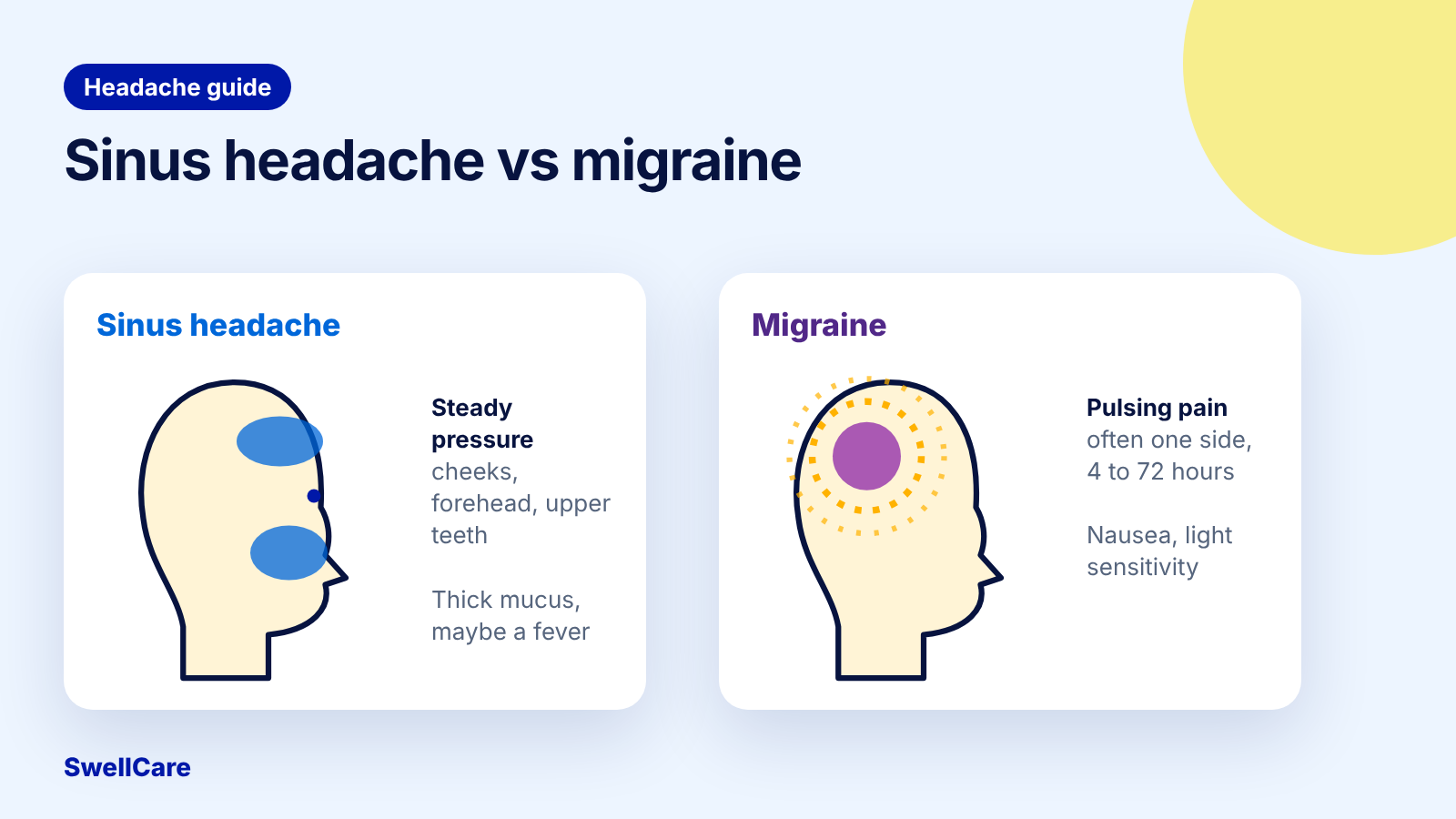
In a study of nearly 3,000 people with self-reported or doctor-diagnosed sinus headaches, 88% actually met the criteria for migraine. A migraine attack can bring a stuffy nose and watery eyes, which makes the mix-up easy. True sinusitis is far less common than most people assume.
A true sinus headache comes from sinusitis, an infection. The American Migraine Foundation says it usually comes with thick, discolored mucus, a reduced sense of smell, aching upper teeth and often a fever. It should clear up within about a week of the infection getting better. If the pain keeps coming back without those signs, ask about migraine instead. This is broken down further in the guide to sinus headache vs migraine.
Cluster headache
Cluster headaches are rare but brutal. The pain is stabbing or burning, sits on one side and centers in or behind one eye. According to MedlinePlus, it peaks within 5 to 10 minutes and lasts 15 minutes to 3 hours.
What sets it apart is the timing and the eye symptoms. Attacks come in “clusters,” often daily for weeks or months, and frequently strike 2 to 3 hours after you fall asleep, at the same time each day. On the painful side, the eye may tear up and turn red, the eyelid may droop and the nostril may run.
They’re more common in men and usually start between ages 20 and 40. Alcohol and smoking are well-known triggers. People often pace or rock during an attack instead of lying still, which is the opposite of what most headache sufferers do.
Match your symptoms to the likely cause
Use this as a starting point, not a diagnosis. Symptoms overlap, and some people have more than one headache type.
| What it feels like | Where | Other clues | Most likely cause |
|---|---|---|---|
| Steady squeeze, tight band | Both sides, forehead | Tight neck, stress, poor sleep | Tension headache |
| Throbbing, worse with movement | Usually one side | Nausea, light sensitivity, aura | Migraine |
| Dull ache that builds all day | Both eyes, brow | Long screen sessions, dry eyes | Eye strain |
| Deep pressure | Cheeks, forehead | Colored mucus, fever, lost smell | Sinusitis |
| Severe stabbing or burning | One eye, same side | Tearing, droopy lid, restlessness | Cluster headache |
| Severe eye pain, blurred sight | One eye | Redness, halos, vomiting | Acute glaucoma (emergency) |
If you can’t match your symptoms to one row, or your symptoms have changed recently, that’s worth a conversation with a clinician.
Rare causes you shouldn’t ignore
A small number of headaches behind the eyes come from conditions that need prompt treatment. These are the ones worth knowing by name.
Acute angle-closure glaucoma. Fluid suddenly can’t drain from the eye, and pressure spikes. The National Eye Institute lists intense eye pain, nausea, a red eye and blurry vision as the warning signs. It’s a medical emergency. Without treatment, it can cause blindness within a few days.
Optic neuritis. Here, the optic nerve becomes inflamed, often because the immune system attacks it. The American Academy of Ophthalmology describes pain behind the eye that gets worse when you move it, along with dim or blurry vision and colors that look washed out. Optic neuritis is closely linked with multiple sclerosis, a neurological disease, and needs an eye exam soon.
Bleeding or stroke. A ruptured brain aneurysm or a stroke can cause a sudden, explosive headache, sometimes with double vision, weakness or confusion. Call 911.
High blood pressure. NINDS includes hypertension among the secondary causes of headache. Most people with it feel nothing, though. A severe headache plus a very high home reading is urgent.
None of these is common. Most of the time, a headache behind eyes is a nuisance, not a danger. Know these patterns anyway.
How to get rid of a headache behind your eyes
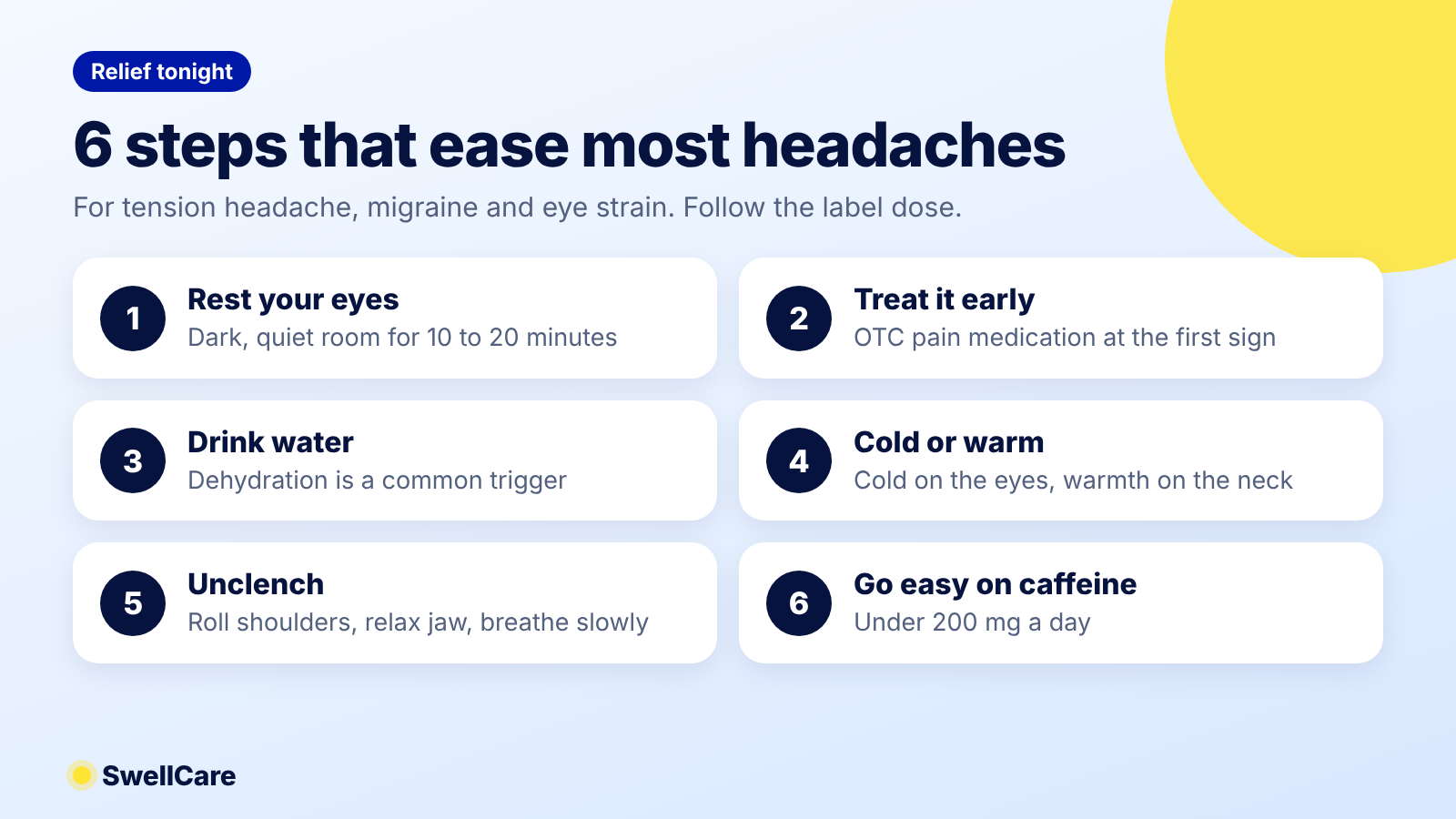
For a typical tension headache, migraine or eye strain episode, these steps help most people. Go in order.
- Step away from the screen. Dim the lights and rest in a dark, quiet room for 10 to 20 minutes.
- Take an over-the-counter pain medication early. NSAIDs such as ibuprofen, naproxen or aspirin, or acetaminophen, work best at the first sign of trouble, not an hour in. Follow the label dose.
- Drink a large glass of water. Dehydration is a common trigger, and fixing it is free.
- Try cold or warm. A cold compress across the eyes and forehead helps many people with migraine. Warmth on the neck and shoulders tends to suit a tension headache better.
- Ease the stress in your muscles. Fix your posture, roll your shoulders, stretch your neck gently and unclench your jaw. Slow breathing for two or three minutes can take the edge off.
- Use caffeine carefully. A small dose can boost a pain medication. Too much backfires. Heavy daily use, or suddenly skipping your usual cup, can trigger headaches of its own, so the American Migraine Foundation suggests staying under 200 mg a day.
If you get migraines regularly, prescription medication usually works better than over-the-counter medication. Triptans such as sumatriptan are a common first-line treatment for an attack. Newer CGRP medications block a protein involved in the pain and can treat or prevent attacks. For cluster attacks, breathing 100% oxygen and fast-acting triptans are standard treatment, and verapamil is often used to prevent them.
How to stop them coming back
If a headache behind eyes keeps coming back, quick relief isn’t enough. Fewer headaches is the real goal.
Keep a headache diary for two to four weeks. Note the time, what you were doing, sleep, food, screen hours, alcohol and any medication. Patterns show up fast, and they make any medical visit far more useful.
Fix your screen setup. The American Optometric Association recommends placing your monitor about 20 to 28 inches from your eyes and 15 to 20 degrees below eye level. Follow the 20-20-20 rule: every 20 minutes, look at something 20 feet away for 20 seconds. After two hours of continuous use, rest your eyes for 15 minutes.
Get your eyes checked. If you haven’t had an eye exam in a couple of years, book one. Ask about a separate prescription for computer distance.
Protect your sleep. Aim for regular bed and wake times. Poor sleep is one of the most consistent triggers for both tension headaches and migraine.
Watch how often you take pain medication. This is the one most people miss. Using simple pain relievers on more than 15 days a month, or triptans and combination products on more than 10 days, can cause medication overuse headache, also called rebound headache, according to the American Migraine Foundation. If you need headache medication more than two days a week, see a clinician about preventive treatment instead.
When a headache behind the eyes needs a doctor
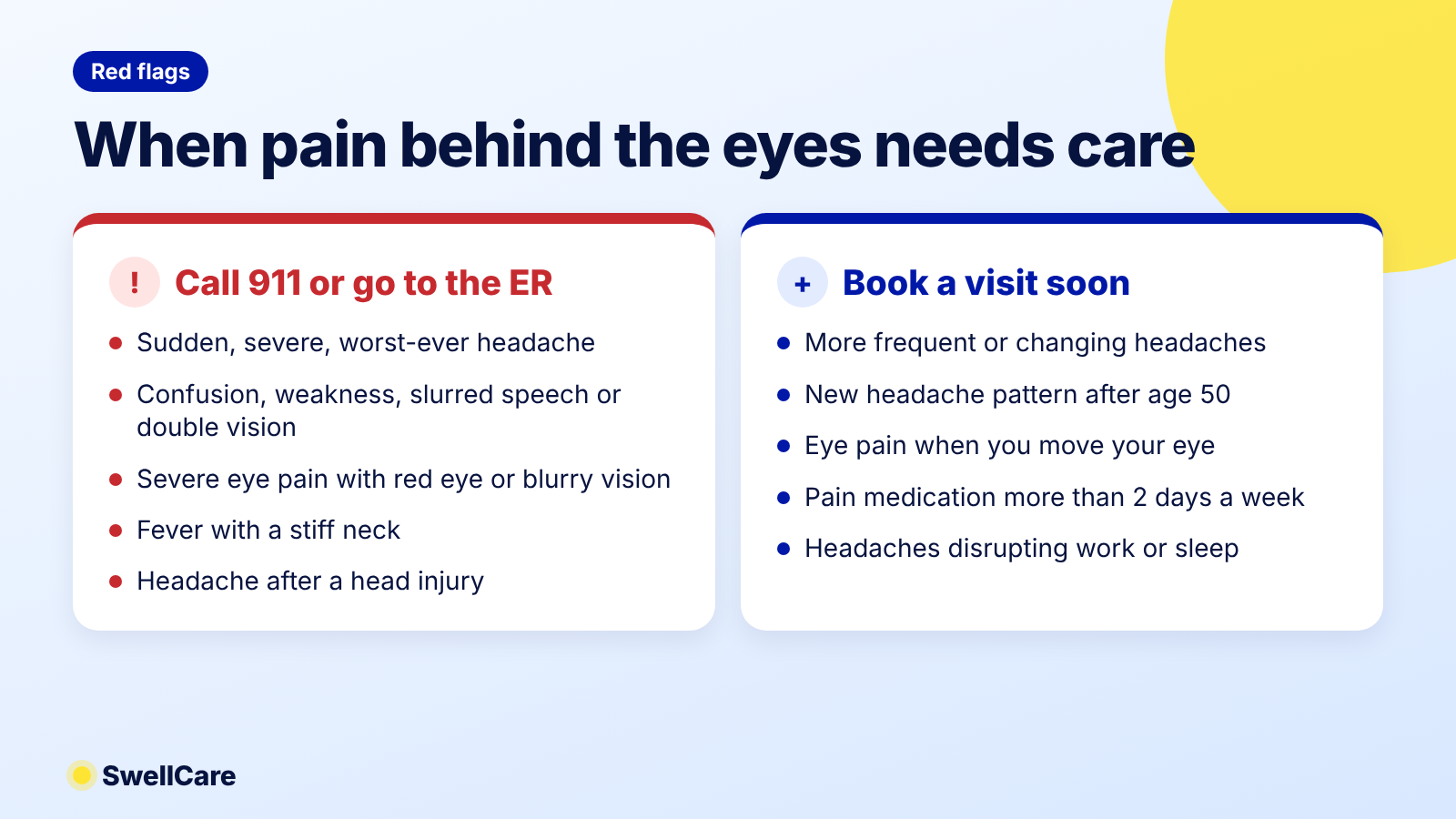
Call 911 or go to the ER now if you have:
- A sudden, severe headache, the worst of your life
- Headache with confusion, weakness, numbness, slurred speech or double vision
- Severe eye pain with a red eye, blurry vision or halos around lights
- Headache with fever and a stiff neck
- Headache after a head injury
Book a visit soon if:
- Your headaches are getting more frequent or changing pattern
- You have a new type of headache and you’re over 50
- Pain behind the eye gets worse when you move your eye, or colors look faded
- You’re using pain relievers more than two days a week
- Headaches are getting in the way of work, sleep or family life
These warning signs follow the guidance from NINDS. When in doubt, get checked. That’s never an overreaction.
Talk to a Swell clinician tonight
Headaches don’t keep office hours. If yours isn’t an emergency but you want a clear answer, Swell’s licensed clinicians are available 24/7 by secure chat or video.
Start with a free screening chat and tell a clinician what’s going on. A clinician reviews it and tells you whether it can be handled safely through telehealth. The price? $45 for a completed visit. No membership. You may get home-care advice, treatment if it’s appropriate or a referral to be seen in person. No prescription is guaranteed, and a clinician will tell you plainly when online care isn’t enough.
Start your free screening with Swell or see how a Swell visit works.
Questions people ask about headaches behind the eyes
Can dehydration cause a headache behind eyes?
Yes. NINDS lists dehydration as a common trigger for tension headaches, and it can also set off a migraine. The pain is often a dull pressure across the forehead and behind both eyes. Drink water steadily through the day, more in heat or during exercise. If a large glass of water and an hour of rest don’t help, look for another cause.
How do I get rid of a headache behind one eye?
Pain behind one eye most often points to migraine or, less often, cluster headache. Take a pain medication early, rest in a dark room and try a cold compress. If it’s severe, always the same eye and comes with tearing or a droopy lid, ask a clinician about cluster attacks. Sudden pain with a red eye and blurred vision needs the ER.
Why does it hurt behind my eyes when I wake up?
Short or poor sleep, alcohol the night before and missing your usual morning coffee are frequent causes. Cluster headaches often strike a few hours after you fall asleep. Loud snoring or waking up gasping can signal sleep apnea, which is worth raising with a clinician.
Can high blood pressure cause pain behind the eyes?
It can, but usually only when blood pressure is very high. Most people with high blood pressure have no symptoms at all, which is why regular checks matter. If you have a severe headache along with a very high reading, chest pain, confusion or vision changes, call 911.
Is pressure behind the eyes a sign of a brain tumor?
Rarely. Pressure behind the eyes is far more likely to come from tension, eye strain, migraine or a stuffy nose. Headaches linked to a tumor tend to worsen steadily over days or weeks, change pattern and come with other symptoms such as vision changes, weakness or seizures. If that matches what you’re feeling, see a clinician promptly.
Trusted references
Public-health, research, and medical-society resources related to this guide.
- NINDS: Headache
- American Optometric Association: Computer vision syndrome
- PubMed: Study of self-reported sinus headache and migraine criteria
- American Migraine Foundation: Sinus headache
- MedlinePlus: Headache (encyclopedia)
- National Eye Institute: Types of glaucoma
- American Academy of Ophthalmology: What is optic neuritis?
- American Migraine Foundation: Medication overuse headache