You’re itchy, sore and counting hours. So here’s the number. With the right antifungal treatment, a typical vaginal yeast infection settles in about 1 to 7 days, and a mild one can feel better within a couple of days. Without treatment, it can drag on for weeks, or fade and flare again.
Most of the wait comes down to how severe your yeast infection is, which medication you use, and whether it really is yeast. This guide walks through the timeline both ways. You’ll also see why some infections refuse to leave, and when it’s time to talk to a clinician.
How long does a yeast infection last? The short answer
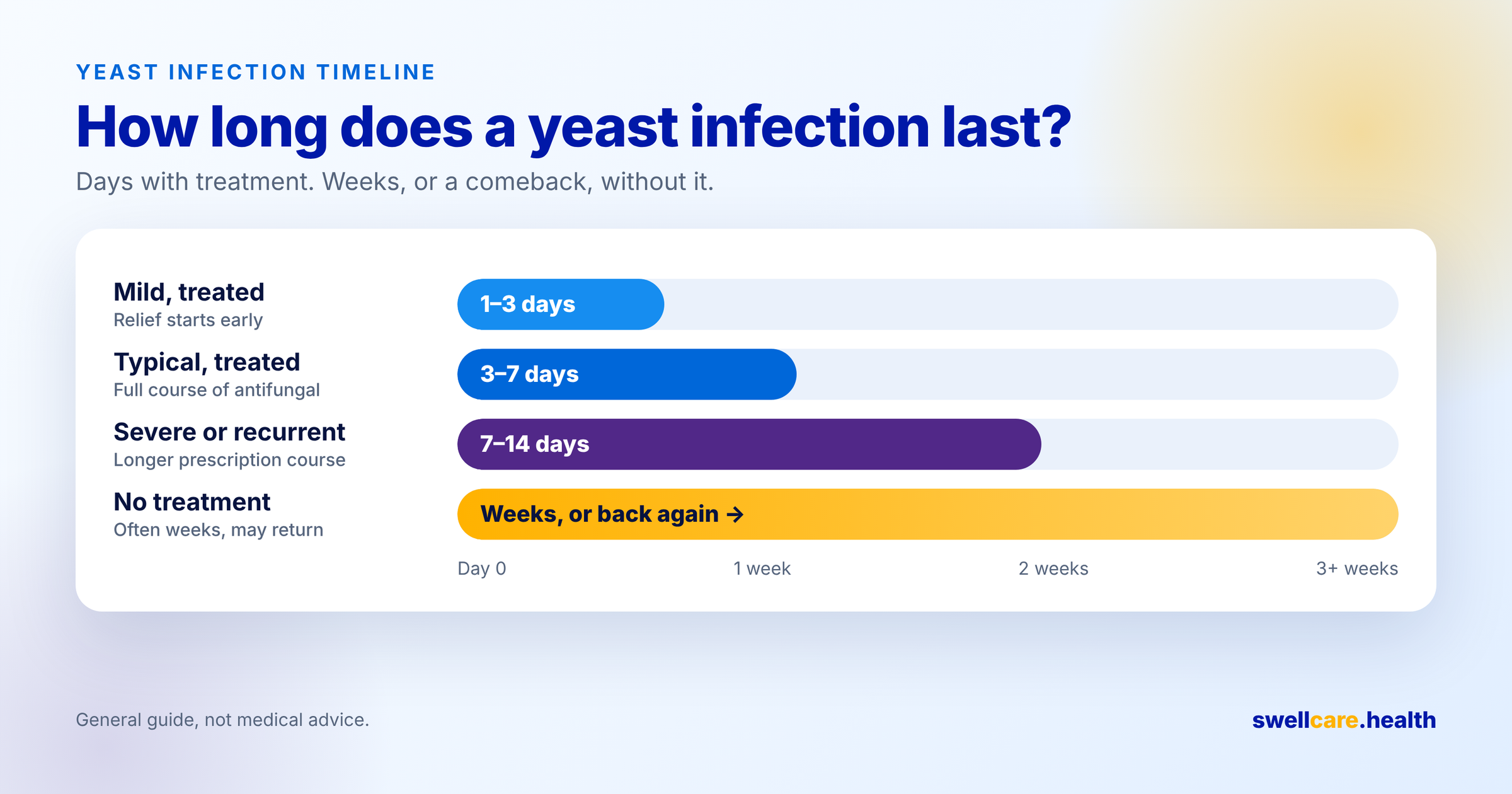
If you’re asking how long does a yeast infection last, plan on days with treatment and weeks without it. The ranges below come from CDC treatment guidelines and major medical centers, and your own timeline depends on your health and the product you choose.
| Situation | Typical length | What to expect |
|---|---|---|
| Mild, treated early | 1 to 3 days for relief | Itching and burning ease first, redness fades after |
| Typical, treated | 3 to 7 days | A full course of medication usually clears it |
| Severe or complicated, treated | 7 to 14 days | Longer course or a second pill dose |
| Untreated | Weeks, or recurring | May improve a little, then return |
Notice the gap between feeling better and being cured. Relief often shows up well before the infection is gone, which is why finishing the full course matters.
What a vaginal yeast infection feels like
It helps to know you’re dealing with the right thing before you start counting days. A vaginal yeast infection happens when Candida, a fungus that lives in the body anyway, overgrows. Up to three in four women get at least one in their lifetime, according to the Office on Women’s Health, so you’re in large company.
The classic signs are vaginal itching that can border on maddening, plus burning. You may see redness and swelling around the vulva. A thick white discharge, which some people compare to cottage cheese, is another giveaway. Pain with sex or while peeing is common too. The discharge usually has little or no odor.
A yeast infection isn’t an STI, and it isn’t a sign you’re unclean. Antibiotics, hormone shifts and blood sugar swings are far more common triggers, and we’ll get to those below.
How long does a yeast infection last with treatment?
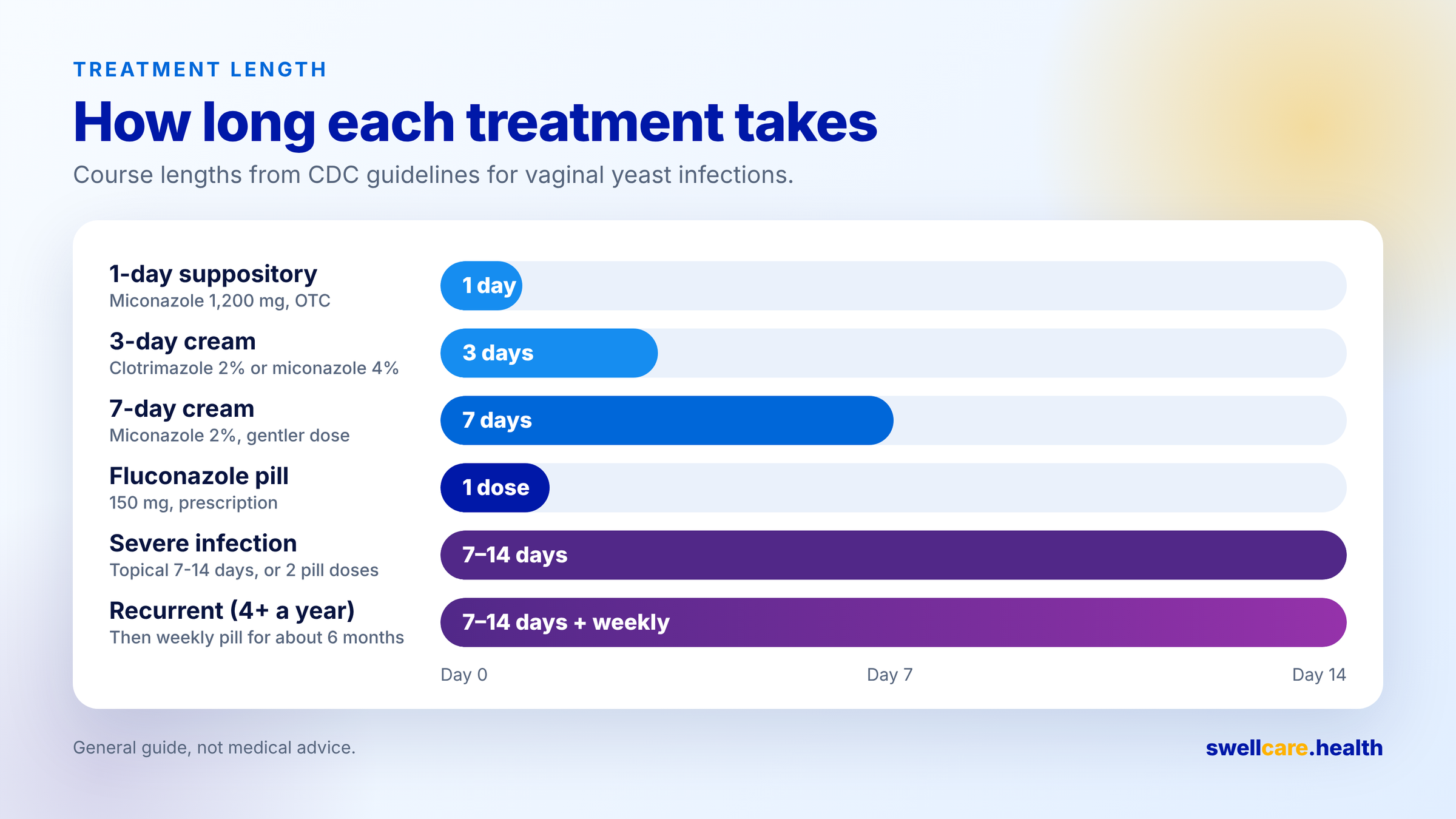
Most people feel real relief within a few days. The CDC reports that 80 to 90 percent of patients who complete azole therapy have symptom relief, and MedlinePlus says symptoms usually clear within the length of the course, anywhere from 1 to 14 days. Your product choice sets the schedule.
Over-the-counter creams and suppositories
Pharmacy shelves are packed with over-the-counter antifungal products. Clotrimazole and miconazole are the two most common active ingredients. Clotrimazole 1% cream is used for 7 to 14 days, while a 2% strength works in 3. Miconazole runs from a 7-day cream to a 1-day suppository. Course lengths run from a single day to a full week, according to the CDC’s treatment guidelines. A 1-day or 3-day product is stronger per dose.
A 7-day course is gentler, and each option reaches about the same result. Most over-the-counter medication works the same way: it stops the yeast from multiplying so your body can catch up.
One practical catch: oil-based creams can weaken latex condoms and diaphragms. Check the box before you rely on either.
The one-dose fluconazole pill
Fluconazole is an oral prescription antifungal medication. A single 150 mg pill is a standard option for an uncomplicated infection. Other prescription choices include creams like terconazole and butoconazole. With the pill, you swallow it once and wait. Relief isn’t instant, since the pill needs time to build up in your system, but the itching often starts easing within a couple of days.
Skip this pill if you’re pregnant. The CDC advises topical treatment for 7 days during pregnancy instead, because a single 150 mg dose has been linked in studies to pregnancy complications.
When will the itching and burning ease?
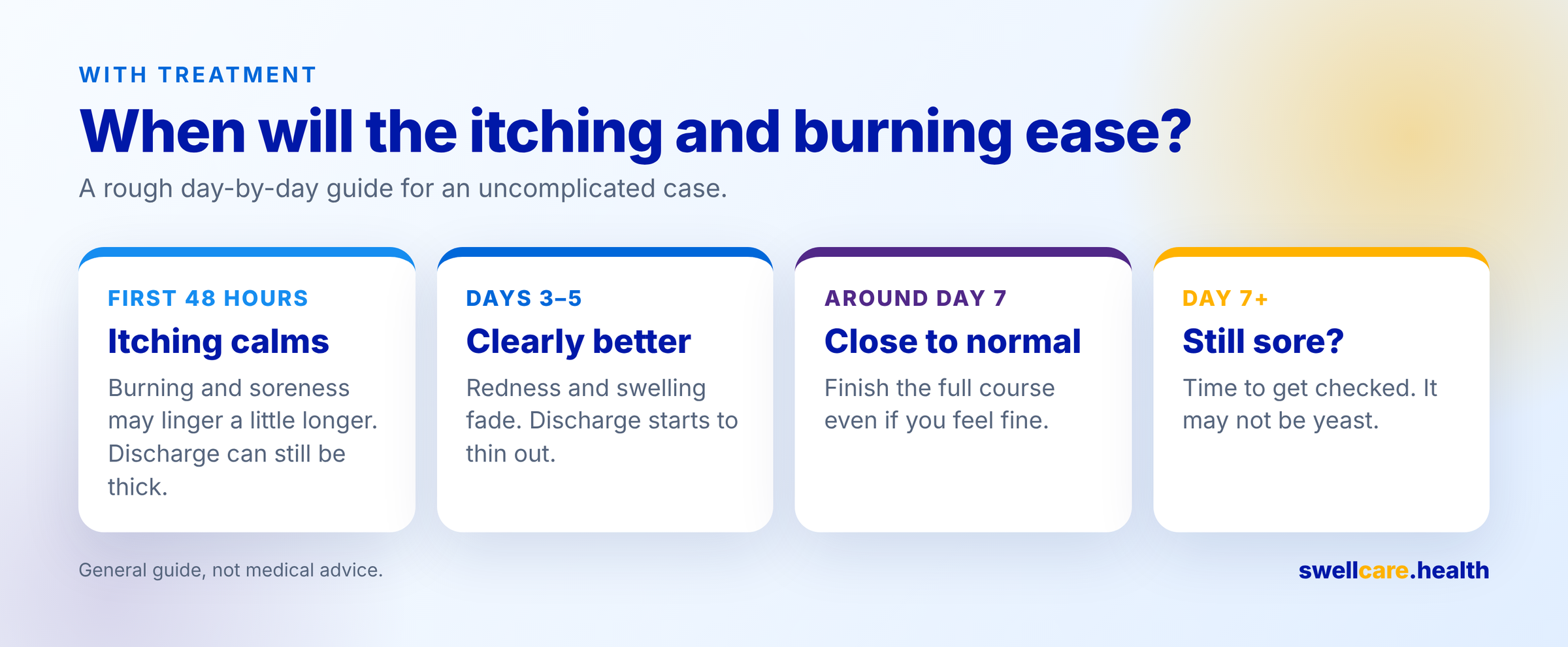
Here’s a rough day-by-day guide for an uncomplicated case.
The first 48 hours: itching starts to calm. Burning and soreness often take a little longer, and thick vaginal discharge may still be there.
Days 3 to 5: most symptoms are noticeably better. Redness and swelling fade, and the discharge thins out.
Around day 7: you should feel close to normal. Still uncomfortable at the one-week mark? That’s your cue to get checked.
Don’t stop early because you feel fine. Quitting a medication halfway is a classic way to see your yeast infection symptoms creep back. Full recovery is the goal, not just the first day without itching.
What happens if you don’t treat a yeast infection?
This is where the sources disagree a little, and it’s worth being straight about it. Cleveland Clinic says a yeast infection doesn’t go away on its own and needs antifungal medication. Medical News Today notes that a very mild case can occasionally clear without help, but that untreated infections are more likely to return. Hard data on untreated timelines is thin, because nobody wants to sit through the symptoms for a study.
What we can say is practical. An untreated yeast infection usually hangs around for weeks rather than days. Symptoms can wax and wane with your cycle. Scratching can crack the skin, which raises the chance of a secondary skin infection. In people with a weakened immune system or poorly controlled diabetes, a problem that started small can turn stubborn, and the first weeks matter most.
So should you wait it out? We wouldn’t. The treatment is cheap, the course is short, and waiting only prolongs the discomfort. The one exception is a first-ever episode where you aren’t sure what you have, and that situation calls for an exam, not a wait-and-see approach.
Why won’t my yeast infection go away?
If you’ve finished a full course and you still feel awful, don’t just repeat the same medication. Something else is probably going on.
It may not be a yeast infection
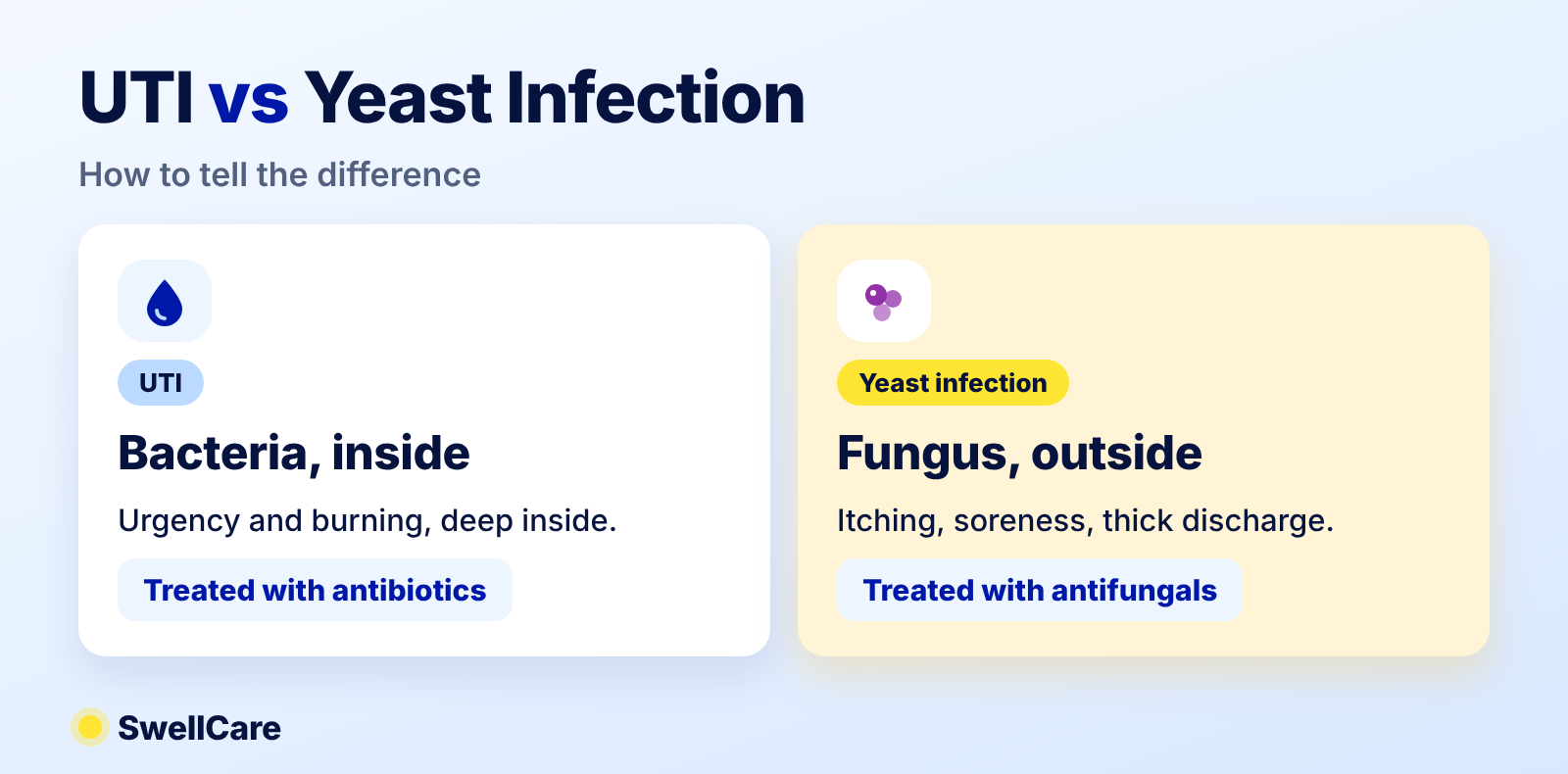
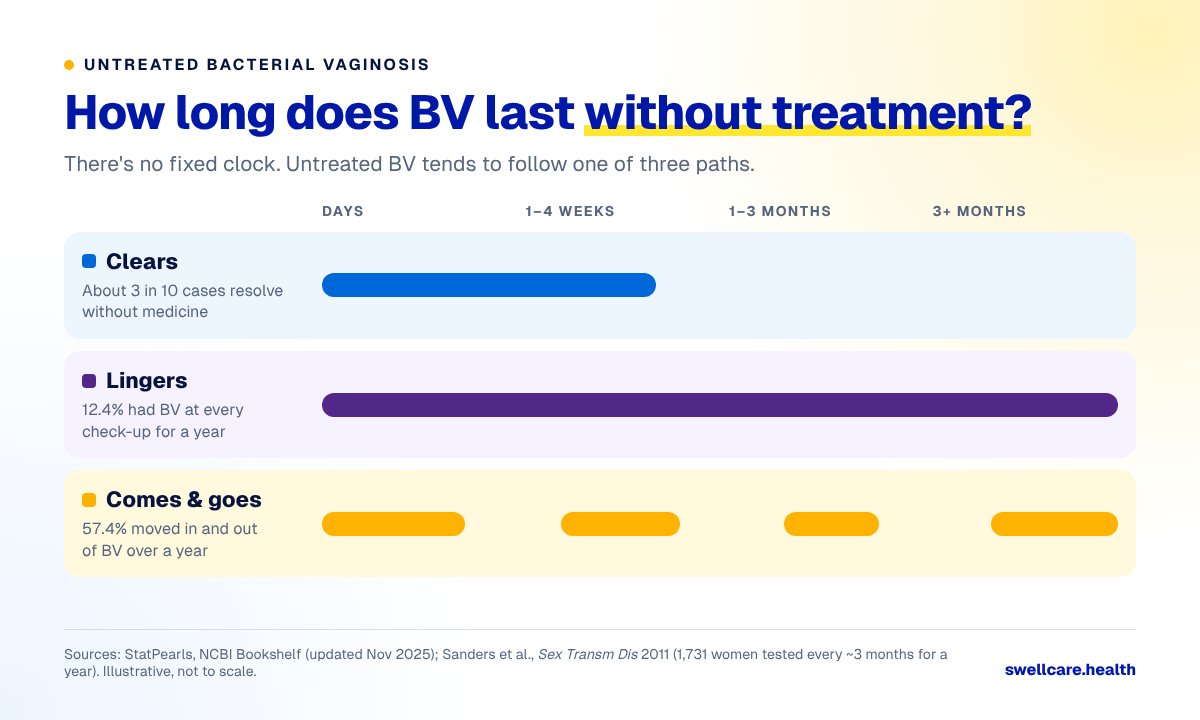
The Office on Women’s Health reports that about two out of three women who buy yeast medicine don’t actually have a yeast infection. Bacterial vaginosis, sexually transmitted infections, a urinary tract infection and simple irritation from soaps or pads can all look similar. Bacterial vaginosis, the most common mix-up, needs a prescription antibiotic. Antifungals do nothing for any of those. Discharge that’s gray, thin or fishy-smelling points away from yeast, as does pelvic pain or fever.
It may be complicated or recurrent
The CDC calls an infection “complicated” when it’s severe, happens often, is caused by a less common type of Candida, or shows up in someone with diabetes or a weakened immune system. About 10 to 20 percent of cases fall in this group. Four or more infections in a year counts as recurrent, and that needs a plan, not another box from the pharmacy.
Treatment for a recurrent yeast infection is longer. The CDC describes a first round of 7 to 14 days, followed by weekly fluconazole for about six months to keep it under control. Your clinician may also order a culture to find out exactly which yeast is involved.
What makes a yeast infection last longer
Some people clear one in a weekend. Others fight for two weeks. The difference usually traces back to a handful of factors.
Diabetes. High blood sugar feeds yeast. If your levels run high, an infection is harder to clear and more likely to return.
Antibiotics. They kill the helpful bacteria that keep Candida in check. A yeast infection after a round of antibiotics is common, and it’s one reason to ask whether you need the antibiotic at all. Taking antibiotics for a different infection can quietly set up the next one.
Pregnancy. Hormone shifts raise the risk, and the pill option is off the table. Pregnancy treatment relies on topical antifungal products for the full 7 days, so recovery can feel slower.
A weakened immune system. Steroids, HIV and some cancer treatments all slow recovery.
Estrogen swings. Higher-estrogen birth control, pregnancy and the lead-up to menopause can all tip the balance. Hormonal change, especially a shift in estrogen, is a common thread in stubborn cases.
Moisture and irritation. A wet swimsuit, tight synthetic clothing, douching and scented products all irritate the area and can stall healing.
What helps while you wait, and what doesn’t
Medication does the heavy lifting. A few small habits can make you more comfortable while it works.
Wear loose cotton underwear and change out of damp clothes quickly. Skip douching and scented pads. Rinse with plain water. Avoid sex until you’ve finished treatment, because it can irritate tender skin and some creams weaken condoms. A cool compress can take the edge off itching.
What about home remedies? Yogurt, tea tree oil, apple cider vinegar baths and probiotics get a lot of attention online. The CDC says probiotics and homeopathic remedies lack solid evidence, and several of these can burn already inflamed skin. If you want to try something gentle, do it alongside proven medication, not instead of it.
When to see a clinician
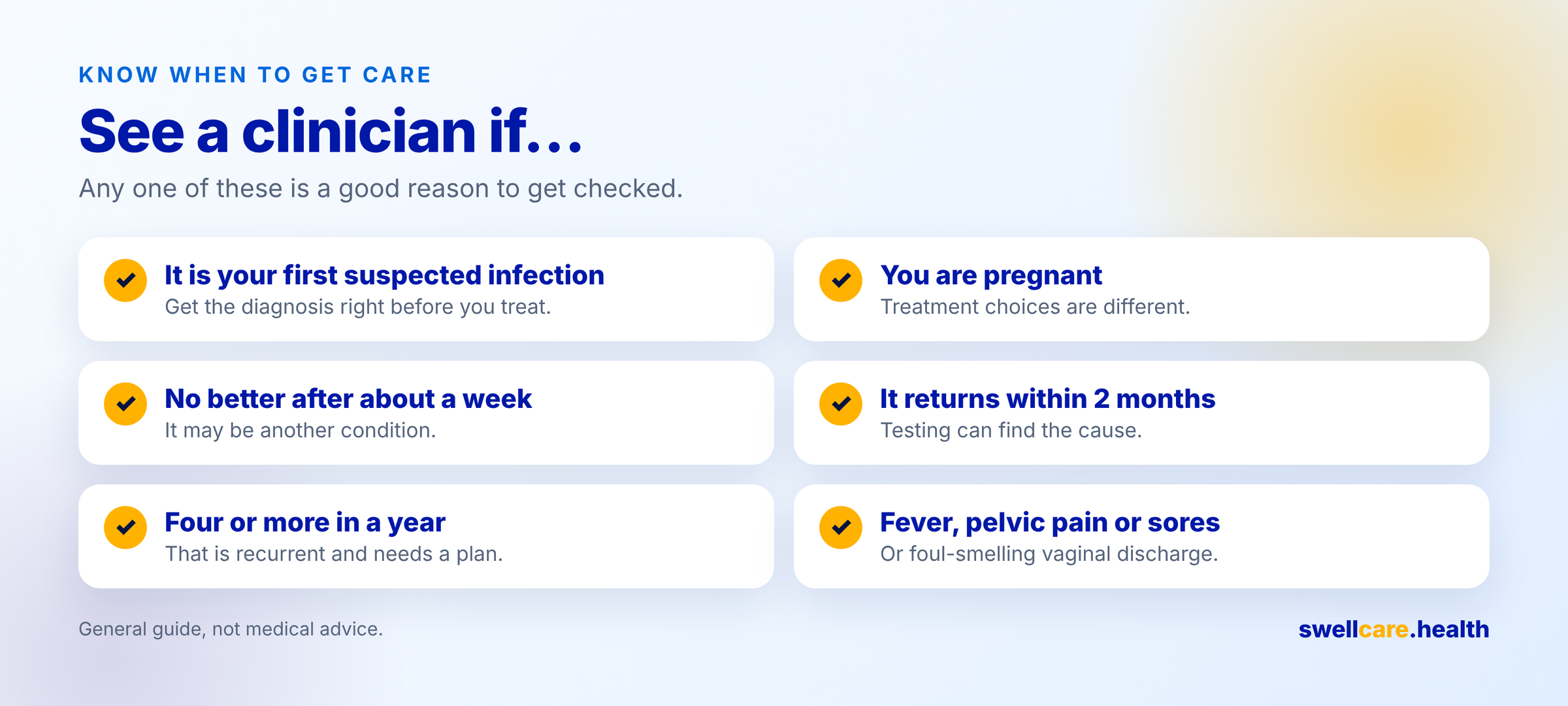
See someone if this is your first suspected yeast infection, if you’re pregnant, or if you aren’t sure what’s causing your symptoms. Get checked if the infection hasn’t improved after a week of treatment, if it returns within two months, or if you’ve had four or more in a year. Fever, pelvic pain, foul-smelling vaginal discharge and sores all need prompt care. A clinician can confirm it’s a yeast infection, rule out look-alikes and match you to the right treatment, which shortens the whole recovery.
You don’t have to wait for a clinic slot to start the conversation. Swell’s clinicians offer virtual care around the clock, and the screening is free. See how it works or browse the conditions we treat to start. A completed consultation is $45, with any medication or lab costs billed separately.
Questions people ask about yeast infections
Can a yeast infection go away on its own?
Occasionally, if it’s very mild, but don’t count on it. How long does a yeast infection last when you skip treatment? Often weeks. Major medical centers advise antifungal treatment because untreated infections tend to last longer and come back. If your symptoms haven’t eased in a few days without medication, treat it or get checked.
How long does a yeast infection last with treatment?
Usually 1 to 7 days. Over-the-counter products run from one day to a week, and a single fluconazole pill often brings relief in a day or two. Severe or recurrent infections need 7 to 14 days or more of treatment.
How long does a yeast infection last without treatment?
There’s no exact figure, but expect weeks, not days. Symptoms may ease, then flare again. Skipping treatment also raises the odds that the yeast infection returns.
How do I know my yeast infection is going away?
Itching and burning fade first. Redness, swelling and thick discharge follow over the next few days. By day five to seven you should feel near normal. If you don’t, your symptoms may have another cause.
Why did my yeast infection come back?
Antibiotics, high blood sugar, hormonal changes and stopping treatment early are the usual culprits. A misdiagnosis is another. If you’re getting four or more infections a year, you need an evaluation.
Can I treat a first yeast infection on my own?
It’s best to get a diagnosis first. MedlinePlus says home treatment makes sense mainly for mild symptoms in someone who has had a yeast infection before, isn’t pregnant, and has no fever or pelvic pain.
Trusted references
Public-health, research, and medical-society resources related to this guide.