You swallow, and it hurts. Only on the left, or only on the right. The other side feels fine, which somehow makes it more worrying. A sore throat on one side is usually something ordinary, like an irritated tonsil or a swollen gland. Sometimes it isn’t. Here’s how to tell the difference, what you can do tonight, and the few signs that mean you shouldn’t wait.
Why does only one side of my throat hurt?
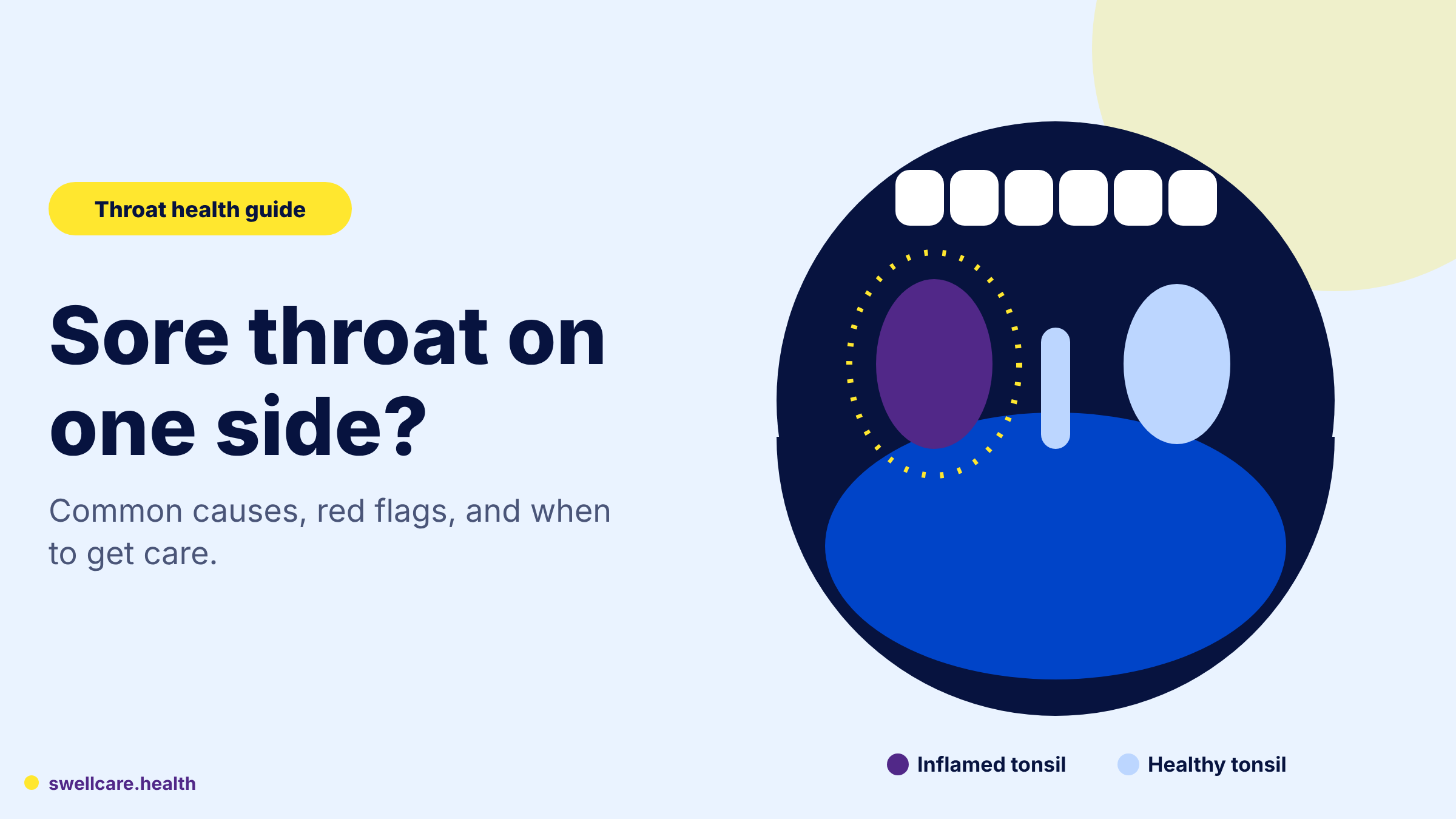
Your throat isn’t as symmetrical as it feels. Each side has its own tonsil and its own set of lymph nodes draining down the neck. An infection can settle in one tonsil, or the nodes on one side can swell while the other side stays quiet. So the pain stays lopsided.
Pain also travels. According to Mayo Clinic’s tooth abscess guidance, a bad tooth can send aching along the jaw and neck and into the ear, and your brain may file it under “throat.”
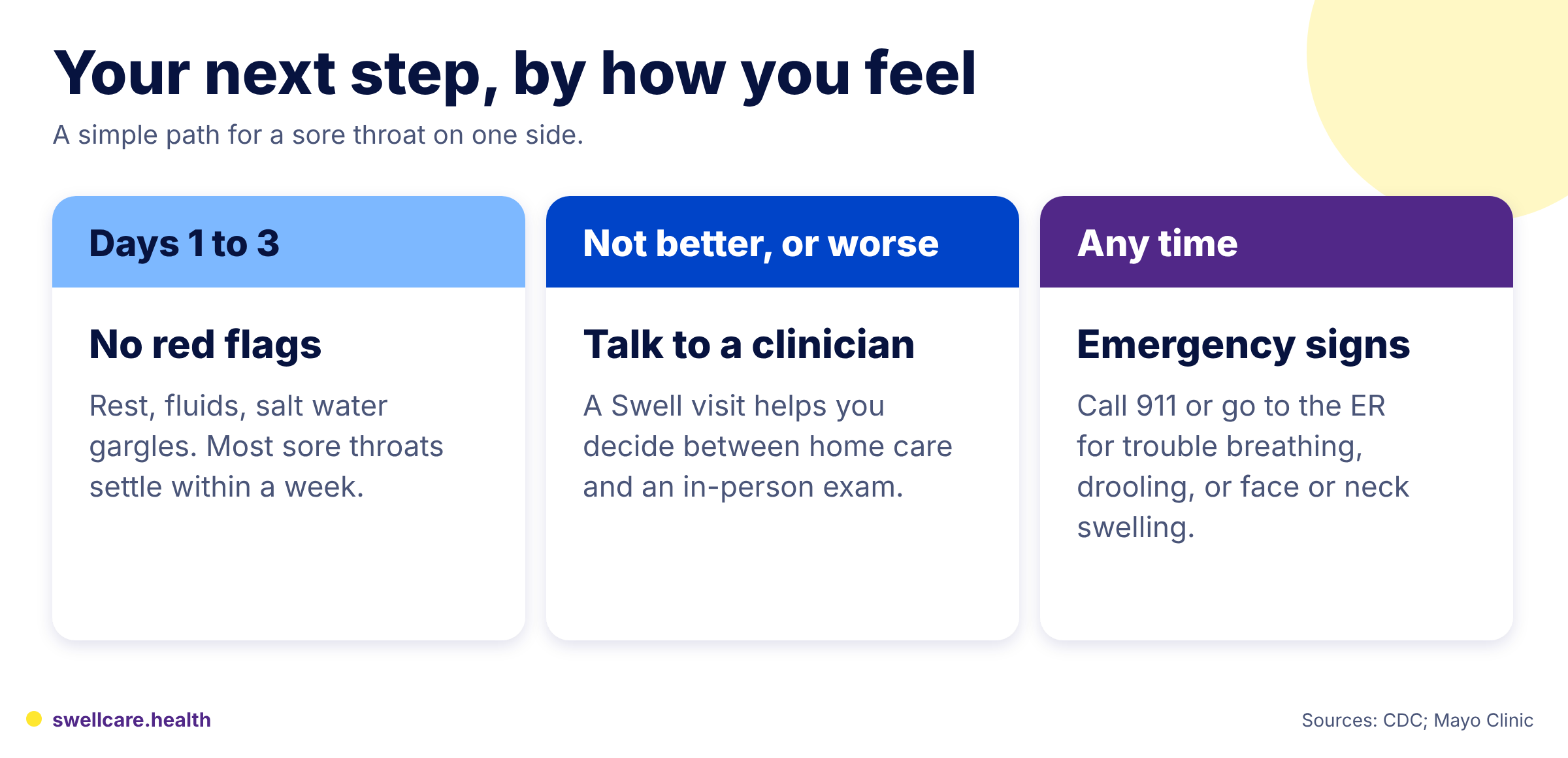
Most sore throats pass fast. The CDC says most get better on their own within a week.
The most common causes of a sore throat on one side
Every cause below comes with a clue you can match against your own symptoms. Start with the picture, then read the ones that sound like you.
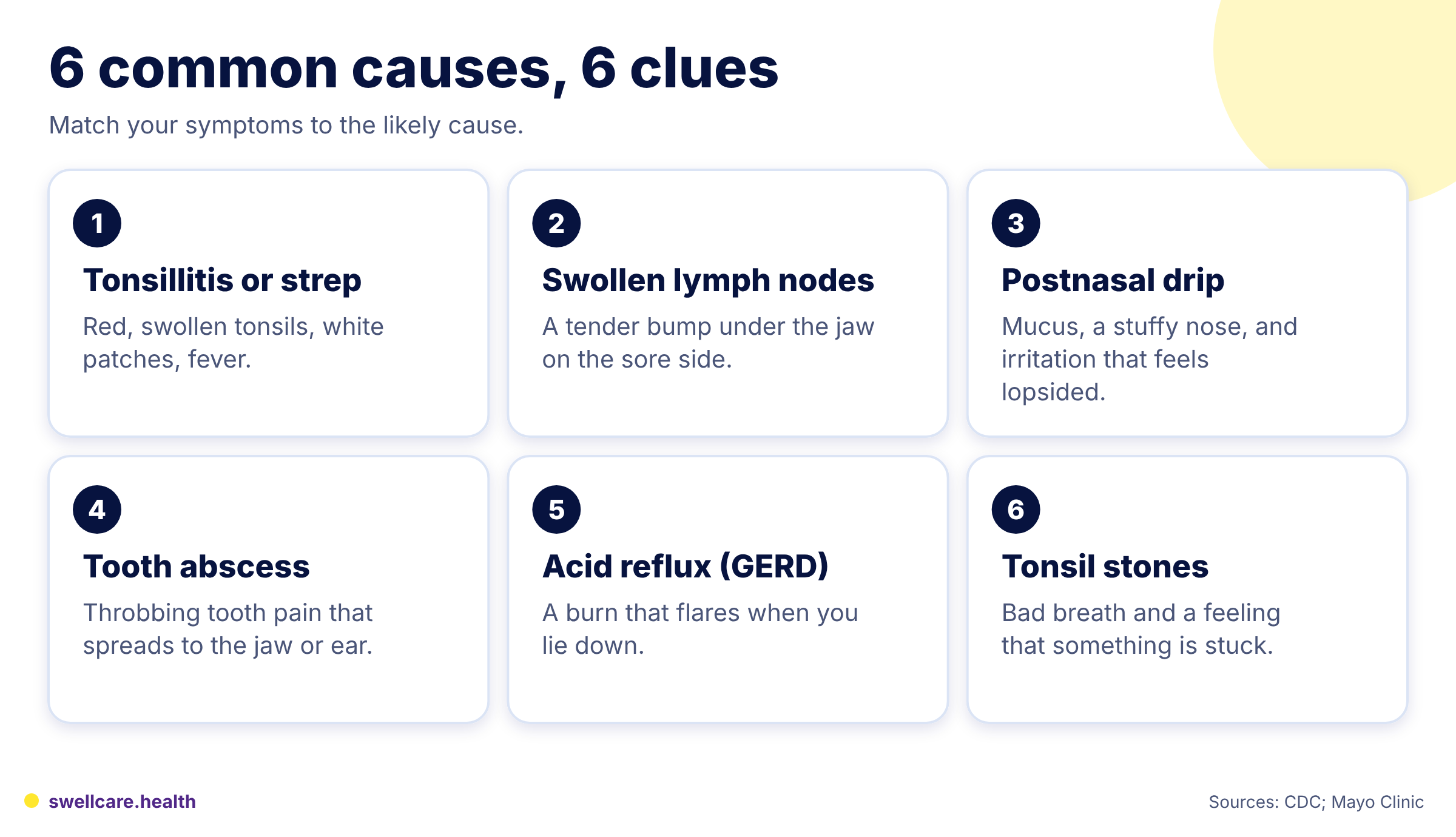
Tonsillitis and strep throat
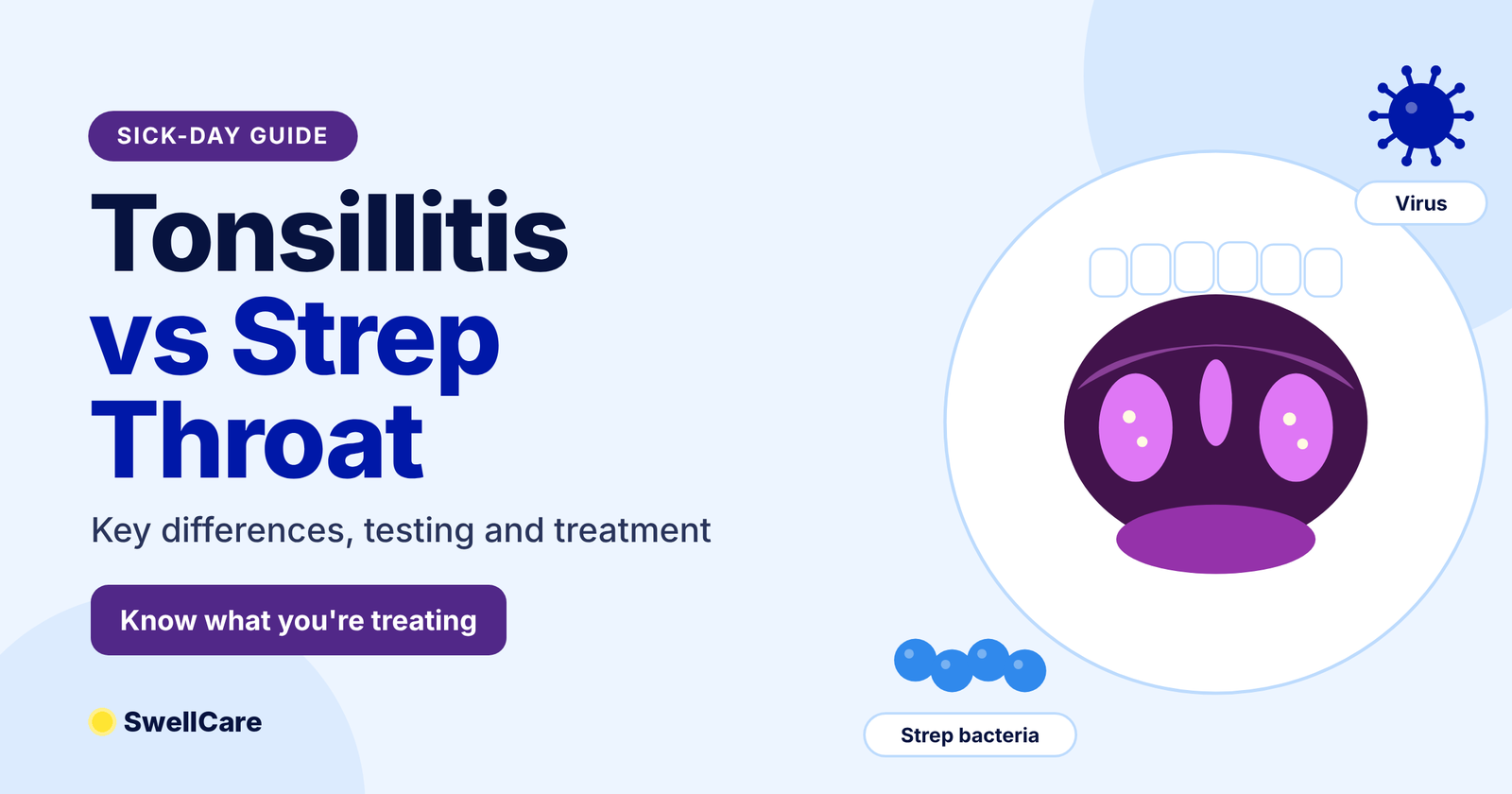
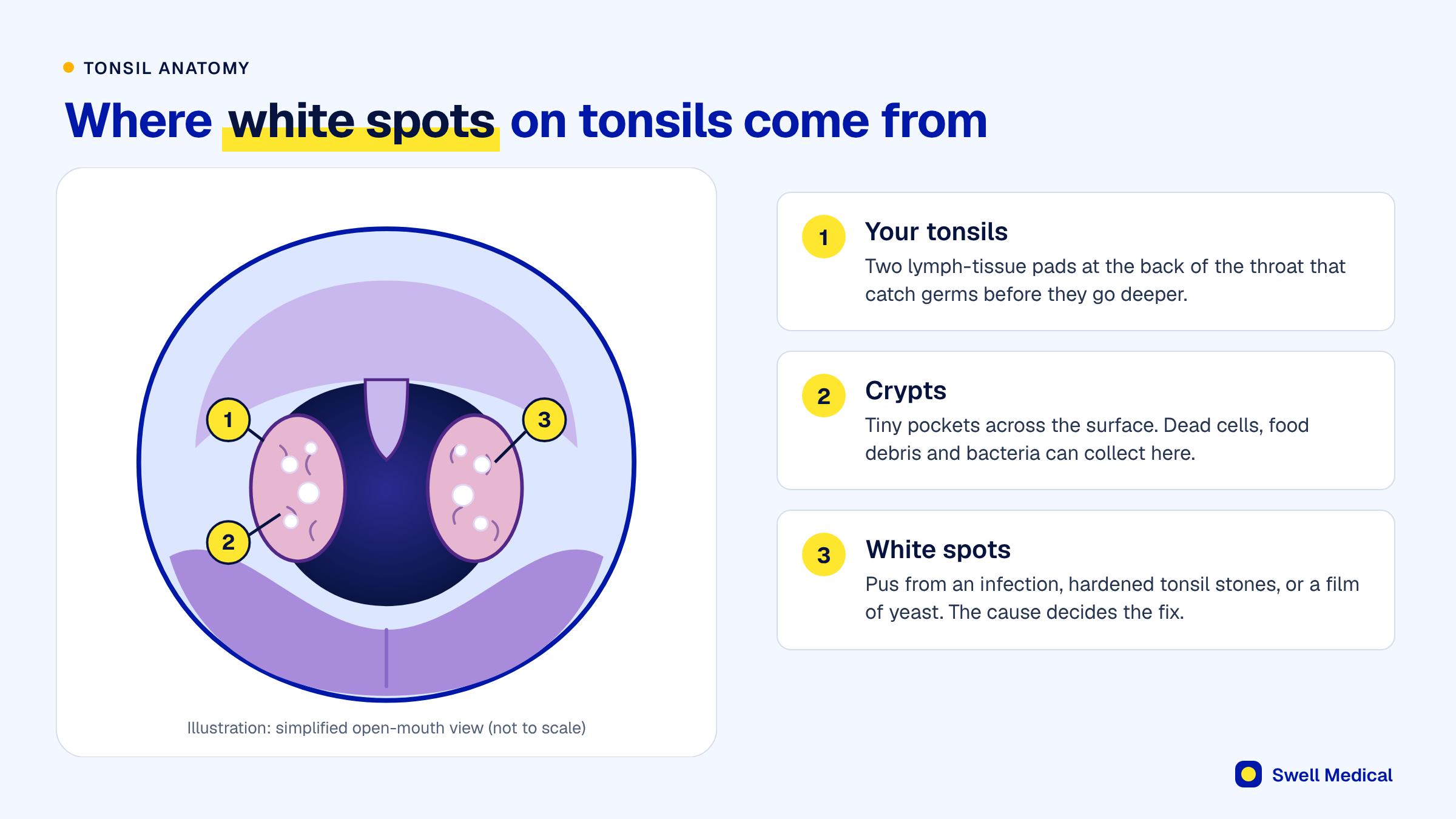
Tonsillitis is simply inflammation of the tonsils. When one takes the brunt, the soreness stays on that side. You may see red, swollen tonsils with white patches or streaks of pus, plus a fever and swollen lymph nodes in the neck. Strep tonsillitis is the classic bacterial version.
Most of the time it’s a viral sore throat. The CDC reports that only about 1 in 10 adults with a sore throat has strep throat. Cough, runny nose or hoarseness points toward a virus instead. Only a rapid strep test settles the question, because antibiotics help a bacterial infection but do nothing for a virus. Unneeded antibiotics can still cause harm, from rashes to a C. diff infection. Treatment depends on the cause, so the test matters.
Swollen lymph nodes and postnasal drip
When you’re fighting an infection, the lymph nodes near it swell up. Press gently under your jaw. Feel for a tender bump on the sore side. It usually means your body is busy with a cold or throat infection, and swollen lymph nodes tend to settle once it’s gone.
Postnasal drip is quieter. Mucus runs down the back of your throat and leaves it raw and tickly. That irritation can feel lopsided after a night spent lying on one side, and the mucus pools there. Postnasal drip often comes with a stuffy nose and thick mucus, which helps you spot it.
A tooth abscess that feels like a throat problem
Throbbing, constant tooth pain is the giveaway. This bacterial infection at the root of a tooth can also bring jaw or neck pain, swelling in the cheek, tender lymph nodes under the jaw, a bad taste and fever. If hot drinks or biting down make it worse, think tooth first. Tooth abscesses need a dentist promptly. If one ruptures, a rush of foul-tasting pus may bring brief relief, but you still need dental treatment. Go to the ER if you have fever and facial swelling and can’t reach one.
Reflux, tonsil stones and irritation
Acid reflux, or GERD, lets stomach acid creep up and burn the throat. It often flares when you lie down. The burn can land on one side. Tonsil stones are small hard lumps of debris, minerals and bacteria that collect in tonsil crevices. Bad breath is the usual sign. Some people feel something stuck back there.
Everyday irritation counts too. Smoke, dry air and a strained voice can all leave the throat sore. So can laryngitis, an inflammation of the voice box that often follows a cold or heavy talking. If GERD keeps coming back, mention it to a doctor, because repeated acid exposure keeps the tissue inflamed.
Red flags: when a one-sided sore throat is urgent
One cause deserves special attention. A peritonsillar abscess is a pocket of pus between a tonsil and the throat muscle. It’s the most common deep infection of the head and neck, and it’s most often seen in adults aged 20 to 40, per the American Academy of Family Physicians. It shows up alongside tonsillitis often enough to be worth knowing about.
Peritonsillar abscess usually looks like severe pain on one side, often with ear pain on the same side, plus trouble opening your mouth (trismus), drooling, tender lymph nodes and a muffled “hot potato” voice. Treatment means draining the abscess and a 10 to 14 day course of antibiotics. Don’t sit on these symptoms.
| How urgent | What you’re noticing |
|---|---|
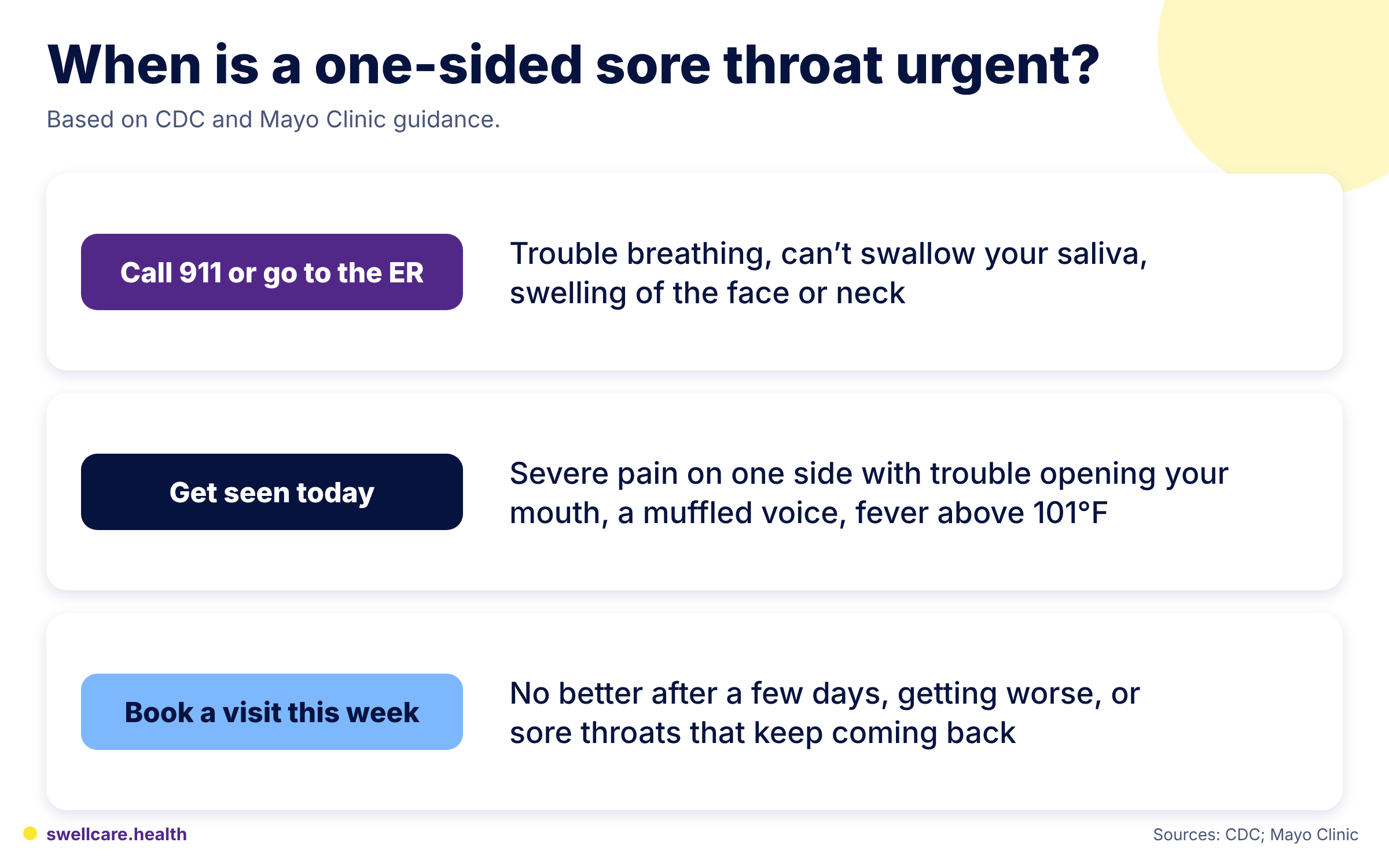
| Call 911 or go to the ER | Trouble breathing, can’t swallow your saliva, swelling of the face or neck |
| Get seen today | Severe pain on one side with trouble opening your mouth, a muffled voice, fever above 101°F, rash or joint pain |
| Book a visit this week | No better after a few days, getting worse, or sore throats that keep coming back |
Sources: the CDC and Mayo Clinic.
How to ease a sore throat on one side at home
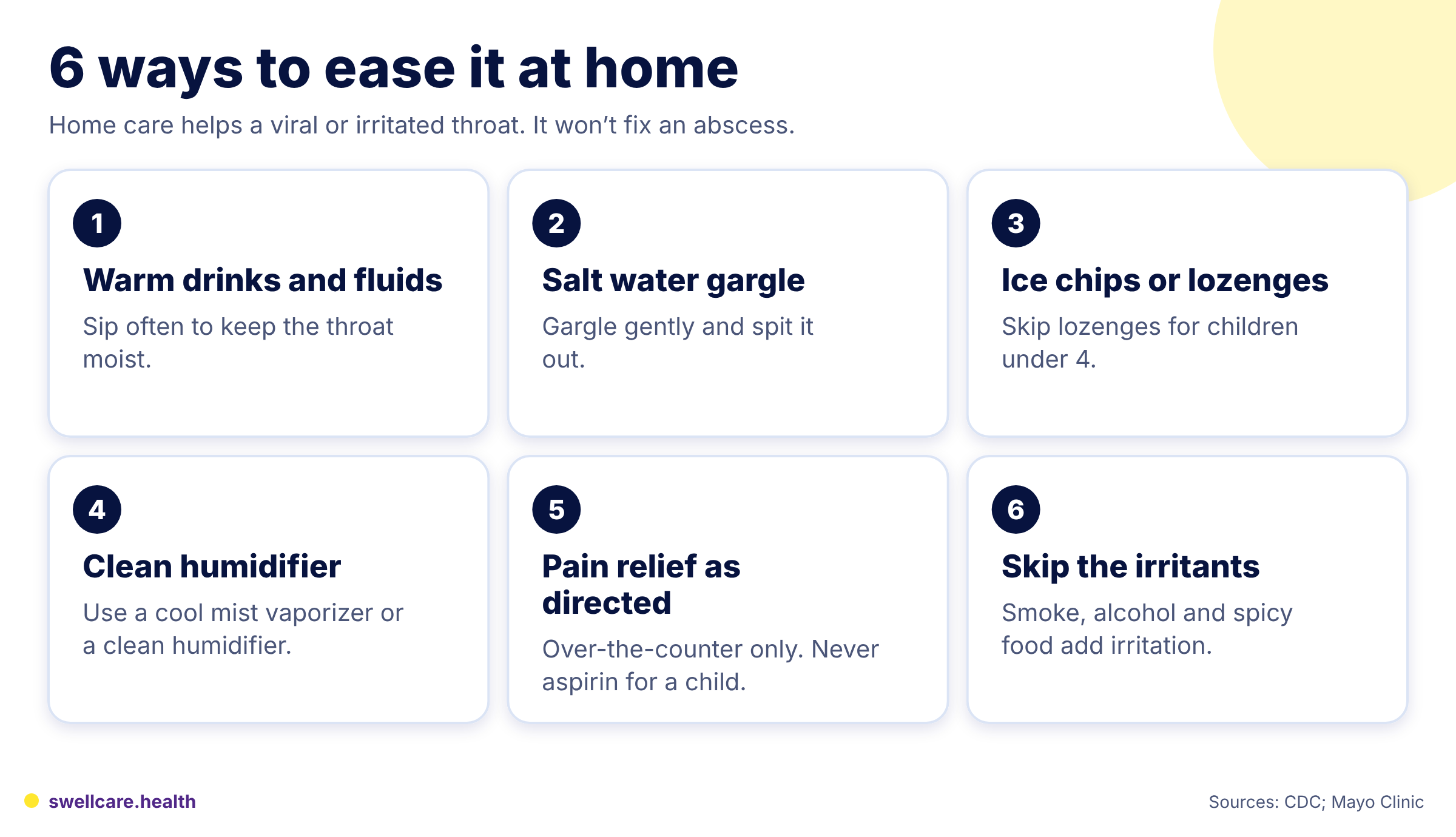
Home remedies won’t cure a peritonsillar abscess, but they take the edge off a viral or irritated throat. The CDC suggests a few simple things:
- Sip warm drinks and plenty of fluids.
- Gargle with salt water.
- Suck on ice chips, popsicles or lozenges (skip lozenges for children under 4).
- Run a clean humidifier or cool mist vaporizer.
- Use over-the-counter pain relief as directed. Never give aspirin to a child.
Skip smoke, alcohol and spicy food while it heals, since all three add irritation. These home remedies ease the pain, and the swelling and inflammation feel less angry. Treatment for a viral sore throat is mostly rest and fluids, while a bacterial cause needs a clinician. If your symptoms are getting worse, home treatment has stopped being enough.
How long does a one-sided sore throat last?
Days, usually. Viral soreness tends to peak early and fade within a week. Knowing when to see a doctor matters more than counting days, though. If a severe sore throat lingers past a week, it deserves a look. So does hoarseness, the hallmark of laryngitis, once it lasts more than two weeks, per Mayo Clinic.
Then there’s the rare scenario, throat cancer. The American Cancer Society lists a sore throat that won’t go away, a lump in the neck, ear pain and trouble swallowing as possible signs of mouth and throat cancer. It says to see a doctor or dentist if these symptoms last more than a few weeks. They can come from other conditions too, so a visit is about getting an answer and ruling out cancer, not assuming the worst.
Get answers today with a Swell clinician
Waiting around for an appointment with a lopsided sore throat is miserable, and guessing is worse. Swell clinicians can talk through when it started, what makes it worse and which red flags you do or don’t have, then tell you whether home care is enough or you need an in-person exam.
Be clear about the limits. Video and chat visits can’t swab your tonsils, so if you need a strep test or an emergency room, we’ll say so. No prescription (antibiotics included) and no outcome is guaranteed. The screening is free, a completed consultation is $45, and there’s no membership.
If this sounds like you, tell us what’s going on and get care now. Call 911 if you can’t breathe comfortably.
Questions people ask about one-sided sore throats
Can strep throat just be on one side?
It can feel that way. Strep tonsillitis infects the throat and tonsils, and one tonsil may be more inflamed, so the pain seems to sit on one side. Only a test can separate bacterial strep from a viral infection. Ask for a rapid strep test if you have swollen lymph nodes in the neck but no cough.
What is a red flag for a sore throat?
Trouble breathing or swallowing, drooling, a muffled voice, trouble opening your mouth, and swelling of the face or neck. Any of these means getting seen right away. Soreness lasting more than a week, or a lump in the neck, also needs a doctor.
Why do I have a sore throat but not sick?
Not every sore throat is an infection. Allergies, dry air, smoke, acid reflux, postnasal drip and voice strain can all irritate the throat, and even mild laryngitis can leave it scratchy, without any cold symptoms. GERD is a common culprit. If it keeps recurring, or you can’t pin down the cause, it’s worth seeing a doctor.
Why does swallowing hurt more on one side?
Swallowing squeezes the tonsils, lymph nodes and muscles, so any inflammation or infection there flares. That’s why a sore throat on one side when swallowing is so common. Tonsillitis, a tooth abscess or a peritonsillar abscess can all do it, and each one needs a different next step. Hard to swallow? Don’t wait.
Can a sore throat on one side be cancer?
Rarely, yes. A sore throat that doesn’t go away, a neck lump, ear pain or trouble chewing can be signs of cancer, which is why the American Cancer Society advises seeing a doctor if they last more than a few weeks. Most causes are far more ordinary, but persistent symptoms deserve a proper look.
Trusted references
Public-health, research, and medical-society resources related to this guide.