You wake up with itchy eyes, a stuffy nose and a sneeze that will not quit. Yesterday you felt fine. So what changed? Chances are, you just walked into allergy season, and it may have arrived weeks before you expected it.
That is the frustrating part. Allergy season does not start on a fixed date, and it does not follow the calendar the way the holidays do. More than a quarter of US adults and children live with at least one allergy, according to the CDC, and for many of them the first sneeze of the year is a surprise.
This guide fixes that. Below you will find exactly when allergy season starts and ends, which pollen is behind each month’s symptoms, how your region changes the timeline, and what you can do now to stay ahead of it. Keep reading, because the right plan starts with knowing what you are up against.
When Is Allergy Season?
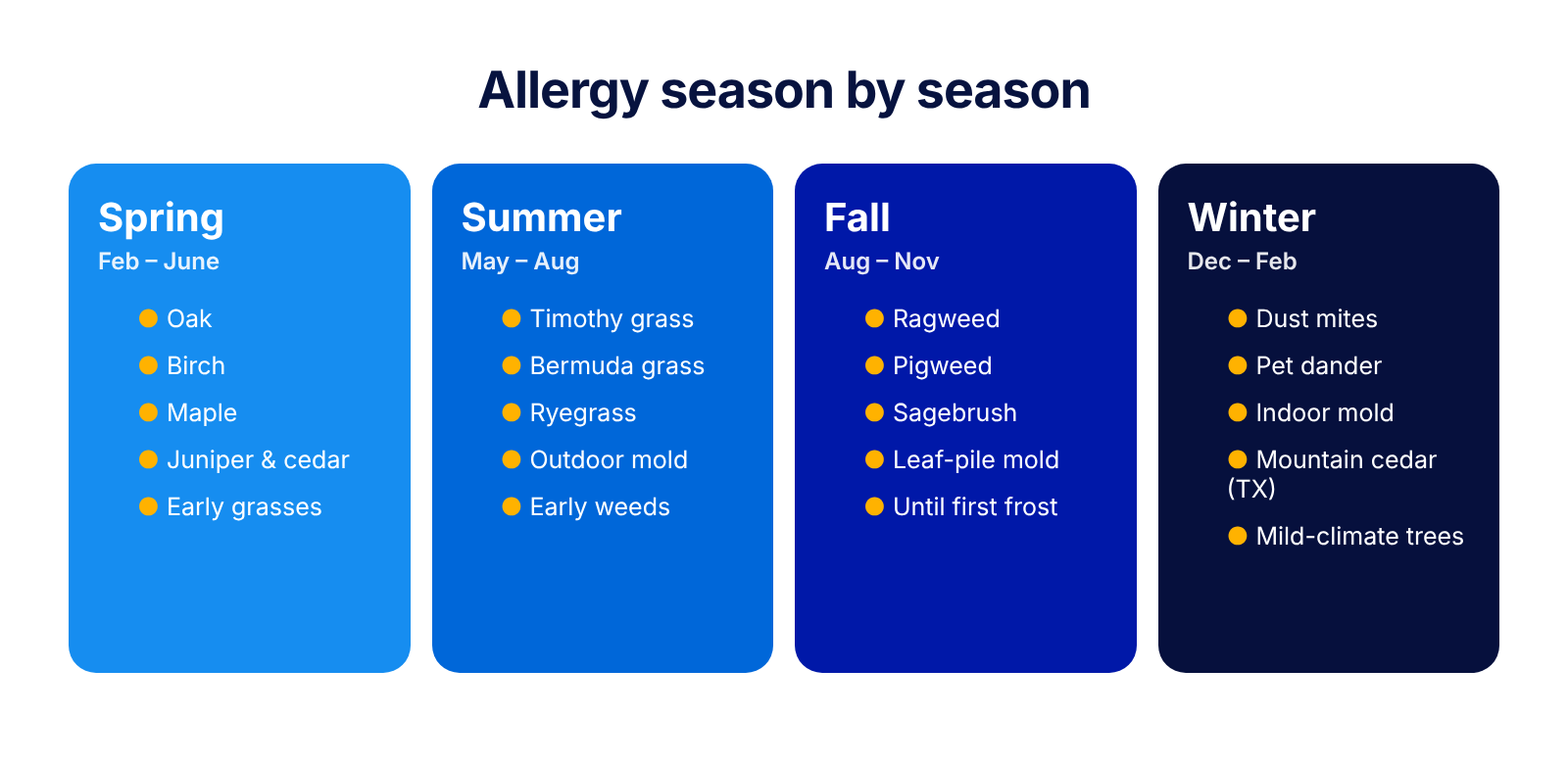
In most of the United States, allergy season runs from February through November. Tree pollen starts it in late winter and spring, grass pollen takes over in late spring and summer, and weed pollen (mainly ragweed) carries symptoms through fall until the first hard frost. Mold and indoor triggers such as dust mites and pet dander can keep you sneezing in any month, which is why winter is not always a break.
So the honest answer to “when is allergy season?” is: it depends on what you are allergic to and where you live. The sections below break it down.
Allergy Season by Season
Spring allergy season (February to June)
Spring is what most people picture when they think of seasonal allergies. As temperatures climb, trees such as oak, birch, maple, juniper and cedar release huge amounts of tree pollen. In warmer states, the first trees can start as early as January or February. Early grasses join in toward the end of the season.
Summer allergy season (May to August)
Grass pollen dominates summer. Timothy, Bermuda, ryegrass and Kentucky bluegrass are common culprits, and grass pollen allergies often peak in June. Hot, humid weather also lifts outdoor mold, so summer can bring a double hit for allergy sufferers.
Fall allergy season (August to November)
If your symptoms flare when the leaves change, ragweed is a likely suspect. Ragweed and other weeds such as pigweed and sagebrush release pollen from late summer, and ragweed pollen counts typically stay high until the first hard frost. One ragweed plant can produce up to a billion pollen grains, and the light grains travel for miles on the wind. Mold in damp leaf piles adds to the load.
Winter allergy season (December to February)
Outdoor pollen drops in cold climates, but you are not off the hook. People spend more time indoors, so dust mites, pet dander and indoor mold become the main triggers. In Texas and parts of the South, mountain cedar (often called “cedar fever”) can peak in the middle of winter.
Allergy Season Month by Month
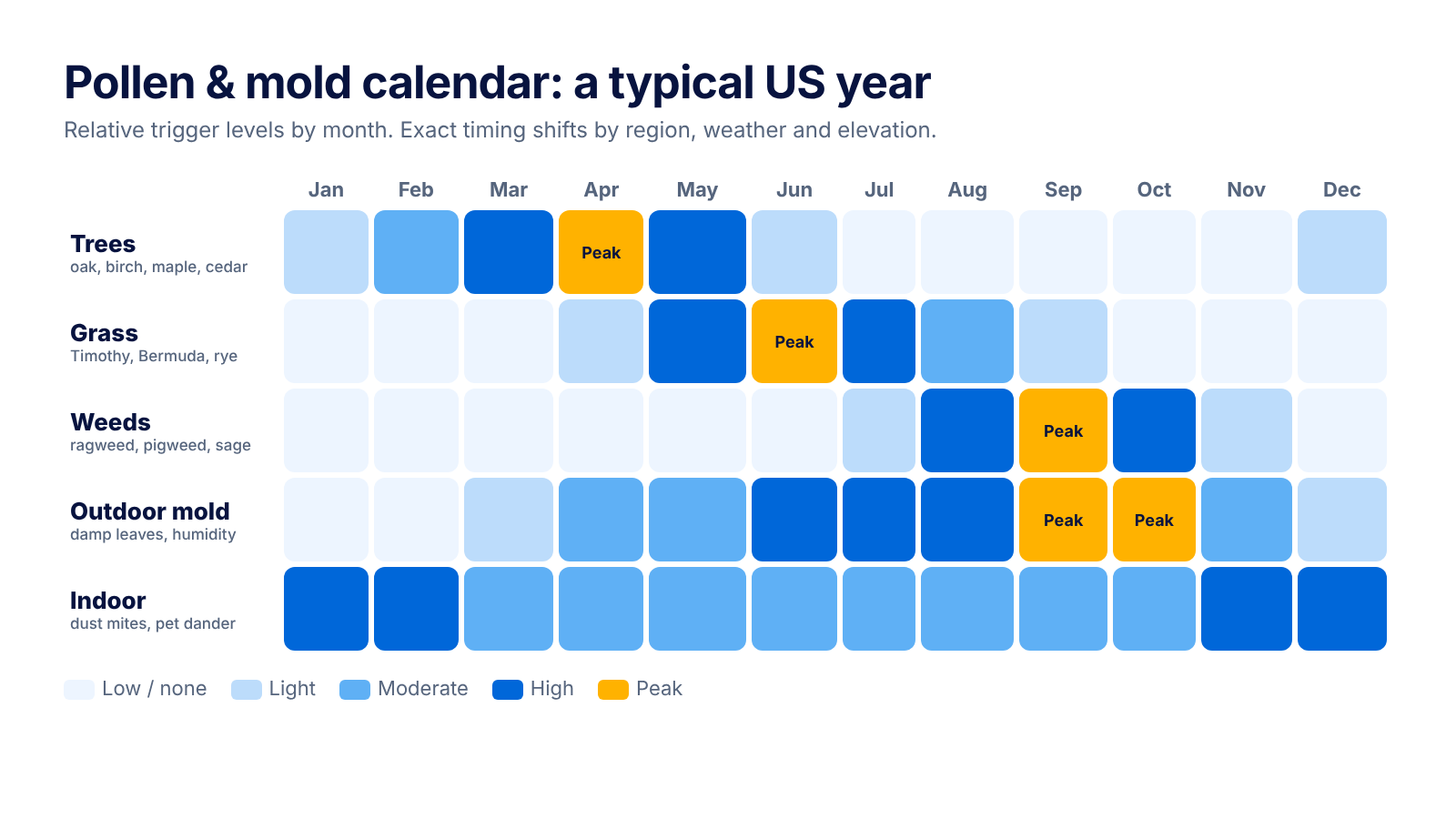
Here is a month-by-month look at what is typically in the air across much of the US. Exact timing shifts with your region, the weather and the year.
January
Most of the country is quiet outdoors. Indoor allergens are the main problem, and in Texas and the Southwest, cedar and juniper pollen can already be high. Warm southern states may see the first alder and hazel pollen.
February
Tree pollen begins in the South and along the West Coast. If you notice sneezing on a mild day, that is probably why. Dust mites and pet dander still cause trouble indoors.
March
Allergy season gets going nationwide. Elm, maple, cedar and juniper release pollen, and rising temperatures speed things up. This is the month many people reach for allergy medicine for the first time.
April
Tree pollen is at or near its peak across much of the country. Oak, birch and maple are in full bloom, and a yellow dusting on cars and sidewalks is a familiar sign. Early grasses start to appear in warm regions.
May
Tree pollen is still high, and grass pollen begins to climb. This is often one of the toughest months for people who are allergic to both. Rain can briefly wash pollen out of the air, but it can also trigger a spike afterward.
June
Grass pollen usually peaks. Timothy, Bermuda and ryegrass drive itchy eyes, runny noses and scratchy throats, especially on dry, windy days. Tree pollen fades.
July
Grass pollen starts to taper, but heat and humidity push outdoor mold up. Early weed pollen begins to appear in some regions late in the month.
August
Weed season begins. Ragweed typically starts releasing pollen in mid-August, even though the summer still feels in full swing. Mold remains high.
September
Ragweed pollen peaks in many areas, and September is one of the worst months for allergies in the US. Mold levels climb as the weather cools and the first leaves fall.
October
Ragweed and other weed pollen continue until the first hard frost. Mold in fallen leaves is a major trigger, so raking can bring symptoms back fast.
November
Pollen drops quickly as frost arrives in colder regions. Indoor triggers rise as windows close and heating turns on. In the South, symptoms may continue longer.
December
Outdoor pollen is lowest in most states. Dust mites, pet dander and indoor mold lead the way, and cedar pollen starts building in Texas.
Why Allergy Season Keeps Getting Longer
If it feels like allergy season is starting earlier and lasting longer than it used to, you are not imagining it. A study published in PNAS found that North American pollen seasons have grown about 20 days longer since 1990, with roughly 21% more pollen in the air. Researchers link much of that trend to warmer temperatures and rising carbon dioxide levels.
Several factors change the timeline from year to year:
- Weather: A warm winter can start tree season weeks early. Rain can wash pollen away, then boost growth and mold afterward.
- Location: Southern and coastal areas often have longer seasons than northern states.
- Air quality: Pollution can irritate your airways and make pollen reactions feel worse.
- Your immune system: Stress, illness and changes in your health can make symptoms feel stronger in some years.
Allergy Season by Region
- Northeast and Midwest: A distinct spring tree season, a summer grass season and a strong ragweed season in late summer and fall. Winter usually brings a real break from outdoor pollen.
- Southeast and Gulf Coast: Tree pollen can start in January, grass pollen runs for months, and mold thrives in the humidity. For many people in this region, allergy season has no true end.
- Texas and the Southwest: Mountain cedar peaks in winter, oak and other trees follow in spring, and grasses and weeds carry through the rest of the year.
- Mountain West: Tree and grass seasons arrive later at higher elevations. Sagebrush and other weeds are common in late summer and fall.
- West Coast: Mild weather means long seasons. Trees may start in January, and grasses and weeds can continue well into fall.
Is It Allergies or a Cold?
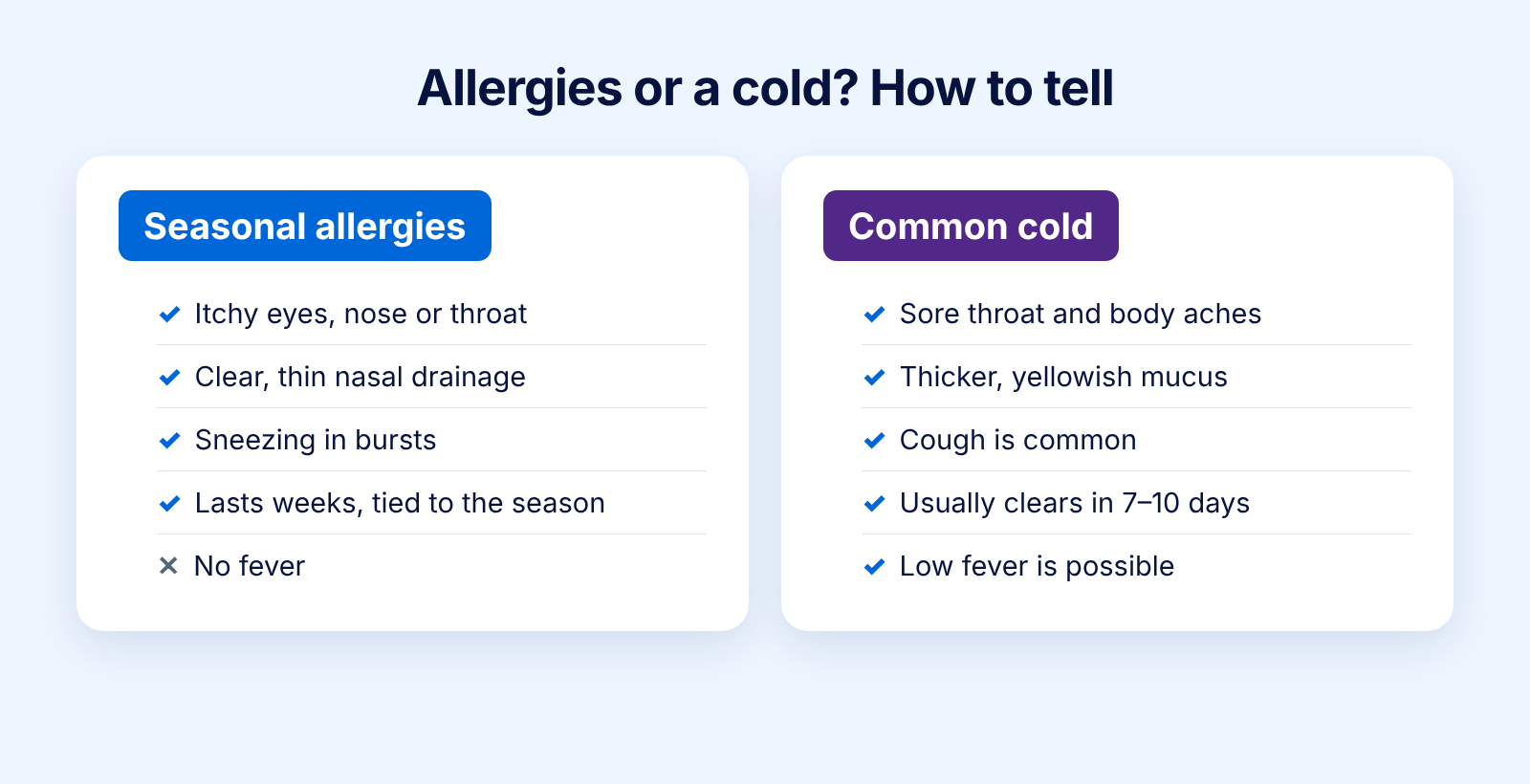
Allergies and colds share symptoms such as a runny nose and sneezing, so they are easy to mix up. A few clues help tell them apart. Allergies usually bring itchy eyes, nose or throat, clear nasal drainage and no fever, and they last as long as you are exposed to the trigger, often weeks. A cold more often comes with a sore throat, body aches and thicker mucus, and it usually clears up in 7 to 10 days.
Common seasonal allergy symptoms include:
- Sneezing
- Runny or stuffy nose
- Itchy, watery or red eyes
- Itchy throat or ears
- Postnasal drip and cough
- Fatigue and trouble sleeping
- Headache or sinus pressure
If your symptoms follow the same pattern every year, allergies are the likely cause.
How to Get Ahead of Allergy Season
Imagine getting through your worst month with clear eyes, an easy nose and a full night of sleep. A little planning makes that realistic for many people. The American College of Allergy, Asthma and Immunology recommends limiting your exposure and talking with an allergist about treatment options, which can include antihistamines, nasal sprays and immunotherapy (allergy shots or tablets).
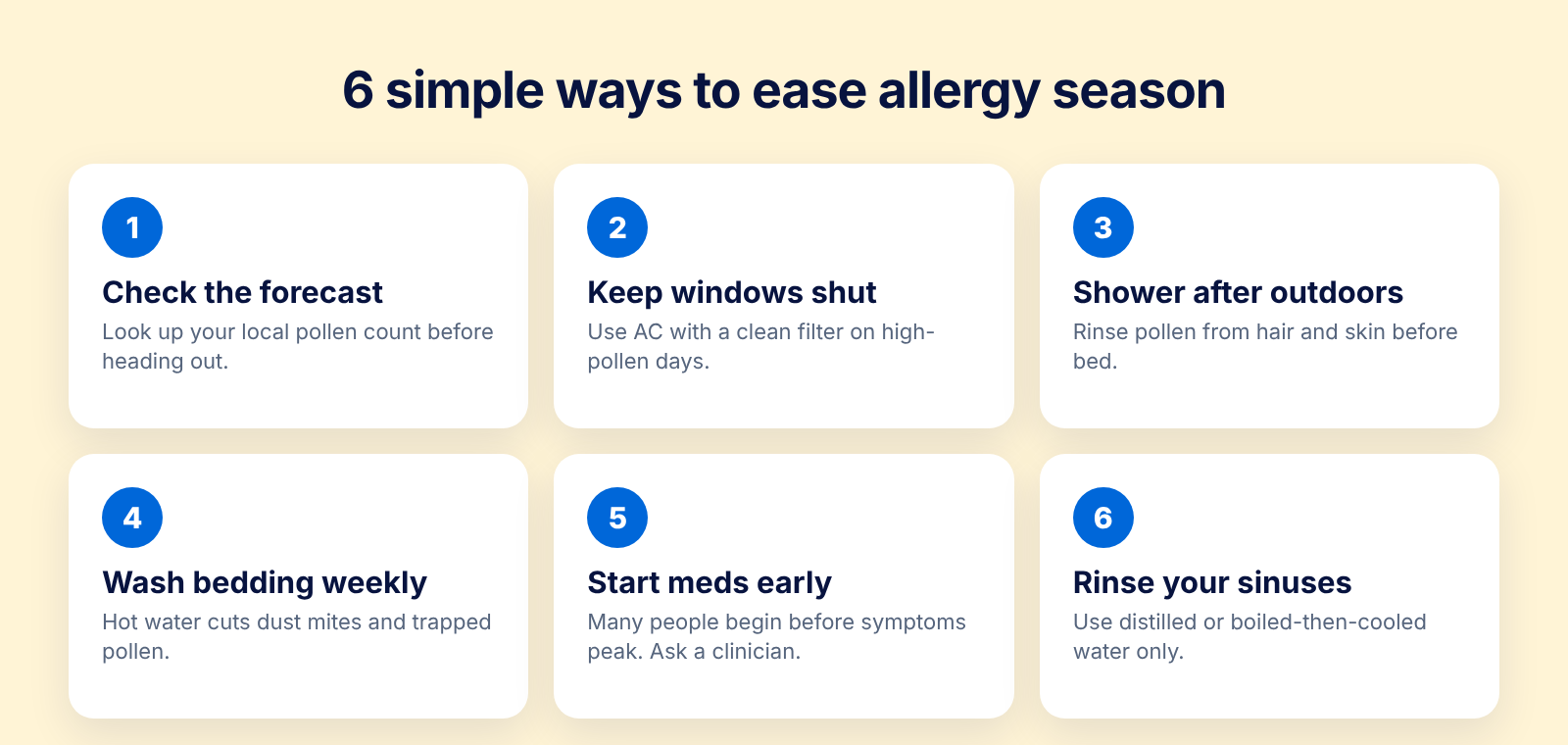
- Check the pollen forecast. Look up your local pollen count each morning and plan outdoor time for low-pollen hours, usually after rain.
- Keep windows closed. Run the air conditioning with a clean filter on high-pollen days, and keep car windows up too.
- Shower and change clothes after being outside. Pollen clings to hair, skin and clothing, so rinse it off before bed.
- Wash bedding weekly in hot water. This reduces dust mites and trapped pollen.
- Start treatment early. Many people begin allergy medicine one to two weeks before their usual season starts. Ask a clinician which option is right for you.
- Rinse your sinuses safely. If you use a saline rinse, use only distilled, sterile or previously boiled and cooled water.
When to Get Help for Allergy Symptoms
Do not wait out another miserable season if your symptoms are:
- Lasting more than a couple of weeks or coming back every year
- Keeping you up at night or affecting your work and daily life
- Not improving with over-the-counter medicine
- Paired with wheezing, chest tightness or shortness of breath, which can signal asthma
- Causing frequent sinus infections
Seek emergency care right away (call 911) if you have trouble breathing, swelling of your lips, tongue or throat, or other signs of a severe allergic reaction.
Get allergy care without waiting for an appointment
You do not need to wait days for an appointment while your symptoms get worse. Swell Medical offers 24/7 virtual care with a clinician in all 50 states and DC. Start with a free screening, and if you go ahead with a consultation, it is a flat $45 with no monthly membership. A clinician can review your symptoms, help work out whether allergies, a cold or something else is behind them, and talk through next steps. Medications and labs, if needed, are billed separately. Swell is not for emergencies.
Start your free screening at Swell Medical →
Frequently Asked Questions About Allergy Season
What month is most common for allergies?
Allergy symptoms peak at different times of year depending on the trigger. For many people, April and May (tree pollen) and September (ragweed and mold) are the hardest months. In warm southern states, symptoms can be bad in almost any month.
What are the worst months for allergies?
In much of the US, spring (March to May) and early fall (August to October) are the toughest. Spring is driven by trees and grass, and fall is driven by ragweed and mold.
How long does allergy season last?
Seasonal allergies can last for weeks or months, depending on your triggers and location. If you react to several allergens, your symptoms can stretch across most of the year.
What are the 7 most common allergy symptoms?
Sneezing, a runny nose, nasal congestion, itchy or watery eyes, an itchy throat, postnasal drip and fatigue are the most common. Some people also get headaches or sinus pressure.
Does allergy season start earlier now?
In many places, yes. Warmer winters and rising carbon dioxide have lengthened pollen seasons in North America by about 20 days since 1990, according to a PNAS analysis.
Can you develop seasonal allergies as an adult?
Yes. Many people first notice seasonal allergies in adulthood, sometimes after moving to a new region with different plants.
Is allergy season ever really over?
Outdoor pollen drops in winter in cold climates, but indoor triggers such as dust mites, pet dander and mold can cause symptoms all year. In warm regions, pollen can persist year-round.
Key Takeaways
- Allergy season runs roughly February through November in most of the US, with trees in spring, grass in summer and ragweed in fall.
- Mold and indoor allergens can cause symptoms in any month.
- Seasons are starting earlier and lasting longer, so plan ahead instead of waiting for symptoms.
- If allergies are disrupting your life, a clinician can help you build a plan, and virtual care makes it easy to start today.
This article is for general information and is not a substitute for medical advice. If you have severe symptoms, call 911.
Trusted references
Public-health, research, and medical-society resources related to this guide.