The fever broke days ago, and your nose finally works again. You’re sleeping through the night, mostly. Yet that cough is still there, loudest at 2 a.m.
So, how long does a cough last? Usually two to three weeks. A review of 19 studies put the average acute cough at about 18 days, and a post-viral cough after a cold or flu can drag on for up to eight weeks and still be harmless. Here’s how to tell normal from not normal, and what to do while you wait.
How long does a cough last? The short answer
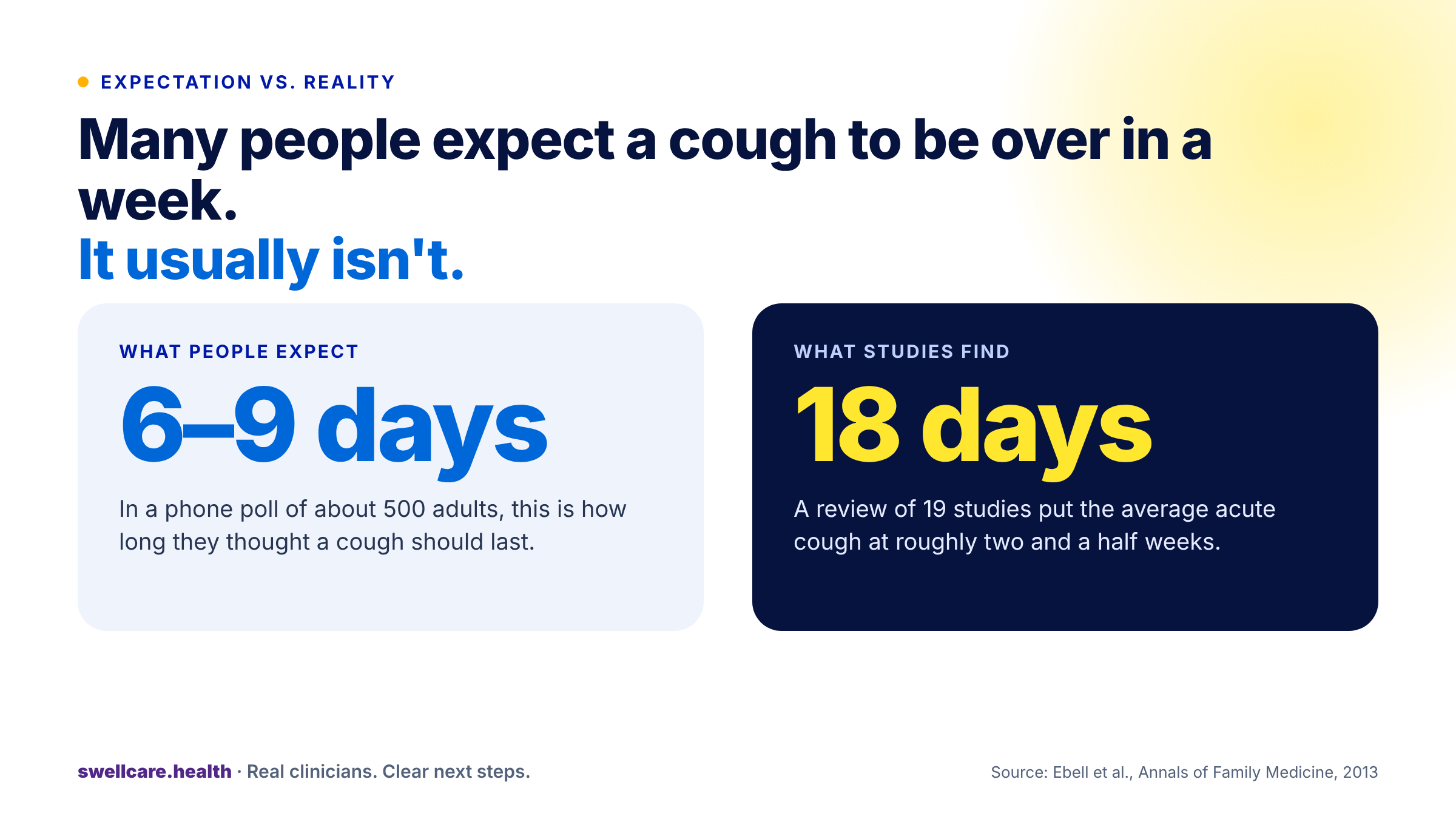
Most of us guess too low. In a phone poll of about 500 adults, people expected a cough to clear in six to nine days. The research says closer to 18 days, according to the Annals of Family Medicine review of 19 earlier studies.
That gap matters. If you think a cough should be gone by day seven, day ten feels like something went wrong. It didn’t. You’re simply on a normal schedule that nobody told you about.
The American Family Physician guidance on acute bronchitis lands in the same place: about two to three weeks is typical, and both patients and clinicians tend to underestimate it. Nothing’s broken. It’s just slow.
Why does a cough hang around after you feel better?
A cold or flu virus is gone long before the inflammation in your airways calms down. Think of a sunburn. The sun is long gone, but the skin stays tender for days. Your lungs aren’t fighting a live infection anymore, and the inflammation is the leftover. Your airways are just raw and touchy.
Three things usually keep the cough going:
- Leftover inflammation. The lining of your airways stays swollen and irritated after the infection clears, and that inflammation can take weeks to settle.
- Mucus and postnasal drip. Extra phlegm is harder to clear, and postnasal drip from your nose and sinuses keeps tickling the back of your throat.
- An oversensitive cough reflex. The nerves that trigger coughing stay jumpy, so cold air, dust or other irritants can set you off.
Cleveland Clinic says the exact cause of a post-viral cough isn’t fully understood, but those three are the main suspects. It also reports that up to 1 in 4 adults with an upper respiratory infection may develop one, so you’re in good company. It’s usually dry, mild and fading, without coughing fits.
Cough timeline by illness
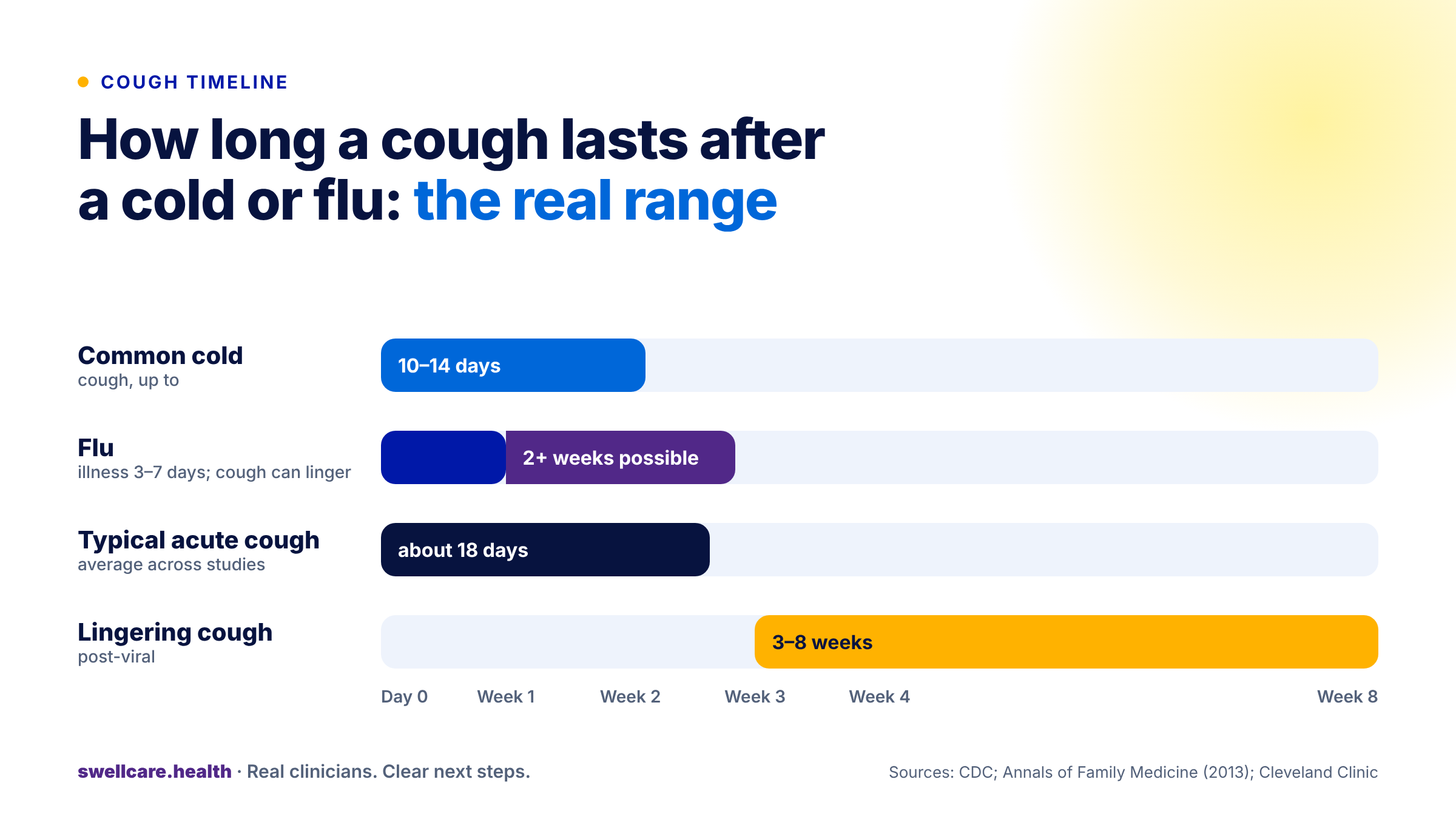
Not every cough follows the same clock. Here’s a quick look at what the CDC and other health sources say to expect.
| Illness | How long the illness lasts | How long the cough can last |
|---|---|---|
| Common cold | Symptoms peak in 2 to 3 days | Up to 10 to 14 days |
| Flu | Usually 3 to 7 days | Can pass 2 weeks, especially in older adults |
| Chest cold (acute bronchitis) | Usually under 3 weeks | Cough with or without mucus |
| Post-viral cough | After the infection clears | About 3 to 8 weeks |
A cough after a cold
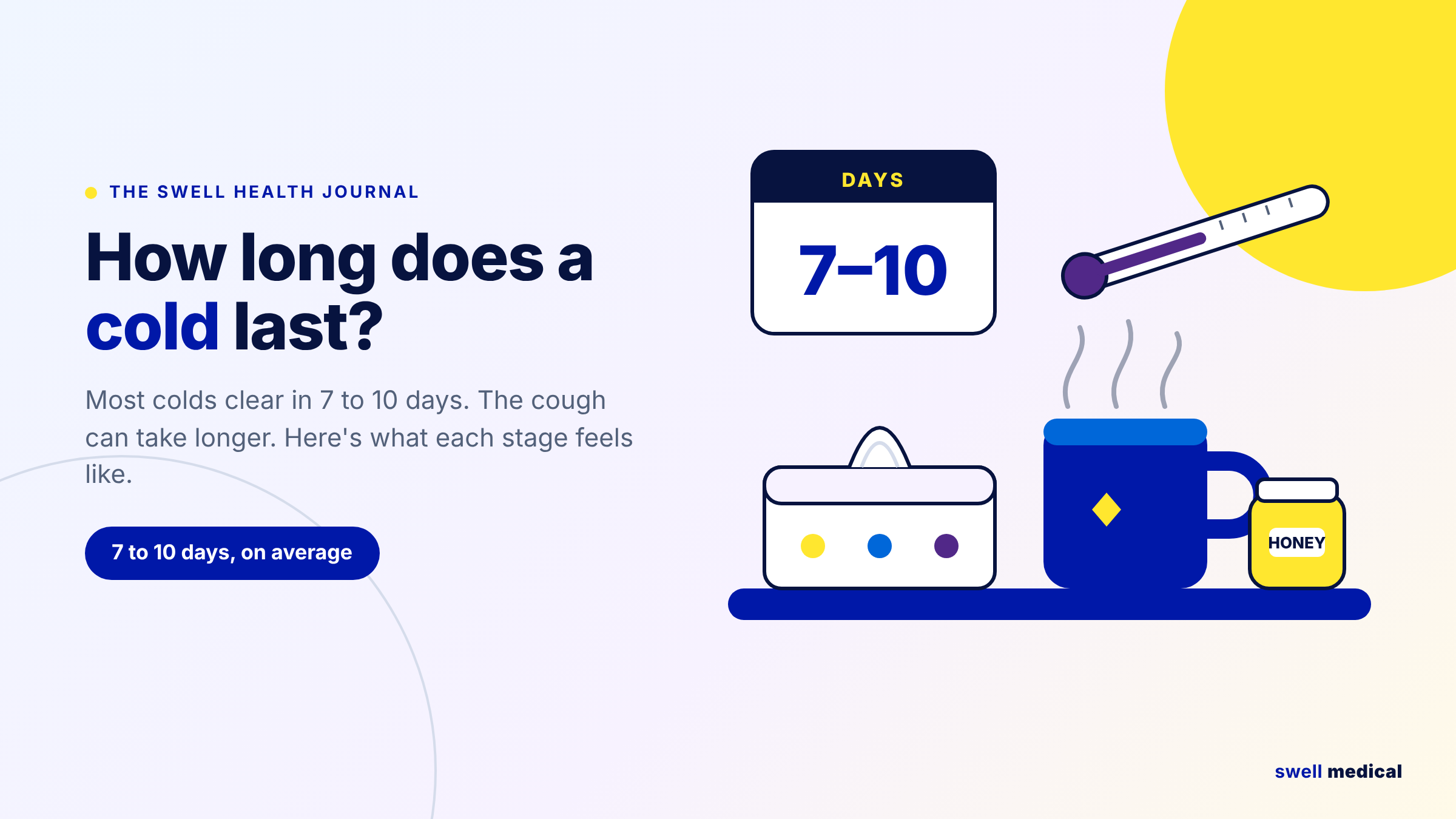
The CDC says a common cold cough can last up to 10 to 14 days and should slowly improve. Mucus that turns white, yellow or green after a few days is normal. It doesn’t mean you need antibiotics.
A cough after the flu
Flu usually clears in 3 to 7 days. The cough and tiredness often don’t. The CDC’s clinical guidance on flu notes that cough and malaise can last more than two weeks, especially in older adults and people with chronic lung disease. So if you’re a week out from the flu and still hacking, that’s the flu’s long tail, not a new illness. If you had COVID-19 instead, a lingering cough is possible too, so use the same red flags below.
COVID-19 can also leave a cough behind. Cleveland Clinic lists the coronaviruses behind both the common cold and COVID-19 among the viruses that can trigger a post-viral cough.
Acute, subacute and chronic cough
Doctors sort coughs by how long they last. An acute cough runs under three weeks. A subacute cough, sometimes called a persistent cough, runs three to eight weeks, which is the usual window for a lingering cough after a cold or flu. A chronic cough lasts eight weeks or longer, and that one needs a proper workup. Asthma, acid reflux, allergies and smoking are common reasons a chronic cough sticks around. Allergies in particular can mimic a lingering cough after a cold, because postnasal drip keeps the throat irritated.
When a lingering cough is a warning sign
Most lingering coughs are fine. Some aren’t. The skill is knowing which is which, and the signs are fairly clear.
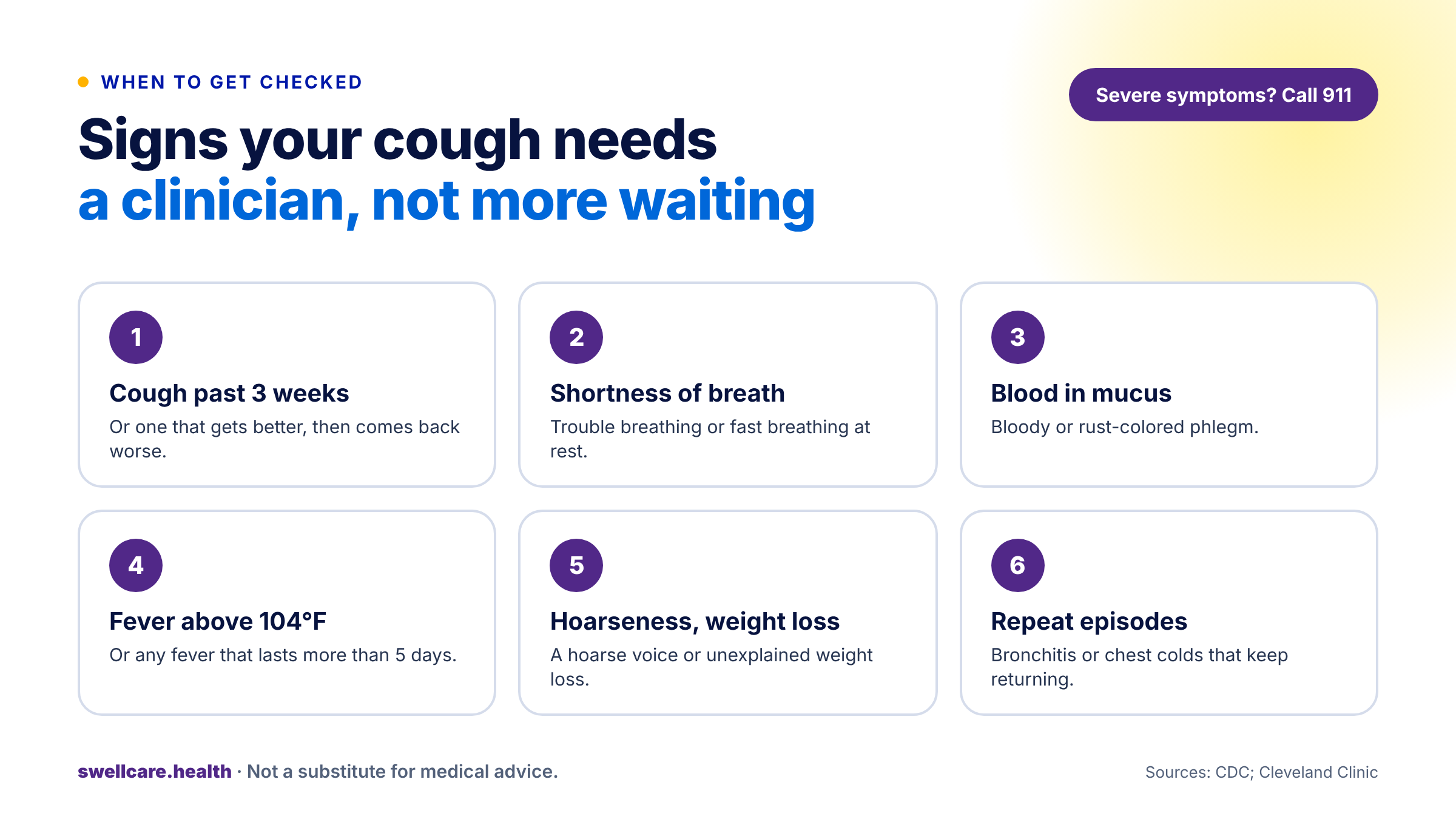
When to see a doctor, according to the CDC and Cleveland Clinic, comes down to six signs:
- Your cough lasts more than three weeks, or it improves and then comes back worse. That’s a persistent cough worth a doctor’s eyes.
- You have shortness of breath or trouble breathing.
- You’re coughing up blood or bloody mucus.
- You run a temperature above 104°F, or any fever that lasts more than five days.
- You have a hoarse voice or unexplained weight loss along with the cough.
- You keep getting bronchitis or chest colds, again and again.
Get seen sooner if you have coughing fits that end in a whooping sound or vomiting, or if you’ve been around someone with whooping cough. The American Family Physician article flags a cough lasting more than two weeks as a reason to think about pertussis. And if you have asthma or COPD, a cough that changes shape is worth a call to your doctor even if it hasn’t hit the three-week mark. Same if a chronic cough has been around for months and no one has looked at it.
Severe symptoms, like trouble breathing at rest, chest pain or confusion, are an emergency. Call 911.
What actually helps a lingering cough
Here’s the honest version. Nothing on a pharmacy shelf will make this kind of cough vanish overnight, and thinning phlegm with fluids does more than most syrups. Antibiotics don’t help a viral cough. The CDC says they don’t help a chest cold even when bacteria are involved, and they can cause side effects. Cleveland Clinic says the same about post-viral cough.
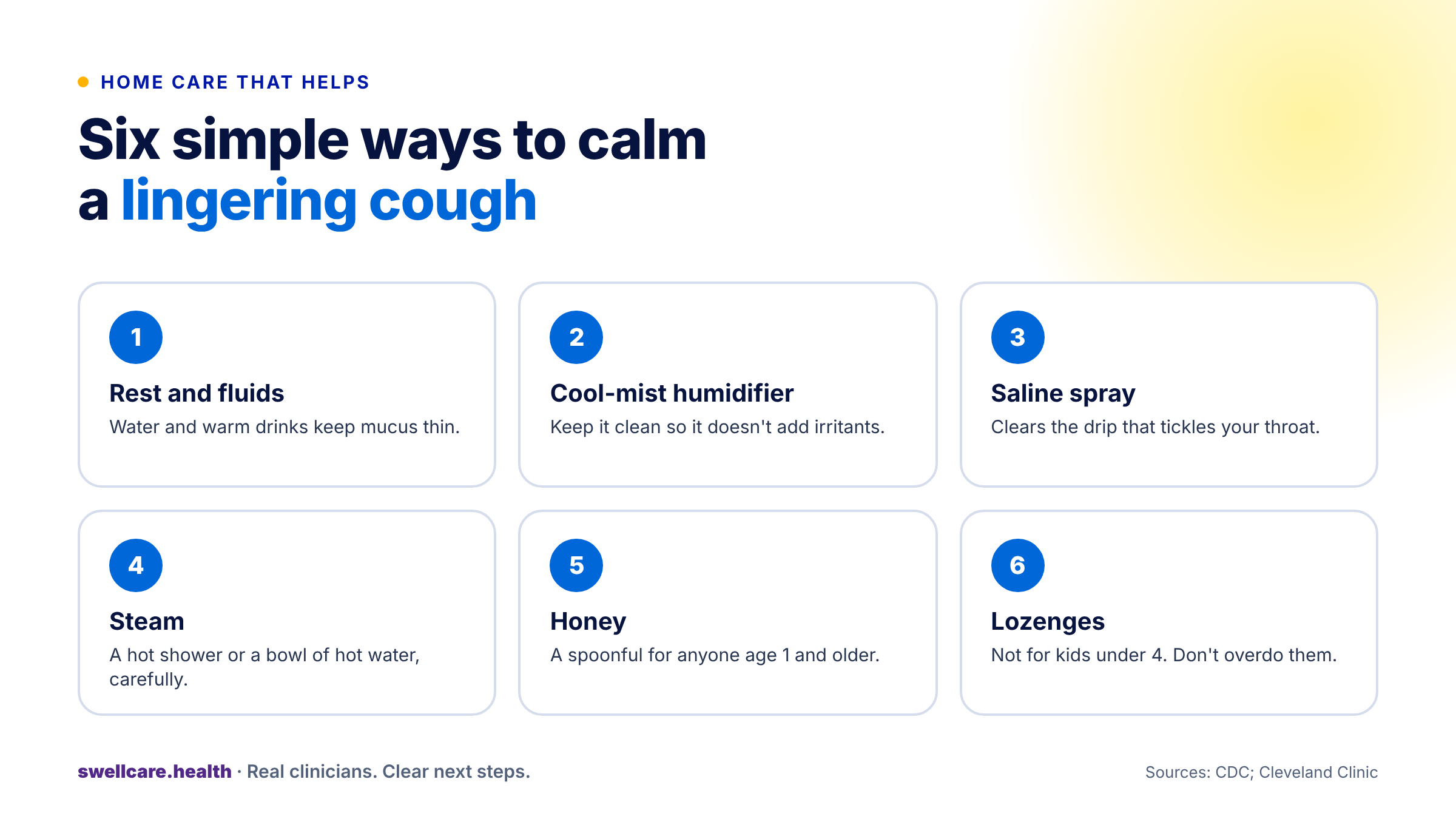
What does help is calming the airway and giving it time. The CDC suggests:
- Rest, and drink plenty of fluids.
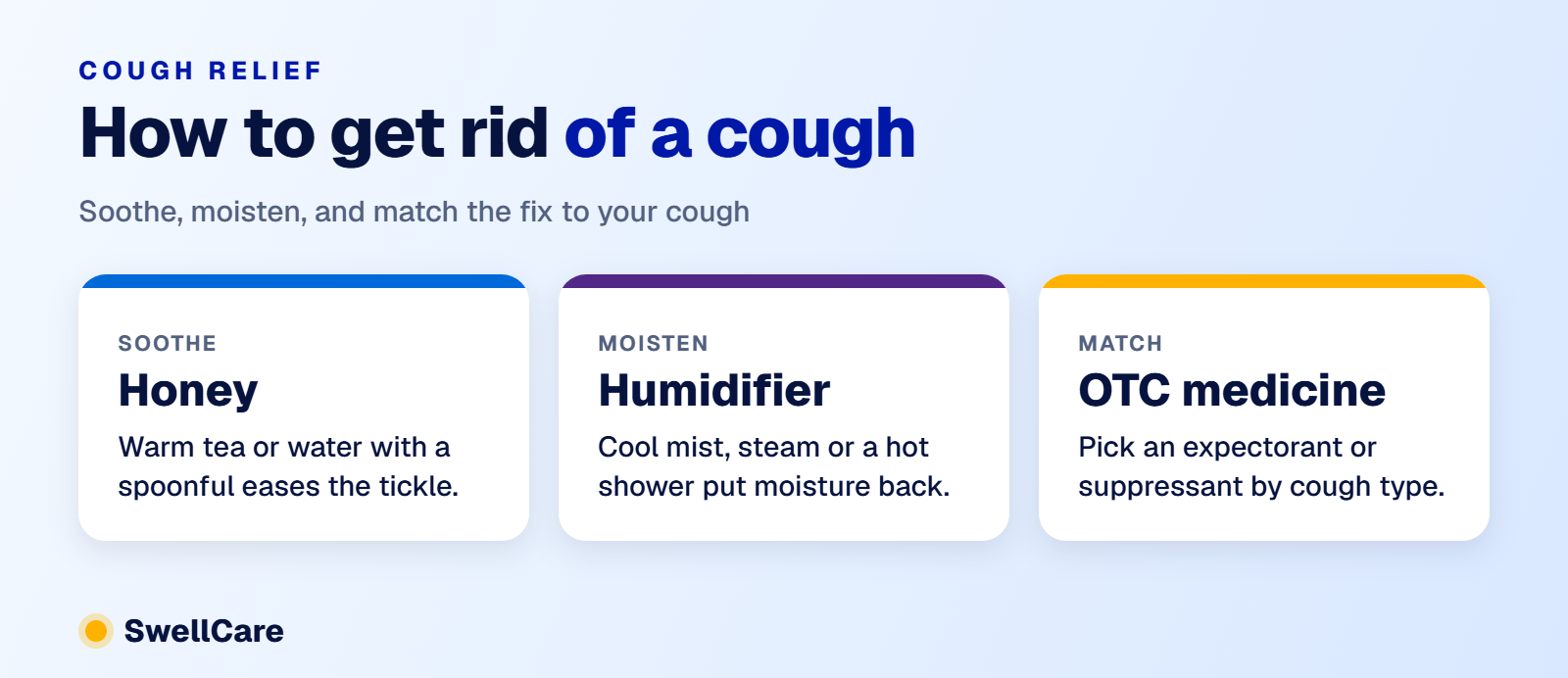
- Run a clean cool-mist vaporizer, or one of the clean humidifiers you already own.
- Try saline nasal spray to ease the drip.
- Breathe steam from a hot shower or a bowl of hot water, carefully.
- Take a spoonful of pasteurized honey if you’re age 1 or older.
- Suck on lozenges or cough drops, but not for kids under 4.
Go easy on cough drops, though. Cleveland Clinic notes that overusing them can actually make a cough worse, and lozenges are no exception. And over-the-counter cough syrups won’t speed up recovery, so treat them as comfort, not a cure. Check labels and ask a pharmacist if you take other medicines. Cough and cold medicines aren’t recommended for children under 6.
Skip the smoke too. Smoking, secondhand smoke, dust and other irritants keep the airways inflamed, which is the very thing that’s keeping your cough alive. Even strong cleaning sprays count as irritants while you heal.
Get cough answers from a Swell clinician
Waiting is the right call for most coughs. But waiting while you’re unsure is stressful, and a lingering cough can disrupt your sleep, your work and everyone near you.
If your cough is past the three-week mark, keeps coming back, or you just can’t tell whether it’s normal, you don’t have to guess. Swell gives you real clinicians and clear next steps, any time of day or night. Tell a Swell clinician how you’re feeling and find out whether this is a wait-it-out cough or one that needs a closer look.
Remember: Swell isn’t emergency care. For severe symptoms, call 911.
Questions people ask about how long a cough lasts
How long does a cough last after a cold?
A cold cough can last up to 10 to 14 days, according to the CDC, and it should gradually get better. If it’s still going strong after 10 days without improvement, or it gets better and then returns, that’s a good time to check in with a doctor. A leftover post-viral cough can run three to eight weeks.
How long does a cough last after the flu?
Flu symptoms typically clear in 3 to 7 days, but the cough and tiredness can linger past two weeks. Older adults and people with chronic lung disease are more likely to cough longer. A cough that gets worse again after you’d started to recover could signal something new, so have a doctor look at it.
Is a cough that lasts 3 weeks normal?
It can be. The average acute cough is about 18 days, so three weeks isn’t alarming on its own. But the CDC says symptoms lasting longer than three weeks warrant a visit to a provider, especially if you have shortness of breath, a fever or blood in your mucus.
When should I worry about a lingering cough?
Worry less about the calendar and more about the pattern. Shortness of breath, coughing up blood, a fever above 104°F, a fever lasting more than five days, or a cough that keeps coming back all deserve a prompt visit. Severe breathing trouble is an emergency, so call 911.
Do antibiotics help a cough that won’t go away?
Usually no. Most coughs after a cold or flu come from viruses, and antibiotics don’t work on viruses. The CDC says they don’t help a chest cold and can cause side effects. They’re reserved for things like whooping cough or pneumonia, which a clinician has to diagnose.
Trusted references
Public-health, research, and medical-society resources related to this guide.