You took your first shot on Sunday. By Tuesday, half a sandwich feels like a holiday dinner, and a low hum of queasiness won’t quite leave. Is that the drug doing its job, or a sign something’s wrong?
Usually it’s the first one. Most semaglutide side effects sit in the gut, stay mild to moderate, and peak in the weeks after you start or raise a dose. A short list of symptoms isn’t normal, though. Knowing which is which keeps you safe and keeps you on the medication long enough for it to work.
Below you’ll find both, built from the official prescribing labels and the questions people bring to a weight care visit.
The short answer: most semaglutide side effects are mild and temporary
Semaglutide is a GLP-1 receptor agonist. Like other GLP-1 medicines, it mimics a gut hormone that signals fullness to your brain, helps release insulin when blood sugar runs high, and slows how quickly food leaves your stomach.
You’ll see it under three brand names. Ozempic is a weekly shot for type 2 diabetes. Rybelsus is a daily tablet for type 2 diabetes. Wegovy is the weekly shot for weight management, and since December 2025 there’s also a once-daily Wegovy pill. It’s the same drug in each. The weight-loss versions use higher amounts, so stomach side effects show up more often there.
Here’s the reassuring number. In the trials behind the Wegovy prescribing information, only 4.3% of adults stopped for good because of gastrointestinal side effects, compared with 0.7% on placebo. Most people adjust, and the side effects fade.
Common semaglutide side effects and how often they happen
This table of side effects comes from the adult weight-management trials on the 2.4 mg label.
| Side effect | Semaglutide 2.4 mg | Placebo |
|---|---|---|
| Nausea | 44% | 16% |
| Diarrhea | 30% | 16% |
| Vomiting | 24% | 6% |
| Constipation or hard, infrequent stools | 24% | 11% |
| Abdominal pain | 20% | 10% |
| Headache | 14% | 10% |
| Fatigue | 11% | 5% |
| Indigestion, heartburn or sour stomach | 9% | 3% |
| Dizziness | 8% | 4% |
| Bloating or gas | 7% | 5% |
| Belching | 7% | under 1% |
| Hair loss | 3% | 1% |
Look at the right-hand column before you worry. Plenty of people getting a dummy injection reported nausea and diarrhea too. Semaglutide raises those odds. It doesn’t make them a sure thing.
At the lower diabetes strengths, the numbers drop. On the Ozempic label, nausea showed up in 15.8% of people on 0.5 mg and 20.3% on 1 mg, and vomiting stayed under 10%.
Why your stomach notices first
Slower gastric emptying is part of how the medication curbs appetite. Food sits in your stomach longer, so you feel full sooner. Keep eating past that point and your gastrointestinal tract pushes back with nausea, burping or heartburn. Sometimes you’ll vomit.
Severe slowing isn’t the norm. The label says the weight-loss version isn’t recommended for people who already have severe gastroparesis, so mention it if you’ve been diagnosed. Either way, portion size matters more than almost any other habit on this drug.
How long do semaglutide side effects last?
For most people, digestive side effects are worst in the first few days after a dose change and ease over one to several weeks. The label says gastrointestinal reactions were reported most often during dose escalation, the slow climb from a starter amount to the long-term one.
That climb is on purpose. For the weight-loss injection, the standard schedule on the label moves up every four weeks:
- First month: 0.25 mg, injected weekly
- Second month: 0.5 mg
- Third month: 1 mg
- Fourth month: 1.7 mg
- From week 17: you stay on 1.7 mg or move to the 2.4 mg maintenance dose
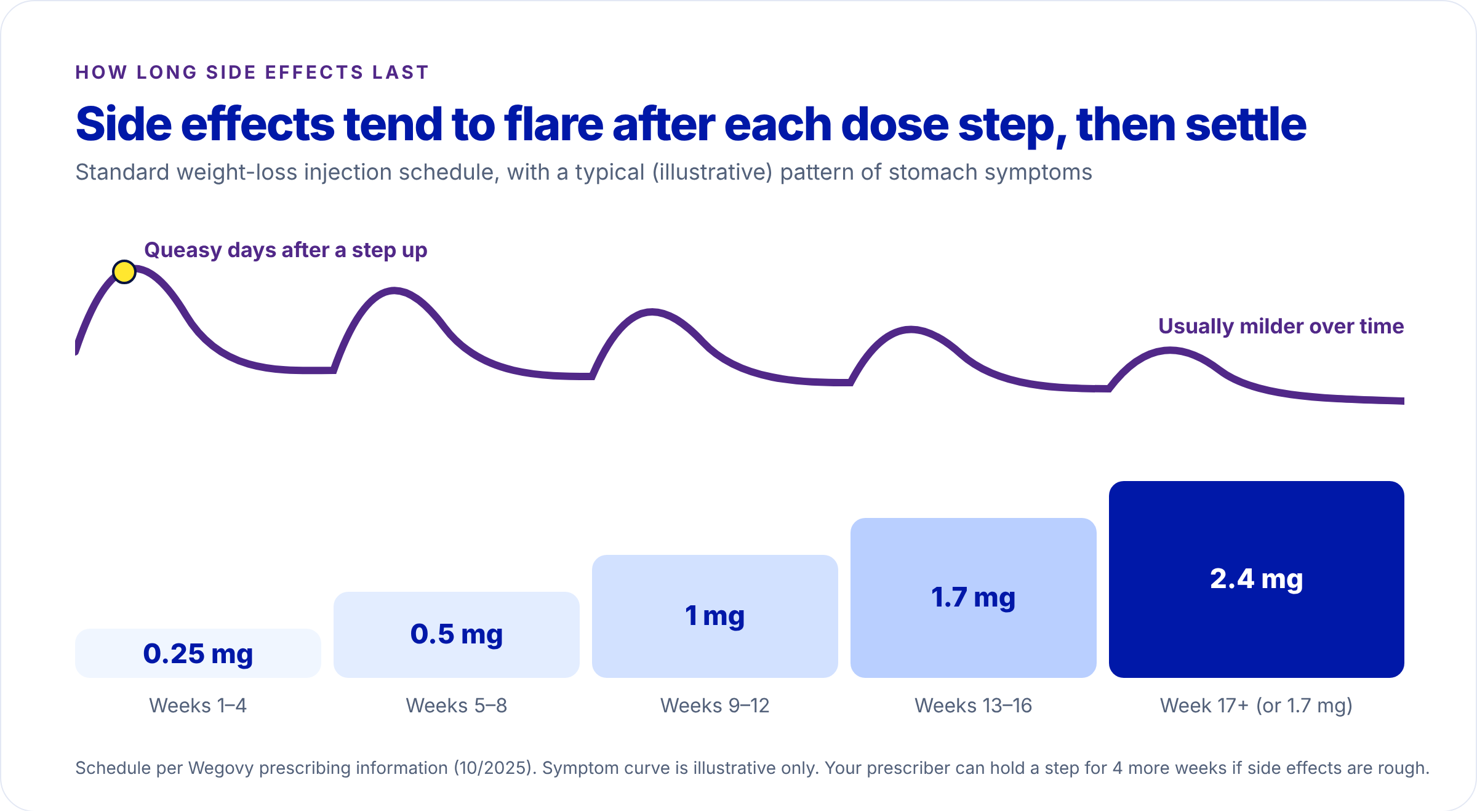
Each step up can bring a few rough days of side effects. If one doesn’t sit well, the label lets your prescriber hold the current dosage for another four weeks before moving up. Ask for that. A slower climb isn’t a failure. It’s often what gets people to a level they can live with.
What’s normal vs. what’s not
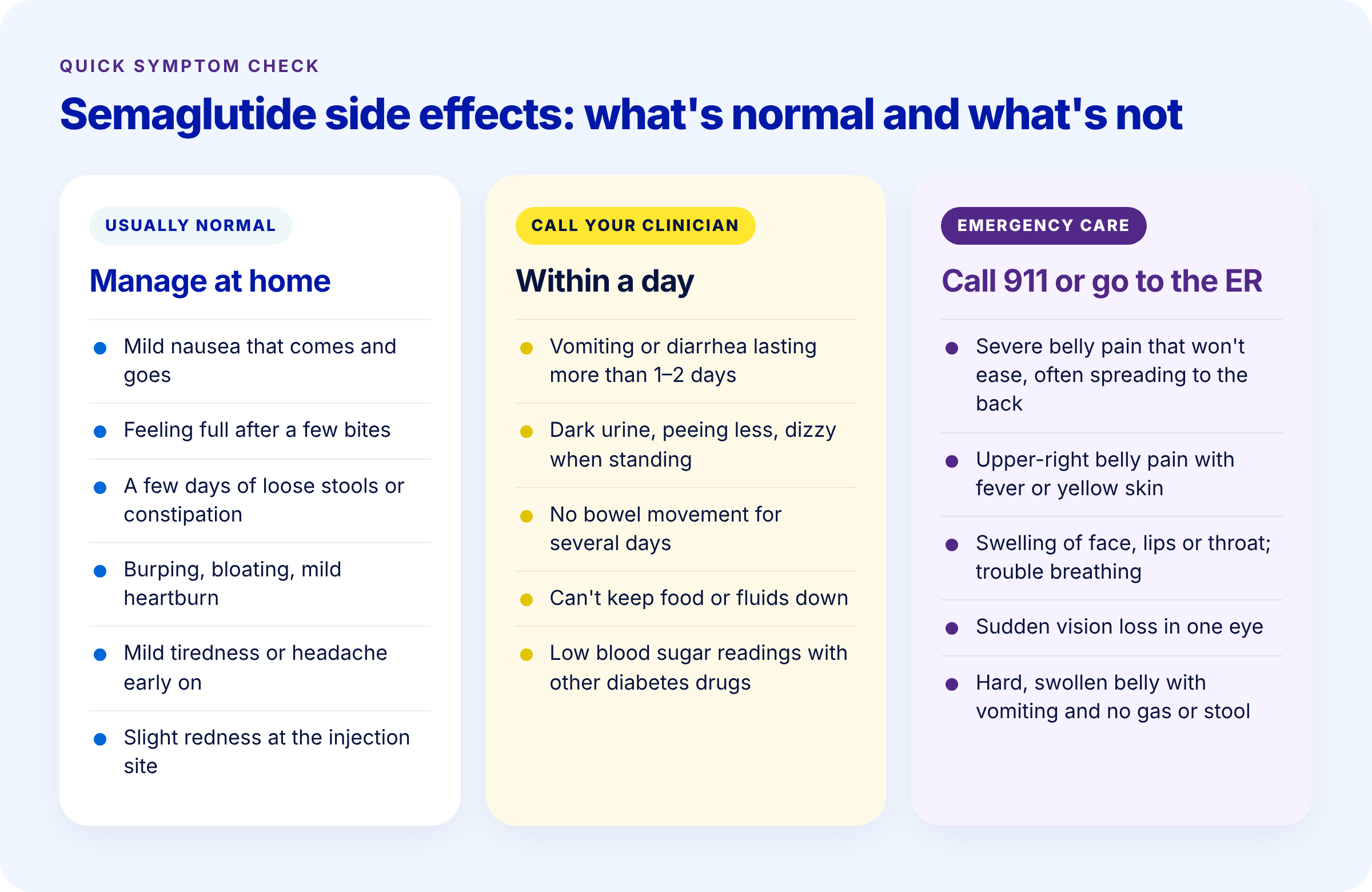
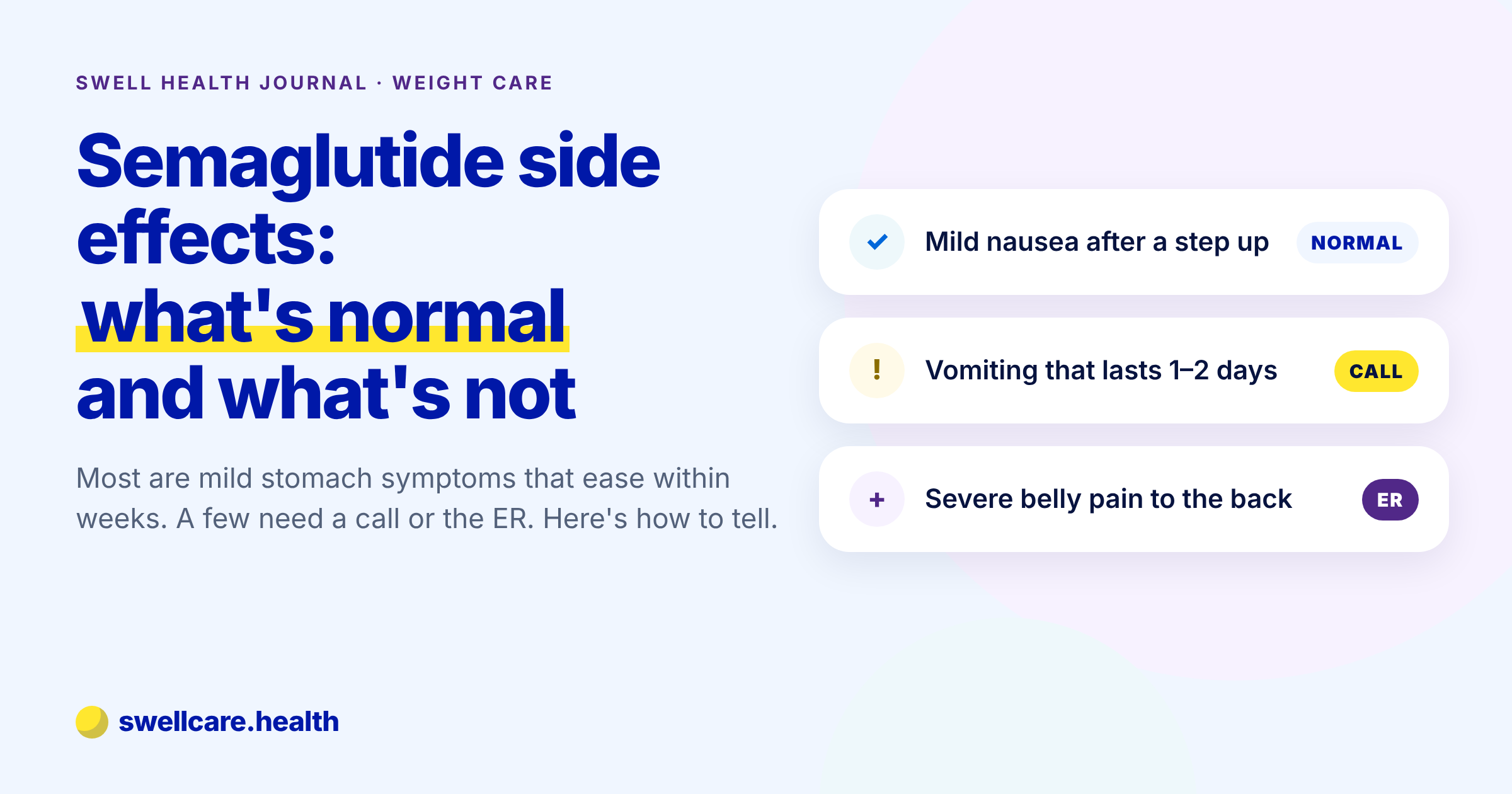
Usually normal. Mild nausea that comes and goes. Feeling full after a few bites. A smaller appetite. A few days of loose stools or constipation, some burping and bloating, a mild headache or fatigue in the first weeks. A little redness at the injection site. These gastrointestinal side effects are expected, and you can usually manage them at home.
Call your clinician within a day. Vomiting or diarrhea that lasts more than a day or two. Signs of dehydration, like dark urine, peeing much less than usual, or dizziness when you stand. No bowel movement for several days. Not being able to keep food or fluids down. Low blood sugar readings if you also take another glucose-lowering medication.
Get emergency care. Severe abdominal pain that won’t let up, especially if it spreads to your back. Upper-right belly pain with fever or yellowing skin. Swelling of your face, lips or throat, or trouble breathing. Sudden vision loss in one eye. A swollen, hard belly with vomiting when you can’t pass gas or stool, which can point to a bowel obstruction.
Serious semaglutide side effects to know about
These side effects are uncommon. They’re also why semaglutide is prescription-only and carries a boxed warning.
Pancreatitis
In the weight-management trials, acute pancreatitis was confirmed in four people on the drug, about 0.2 cases per 100 patient-years. The telltale sign is severe, constant abdominal pain that may travel to your back, with or without vomiting. If that happens, stop your next dose and get seen. Tell your prescriber up front if you’ve ever had pancreatitis.
Gallbladder problems
Fast weight loss makes gallstones more likely. On the label, gallstones showed up in 1.6% of people taking semaglutide versus 0.7% on placebo, and gallbladder inflammation in 0.6% versus 0.2%. Watch for pain under your right ribs, fever, or yellow skin or eyes.
Low blood sugar
On its own, semaglutide rarely pushes glucose too low, because its effect on the pancreas switches on mainly when glucose is high. The risk rises when you combine it with insulin or a sulfonylurea. In people with type 2 diabetes in the weight trials, hypoglycemia hit 6% versus 2% on placebo. Shakiness, sweating, a racing heart and confusion are the classic signs. Your prescriber may lower your other diabetes medication when you start.
Dehydration and kidney strain
Vomiting and diarrhea drain fluid fast, and the label warns of acute kidney injury from fluid loss. People with existing kidney disease are most at risk. Dizziness when you stand is often the first clue. Sip fluids all day rather than waiting until you’re thirsty.
Thyroid tumor warning
The boxed warning comes from rodent studies, where semaglutide caused thyroid C-cell tumors. Nobody knows yet whether that happens in humans. You shouldn’t take it if you or a close relative has had medullary thyroid cancer, or if you have multiple endocrine neoplasia type 2 (MEN 2). Report a neck lump, trouble swallowing or a hoarse voice that won’t clear.
Allergic reactions
Serious allergic reactions, including anaphylaxis and swelling of the face or throat, are rare but listed on every semaglutide label. Any reaction with breathing trouble needs 911, not a callback.
Vision changes
If you have type 2 diabetes with existing diabetic retinopathy, a quick drop in glucose can temporarily worsen diabetic retinopathy, so keep up with eye exams.
A newer concern is NAION, a sudden loss of blood flow to the optic nerve. On November 9, 2026, the FDA told makers of every GLP-1 drug to add it to their labels. Its review of 126 trials with more than 134,000 people found 6.4 cases per 100,000 person-years on these drugs versus 3.8 in comparison groups, per Drug Topics. That’s rare. Still, painless vision changes in one eye mean an emergency visit the same day.
Surgery and anesthesia
Because your stomach empties more slowly, food can still be there when you’re put under, which raises the risk of breathing it into your lungs. Tell your whole healthcare team, including the surgeon and anesthesiologist, that you’re on semaglutide. A 2024 multi-society guidance calls for a shared decision between you and your doctors and suggests a liquid diet for at least 24 hours beforehand when there’s concern. Don’t stop on your own.
How to ease side effects and stay on track
You can’t control how your body reacts to a new strength. You can control a lot of what you eat, drink and do around it.
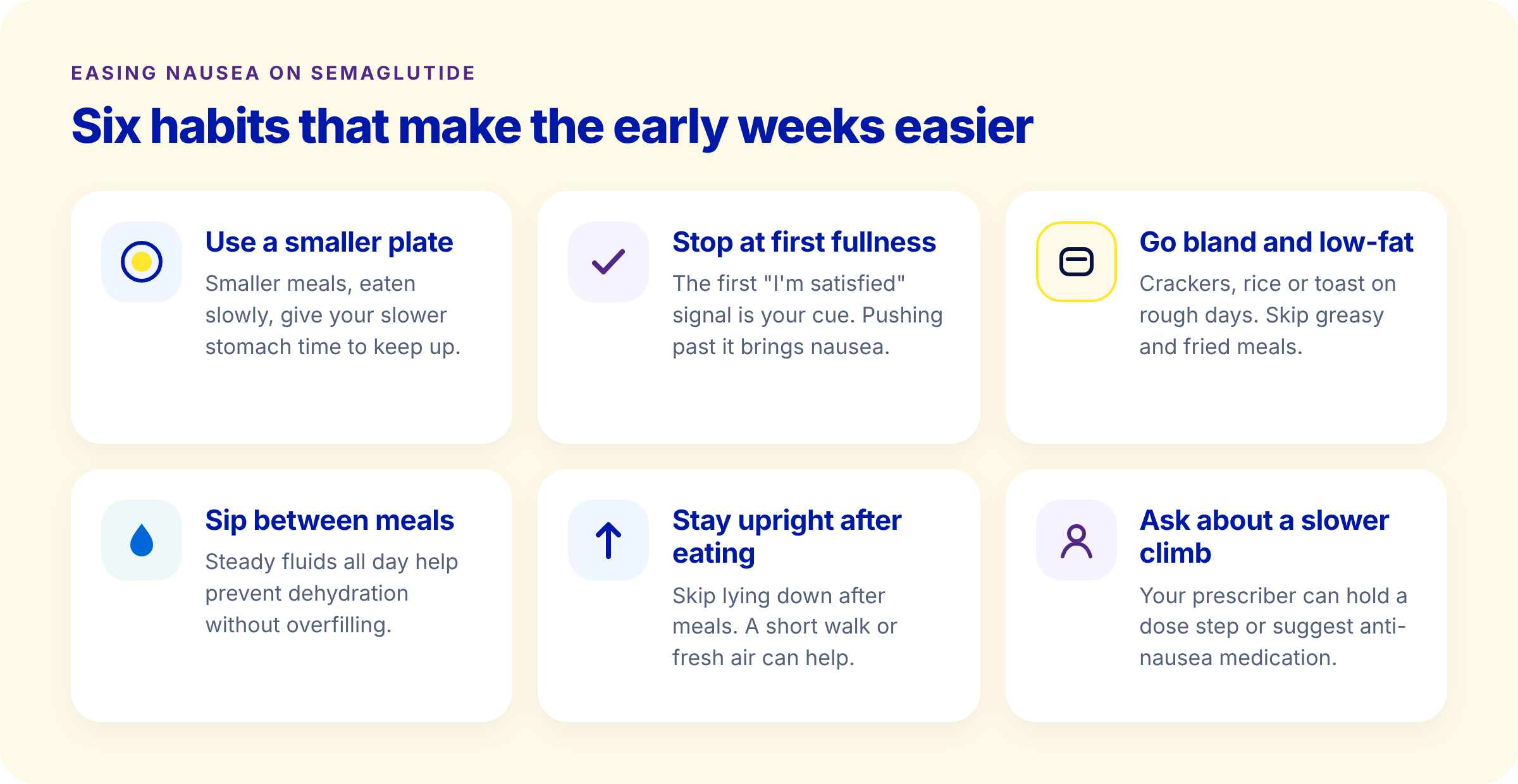
Nausea and vomiting
Eat smaller meals, slowly, and stop at the very first sign of fullness. That one change does more than anything else. Pick bland, low-fat foods like crackers, rice or toast on rough days, and skip greasy or fried meals. Sip fluids between meals instead of gulping them with food. Stay upright after eating rather than lying down, and a short walk or some fresh air can settle things. If nausea keeps you from eating, ask your prescriber about an anti-nausea medication.
Constipation and diarrhea
Both are common gastrointestinal complaints early on. For constipation, add fiber gradually (too much fiber at once can worsen bloating), drink more water than feels necessary, and move your body daily. A pharmacist can point you to an over-the-counter stool softener or gentle laxative if a few days pass. For diarrhea, replace fluids with an electrolyte drink and ask before using an over-the-counter remedy. Alcohol and fizzy drinks tend to make both worse.
Fatigue, headache and dizziness
These side effects often come from eating and drinking far less than before. Aim for some protein at every meal, keep a water bottle within reach, and stand up slowly. If a headache lingers, ask your pharmacist which pain reliever suits your other medications.
Hair loss, “Ozempic face” and mood changes
Hair shedding showed up in 3% of people on the 2.4 mg dosage of semaglutide versus 1% on placebo. It’s generally thought to follow rapid weight loss rather than the drug directly, and it tends to ease once your weight steadies. Eating enough protein helps.
“Ozempic face” isn’t a diagnosis. It’s a nickname for the hollower look some people get when they lose facial fat quickly during weight loss. A steadier pace of loss and strength training to protect muscle are the usual advice.
On mood, the news is better than headlines suggested. In January 2026, the FDA asked drugmakers to remove the suicidal thoughts warning from Wegovy’s label after a review of 91 trials found no added risk. Tell your clinician about any new low mood anyway.
Compounded semaglutide and dosing mistakes
Compounded semaglutide isn’t FDA-approved, and its strength can vary from one pharmacy to the next. The FDA has warned that some patients drew up 5 to 20 times their intended dose from vials, often after mixing up units, milliliters and milligrams. Reported side effects included vomiting, fainting, dehydration and pancreatitis, according to Healio’s report on that alert. Branded versions come in prefilled pens dosed in milligrams. If you use a vial, have your prescriber confirm your dosage in both milligrams and syringe units, then show you how to draw it.
When to call a clinician about side effects
Reach out when side effects stop you from eating or drinking, last longer than a couple of days, or feel different from what you’ve had before. A good clinician will slow your titration, adjust your other diabetes medicine, or check your kidneys with labs instead of telling you to tough it out.
Swell’s licensed clinicians are available day or night online. If you’re starting semaglutide, or struggling to stay on it, start a weight care visit and a clinician will build a plan that fits your body and your schedule. For chest pain, trouble breathing or severe abdominal pain, call 911 first.
Questions people ask about semaglutide side effects
What are the dangers of taking semaglutide?
The serious risks are uncommon: pancreatitis, gallbladder disease, hypoglycemia when it’s combined with other diabetes drugs, kidney injury from dehydration, allergic reactions, worsening diabetic retinopathy and rare eye problems such as NAION. It also carries a boxed warning about thyroid C-cell tumors seen in rodents. People with a personal or family history of medullary thyroid cancer or MEN 2 shouldn’t take it.
How can I avoid side effects of semaglutide?
Most side effects ease when you increase slowly and don’t skip steps of the dose escalation schedule. Eat small, low-fat meals, stop at the first sign of fullness, and drink fluids steadily through the day. Limit fizzy drinks and late, heavy meals. If a dose increase knocks you flat, ask your prescriber to stay at your current dosage for another month before moving up.
What are the bad side effects of Ozempic?
Ozempic and the Rybelsus tablet share semaglutide’s warnings, so the side effects to take seriously are severe stomach pain that could mean pancreatitis, gallbladder attacks, dangerous lows when paired with other diabetes drugs, dehydration, allergic reactions and sudden vision changes. Persistent vomiting, especially with severe constipation or a swollen belly, needs prompt care because ileus has been reported after approval.
Do semaglutide side effects go away?
For most people, yes. Nausea and other gastrointestinal side effects are usually strongest in the days after a dose change and fade over one to several weeks as your body adapts. In the weight-loss trials, fewer than 5 in 100 people quit because of them. If symptoms persist past a few weeks, talk to your prescriber.
Can I drink alcohol on semaglutide?
A small amount is usually fine for most people, but it can make semaglutide nausea and dehydration worse. If you take insulin or a sulfonylurea, alcohol also raises the chance of low blood sugar. Drink slowly, with food, and keep water nearby.
Trusted references
Public-health, research, and medical-society resources related to this guide.
- Becker’s Hospital Review: FDA approves Wegovy pill as first oral GLP-1 for weight loss
- FDA: Wegovy prescribing information (2025 label)
- FDA: Ozempic prescribing information (2026 label)
- Drug Topics: FDA adds NAION eye risk warning to all GLP-1 labels
- HealthDay: Guidance for safe use of GLP-1 RAs in the perioperative period (2024)
- FDA: Request to remove suicidal behavior and ideation warning from GLP-1 labels
- Healio: FDA warns of adverse events due to overdosing of compounded semaglutide