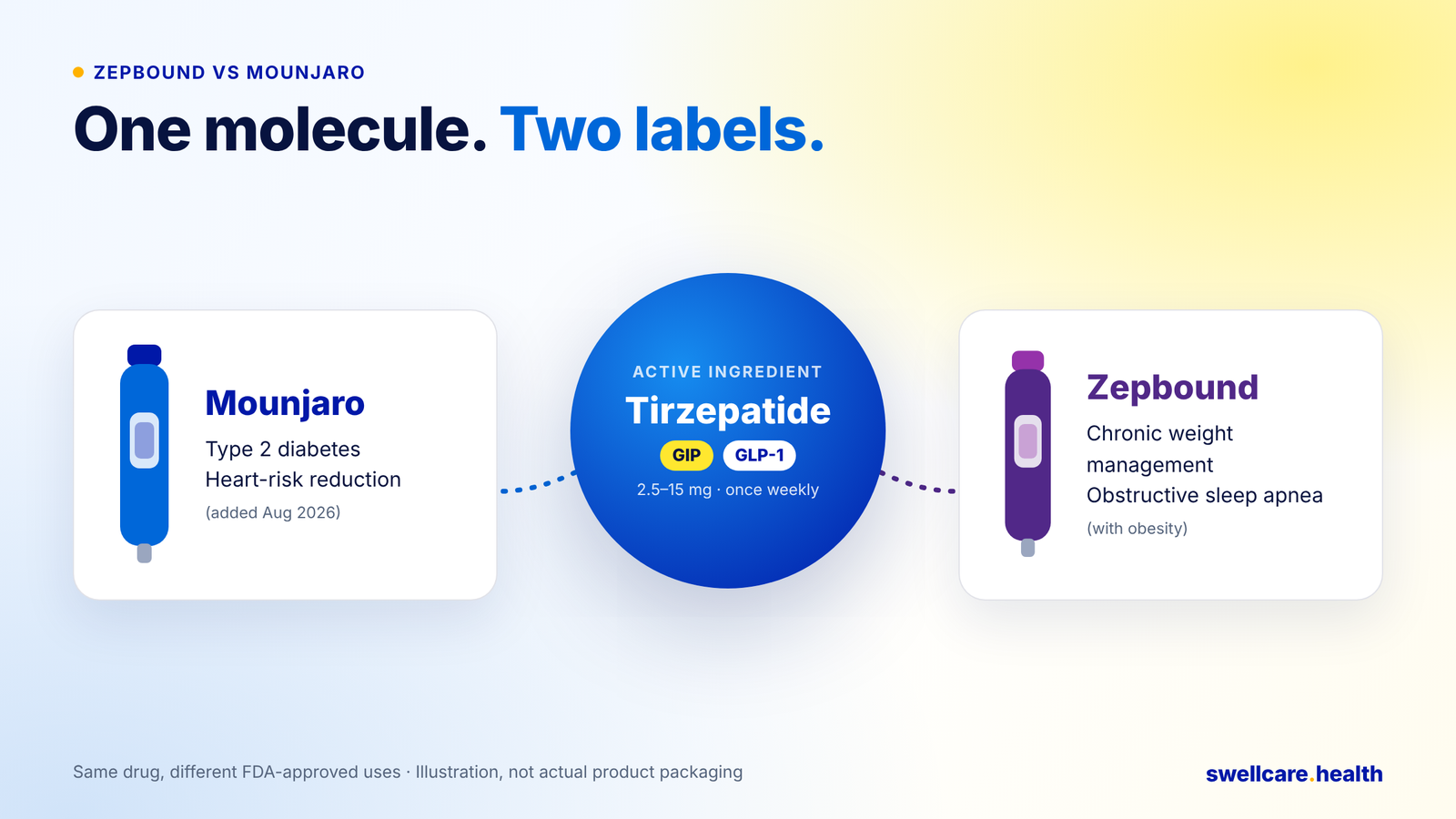
Yes, they’re the same drug. Zepbound and Mounjaro both contain tirzepatide, made by Eli Lilly, in the same strengths, given as a weekly injection. So the real question in any Zepbound vs Mounjaro search isn’t chemistry. It’s paperwork: which FDA label fits your diagnosis, and what your insurance will agree to pay for.
That paperwork matters more than most people expect. It can decide whether you pay a $25 copay or several hundred dollars a month.
Here’s how the two compare in 2026, what changed this year, and how a clinician decides which name goes on your prescription.
Zepbound vs Mounjaro at a glance
| Mounjaro | Zepbound | |
|---|---|---|
| Active ingredient | Tirzepatide | Tirzepatide |
| FDA approved for | Type 2 diabetes (adults and kids 10+); lowering heart attack and stroke risk in high-risk adults with type 2 diabetes | Chronic weight management; moderate to severe obstructive sleep apnea with obesity |
| Doses | 2.5 to 15 mg, once weekly | 2.5 to 15 mg, once weekly |
| Forms | Single-dose pen or vial, multi-dose KwikPen | Same three options |
| Typical coverage | Most plans, for diabetes | Often excluded or needs prior authorization |
| LillyDirect self-pay (Nov 2026) | $499/month, any dose | $299 to $699/month by dose |
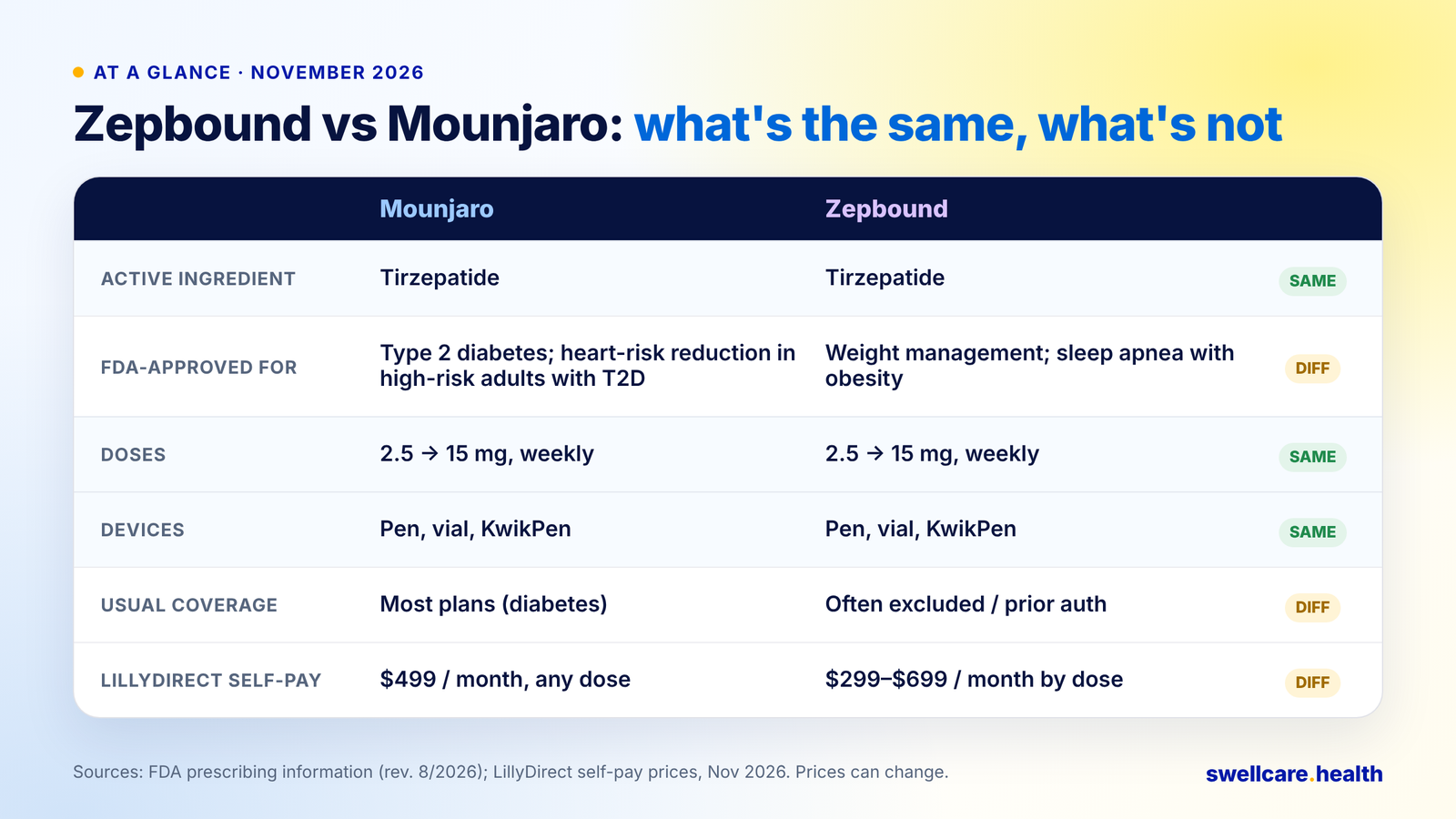
Look at what matches. Same molecule, same dose ladder, same weekly shot, and neither has a generic yet. The differences live in the bottom rows.
One molecule, two jobs: how tirzepatide works
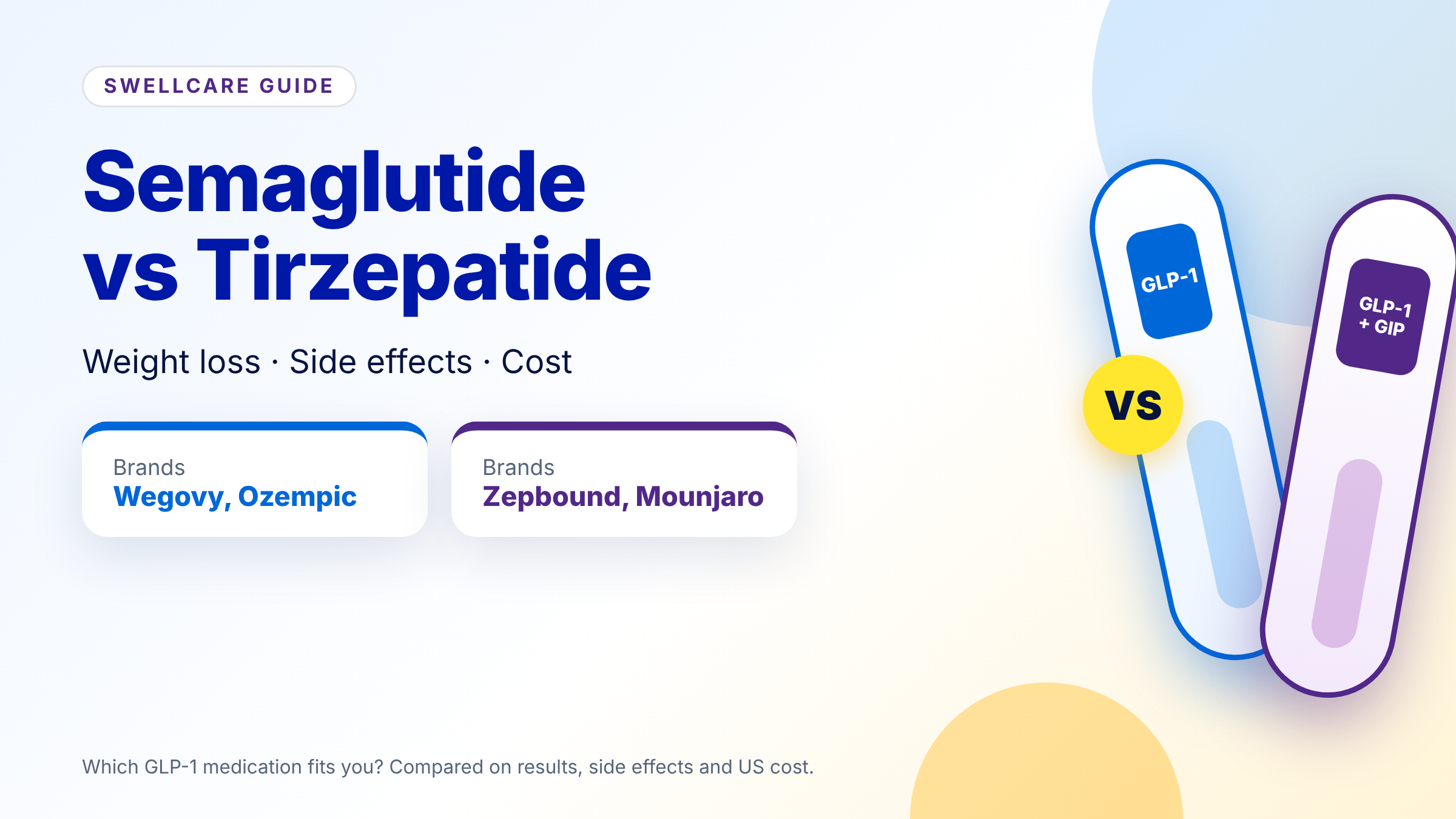
Tirzepatide copies two gut hormones your body already makes after a meal: GIP and GLP-1. Older drugs such as semaglutide (the ingredient in Ozempic and Wegovy) act on GLP-1 only. Tirzepatide hits both the GIP and GLP-1 receptors, which is why it’s called a dual agonist.
In practice, that helps the pancreas release insulin when blood sugar rises, slows how fast your stomach empties, and turns down appetite signals in the brain. Many people call it the “food noise” going quiet.
For diabetes, the headline effect is steadier blood sugar. For obesity, it’s a smaller appetite without white-knuckling every meal. Same mechanism. The label simply points at a different goal.
Why the same drug has two brand names
Drug companies have to prove a medicine works for each specific use. Lilly ran one set of trials for diabetes (SURPASS) and another for weight (SURMOUNT). Each program earned its own FDA approval, and each label carries its own brand name.
That split isn’t just marketing. Insurers write coverage rules around the approved use, so a separate name lets a plan cover diabetes care while making its own call on obesity drugs.
What Mounjaro is approved for
Mounjaro arrived in 2022 to improve blood sugar in adults with type 2 diabetes, alongside diet and exercise. Its label now also covers children 10 and older with the condition.
The big 2026 change: on August 28, the FDA added a cardiovascular indication. Mounjaro can now be prescribed to lower the risk of heart attack, stroke and cardiovascular death in high-risk adults with diabetes. That approval rests on SURPASS-CVOT, a roughly four-year trial of more than 13,000 people with heart disease that compared tirzepatide with dulaglutide (Trulicity). Tirzepatide had 8% fewer major cardiovascular events. It proved at least as good, though not statistically superior.
What Zepbound is approved for
Zepbound followed in late 2023 for chronic weight management. Per the Zepbound prescribing information, it’s for adults with obesity (generally a BMI of 30 or more) or overweight (BMI 27 or more) plus a weight-related condition, such as high blood pressure or prediabetes.
In December 2024 Zepbound picked up a second use: moderate to severe obstructive sleep apnea in adults with obesity. That matters for coverage, because a plan that excludes weight loss drugs may still pay for apnea treatment.
Is Zepbound or Mounjaro better for weight loss?
Neither. With the same molecule at the same strength, your body can’t tell which box it came out of. Any difference people report comes from timing or expectations, not the brand.
What the data does show is how much weight loss tirzepatide itself can deliver. In the SURMOUNT-1 clinical trial, 2,539 adults with obesity but without diabetes took tirzepatide or placebo for 72 weeks:
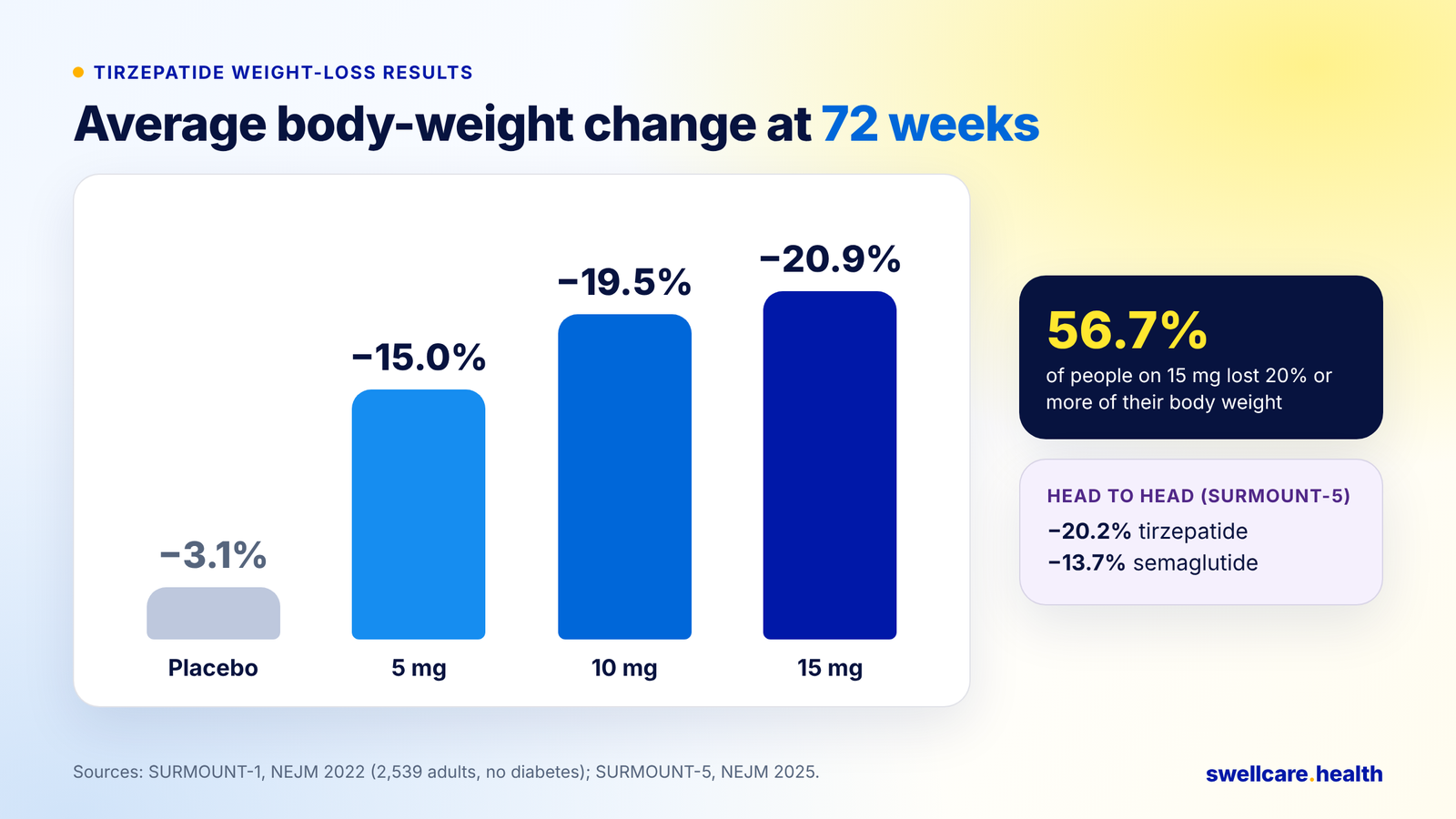
On the top dose, more than half of participants lost at least 20% of their body weight. People with diabetes usually lose a bit less on the same drug, a pattern seen across GLP-1 studies.
Against semaglutide head to head, tirzepatide came out ahead on the scale. The SURMOUNT-5 trial found 20.2% average weight loss with tirzepatide versus 13.7% with Wegovy after 72 weeks. For diabetes, the SURPASS trials showed bigger A1C drops with tirzepatide than with semaglutide, and SURPASS-CVOT added the cardiovascular data.
Dosing: same steps, different devices
Both drugs follow one dosing ladder. You start at 2.5 mg once a week for four weeks. That starter step lets your gut adjust; it isn’t meant to produce much weight loss. After that, your clinician raises the strength by 2.5 mg no sooner than every four weeks, up to 15 mg.
Where you stop differs a little. Zepbound maintenance for weight is 5, 10 or 15 mg, and 10 or 15 mg for apnea. Mounjaro is adjusted to your blood sugar, and kids stay at 10 mg or below.
Each comes as a single-dose pen, single-dose vials with a syringe, or a KwikPen holding four weekly doses. The injection goes under the skin of your belly, thigh or upper arm. Missed one? Take it within four days, or skip it and carry on.
Side effects and safety warnings
Because the medicine is identical, so are the side effects. Most are gastrointestinal and show up in the first weeks or right after a step up.
In the Zepbound weight trials, nausea hit 25% to 29% of people (versus 8% on placebo), diarrhea about 1 in 5, and constipation 11% to 17%. Vomiting, heartburn, tiredness and some hair thinning also appeared. The Mounjaro trials reported lower nausea (12% to 18%), likely because the groups were different, not the drug.
Most side effects ease with time. Smaller meals, stopping when you’re satisfied and going easy on greasy food help a lot. If constipation or diarrhea lasts more than a few days, tell your clinician.
There’s one easy-to-miss warning. Tirzepatide can make birth control pills less reliable. The label advises switching to a non-oral method, or adding a barrier method for four weeks after you start and after every dose increase.
Who should not take tirzepatide
Both labels carry a boxed warning. Tirzepatide caused thyroid C-cell tumors in rats; nobody knows yet whether it does in people. Don’t take it if you or a family member has had medullary thyroid cancer, or if you have MEN 2 syndrome.
Other risks your clinician will review include pancreatitis, gallbladder problems, kidney strain from dehydration, worsening diabetic eye disease and low blood sugar when combined with insulin or a sulfonylurea. It isn’t for pregnancy, and never take Zepbound and Mounjaro together or with another GLP-1 drug.
Cost and insurance: where the real difference shows up
This is where the twins part ways.
Why insurance covers Mounjaro but not Zepbound
Diabetes drugs sit on almost every formulary. Weight loss drugs don’t. Many employer plans exclude them, and the rest usually want prior authorization with a recorded BMI and proof of a related condition.
So with diabetes, Mounjaro is usually the simpler path. Without it, your plan won’t cover Mounjaro for weight alone, and pushing for that can lead to a denial.
What you’ll pay without coverage in 2026
List prices for both top $1,000 a month, but few people pay that. Through LillyDirect, Lilly’s direct-to-patient service, self-pay prices in November 2026 are:
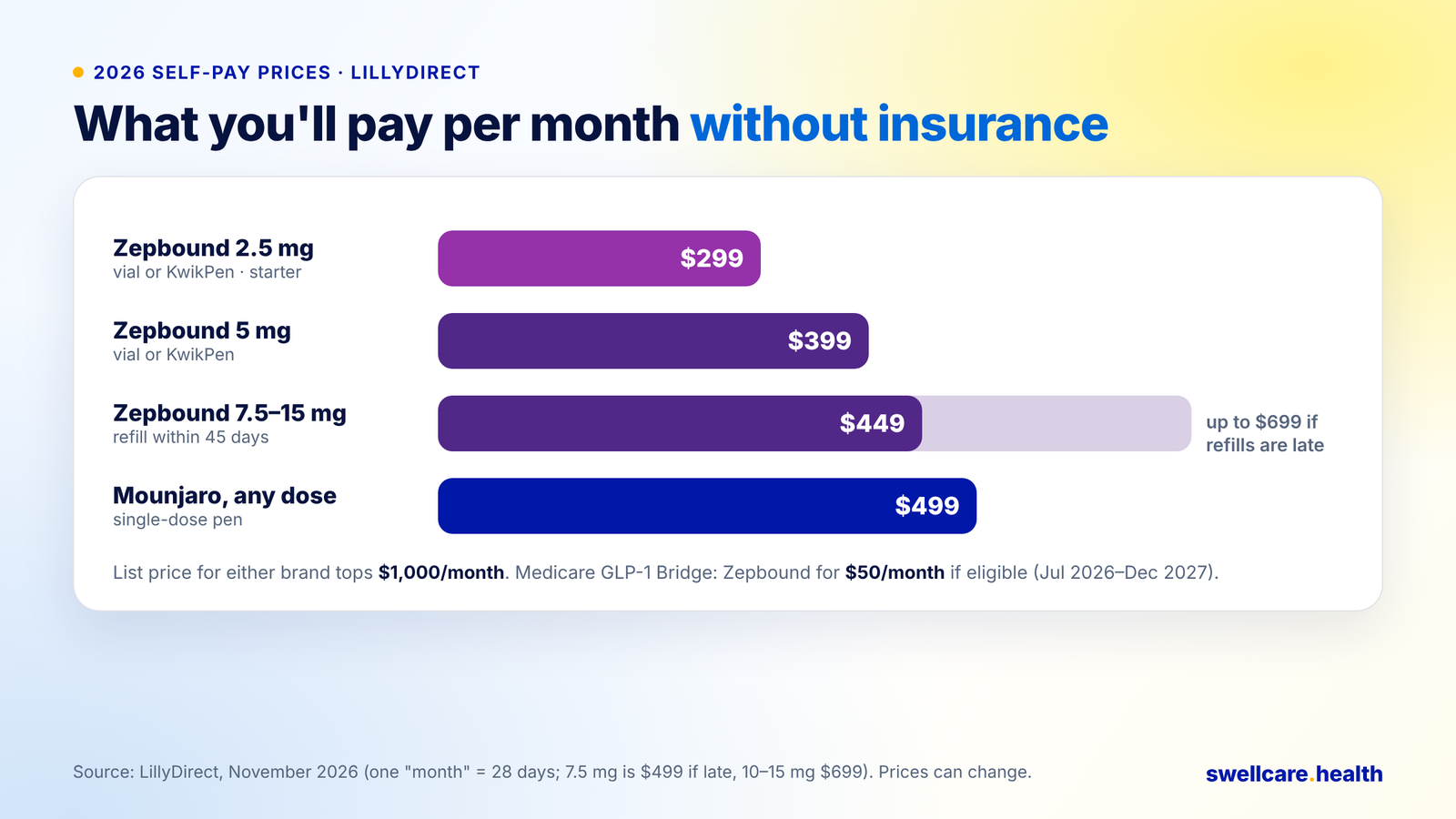
Zepbound vials and KwikPens cost $299 at 2.5 mg and $399 at 5 mg. Higher doses run $449 if you refill within 45 days, or $499 to $699 if you don’t. Mounjaro pens are $499 at every dose. A “month” here means 28 days. Paying cash, Zepbound is often cheaper, if refills stay on time.
Medicare and the GLP-1 Bridge
By law, Medicare Part D can’t cover drugs used only for weight loss. A temporary pilot changes that. The Medicare GLP-1 Bridge, running July 1, 2026, through December 31, 2027, lets eligible Part D members get the Zepbound KwikPen for a flat $50 a month. You qualify with a BMI of 35 or more, or 27 or more with a condition such as heart disease or prediabetes, and your prescriber files the request.
Mounjaro isn’t part of the Bridge. Taken for diabetes, it stays under your regular Part D plan, as does Zepbound prescribed for apnea.
Which one will your clinician prescribe?
Usually the decision makes itself:
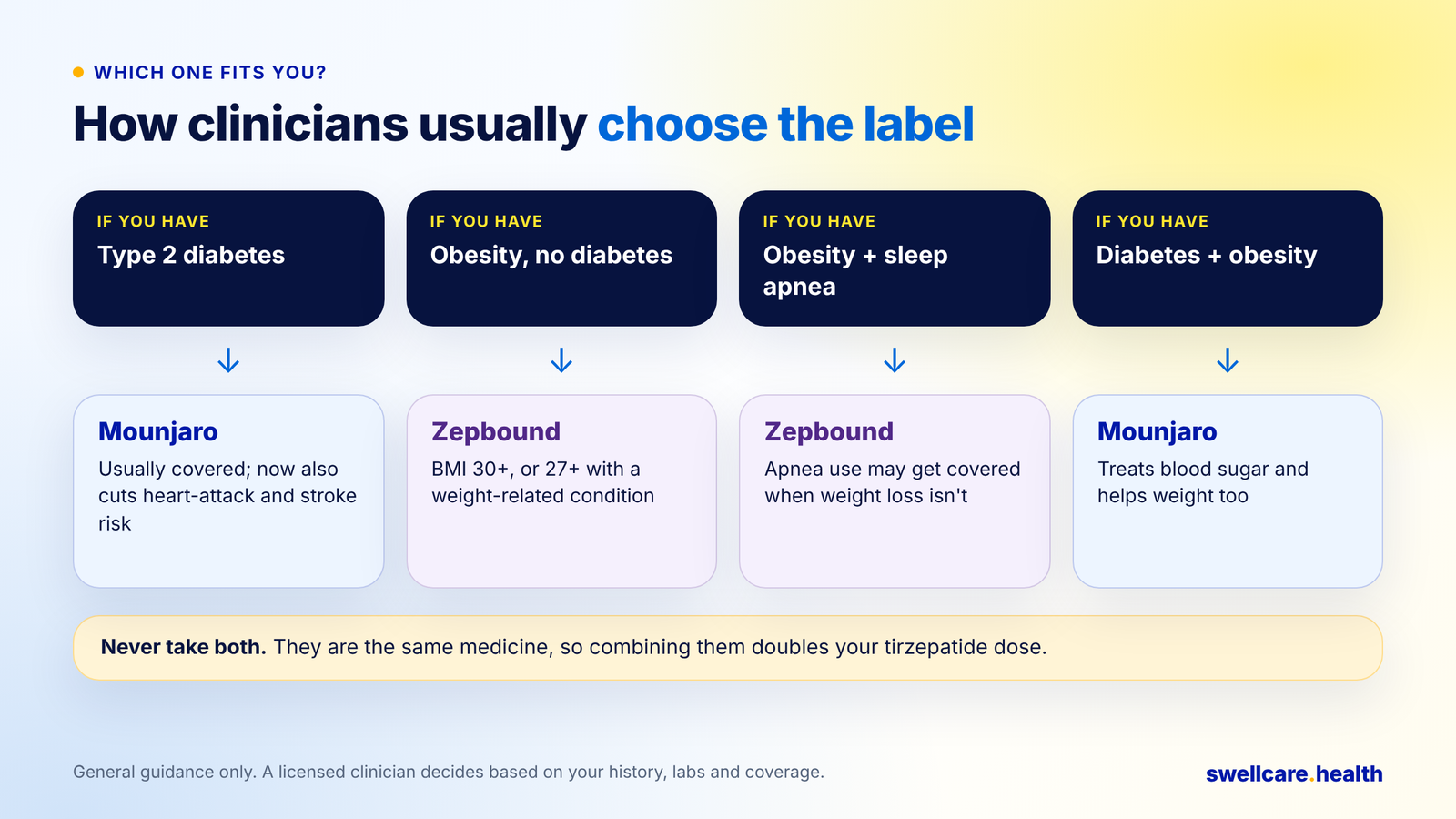
- You have type 2 diabetes: Mounjaro, especially now that it carries the heart-protection label.
- You don’t have diabetes but meet the BMI rules: Zepbound.
- You have obesity and sleep apnea: Zepbound, often with better odds of coverage.
- You have diabetes and obesity: Mounjaro is typically covered, and it’ll help your weight too.
Switching from Mounjaro to Zepbound, or back, is simple. Your strength can often carry over one to one.
When to call your doctor right away
Get care quickly for severe belly pain that spreads to your back (possible pancreatitis), upper right belly pain, yellowing skin or eyes, signs of dehydration, a neck lump, trouble swallowing, or a serious allergic reaction. If low blood sugar won’t come up, treat it and call. For chest pain or trouble breathing, call 911.
Start a tirzepatide plan with Swell
Knowing the facts is easy. Getting the right prescription, under the right name, at a price you can keep paying is harder.
A licensed Swell clinician can review your history, check whether Zepbound or Mounjaro fits your diagnosis and coverage, order labs, and adjust your plan as you go. Start with Swell weight care or see how online visits and pricing work.
Questions people ask about Zepbound vs Mounjaro
Is Zepbound the same as Mounjaro?
Yes. Both contain tirzepatide, the same strengths and the same once-weekly dosing, made by Eli Lilly. The difference is the FDA label. Mounjaro is approved for type 2 diabetes and cutting cardiovascular risk in high-risk diabetic adults. Zepbound is approved for chronic weight management and sleep apnea with obesity. That label shapes insurance coverage.
Which is more expensive, Mounjaro or Zepbound?
List prices are similar. Paying cash through LillyDirect in 2026, Zepbound is usually cheaper: $299 to $449 a month with on-time refills, versus $499 for Mounjaro pens. With commercial coverage for diabetes, Mounjaro can cost much less, sometimes as little as $25 with Lilly’s savings card if your plan covers it.
Why does my insurance cover Mounjaro but not Zepbound?
Insurers cover based on the approved use. Mounjaro treats type 2 diabetes, which almost every plan covers. Zepbound’s main use is weight loss, which many employer plans and standard Medicare Part D exclude. Some plans will still cover Zepbound for obstructive sleep apnea or after prior authorization, so ask your clinician to check.
Can you switch from Mounjaro to Zepbound?
Yes, and it’s usually simple. Because the ingredient and strengths match, many people move to the same Zepbound strength without restarting at 2.5 mg. Your clinician will confirm the switch fits your diagnosis and coverage. Never take both at once; they’re the same medicine.
What is the strongest GLP-1 for weight loss?
Tirzepatide, the GIP and GLP-1 drug in Zepbound and Mounjaro, is among the most effective approved options. In a head-to-head trial it beat semaglutide 2.4 mg (Wegovy) by about six percentage points over 72 weeks. Strongest isn’t always best for you, though; side effects, cost and your health history matter too.
How much weight can you lose on Zepbound in 2 weeks?
Usually not much, and that’s expected. The first four weeks of Zepbound at 2.5 mg are for getting your stomach used to the drug. Some people see a few pounds drop early, mostly from a smaller appetite, but meaningful weight loss builds over months as the strength rises.
Can you take Zepbound and Mounjaro together?
No. They’re the same drug, so using both would double your tirzepatide dose and raise your risk of serious side effects. The labels also advise against combining tirzepatide with any other GLP-1 medicine, such as Ozempic, Wegovy or Trulicity.
Trusted references
Public-health, research, and medical-society resources related to this guide.